

Vanilla Cupcakes
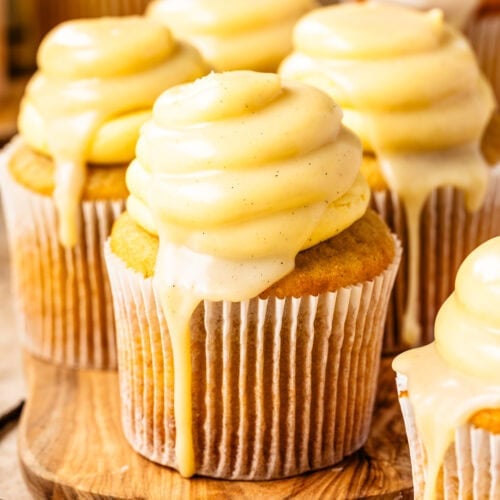
These Vanilla Cupcakes are my take on a classic vanilla cupcake when I want vanilla to be the entire point of the recipe, not just the background flavor. I use vanilla bean paste in the soft, moist cupcakes, fill them with silky vanilla pastry cream, then finish them with vanilla German buttercream and a glossy vanilla bean ganache.
There are a few components here, but I designed them to work together—the same pastry cream used for the filling becomes the base of the buttercream. I love the result because you get plenty of vanilla flavor without relying on an overly sweet frosting.
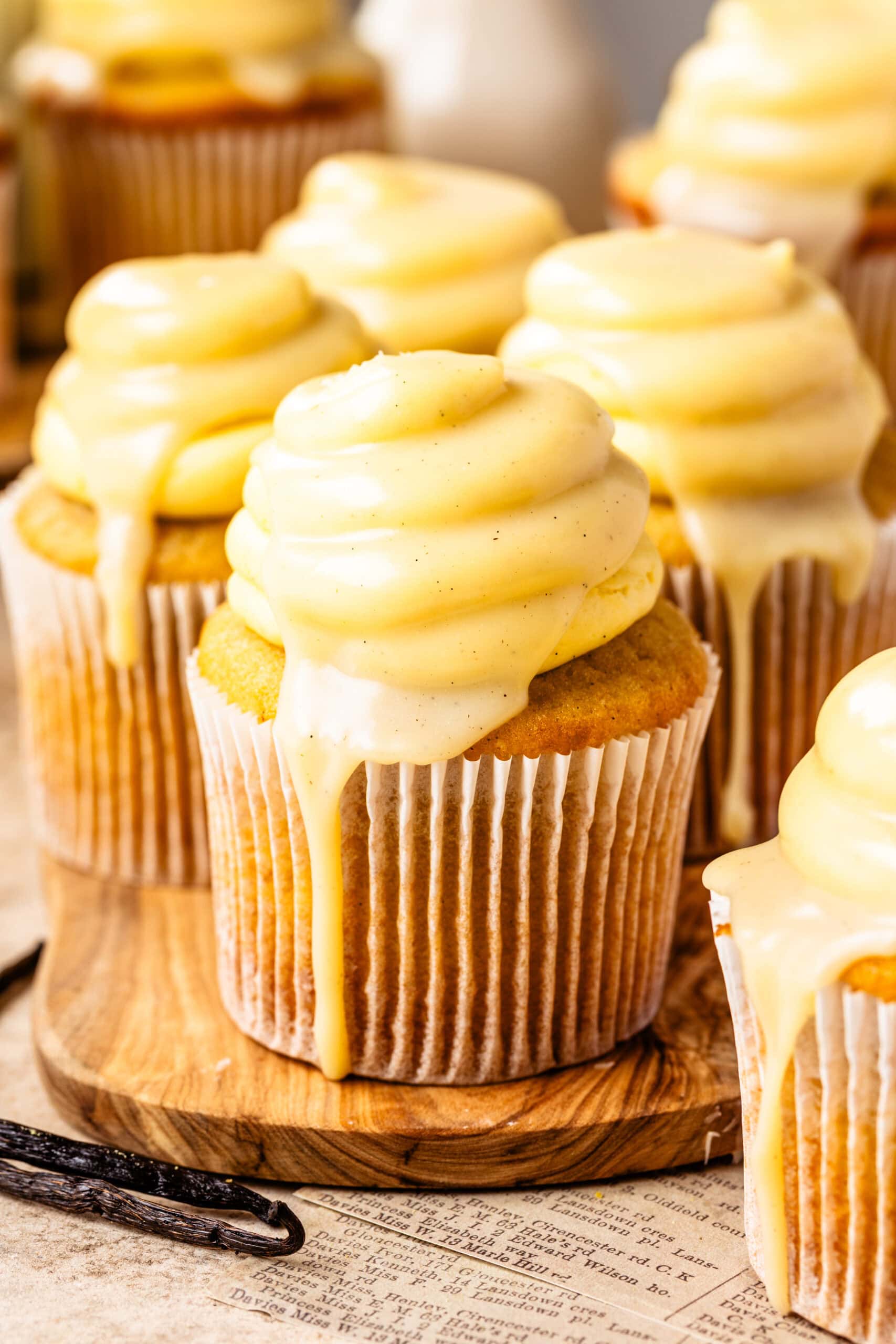
Why You’ll Love These Vanilla Cupcakes
I wanted every component of these cupcakes to bring something different while still keeping the flavor very classic.
This post may contain affiliate links. I earn a commission from qualified purchases. Please read our Privacy policy here.
- They’re incredibly soft and moist. Cake flour, sour cream, butter, and oil give the cupcakes a delicate crumb that stays soft even after refrigeration.
- Vanilla is actually the main flavor. I use vanilla extract, vanilla bean paste, and a whole vanilla bean throughout the different components.
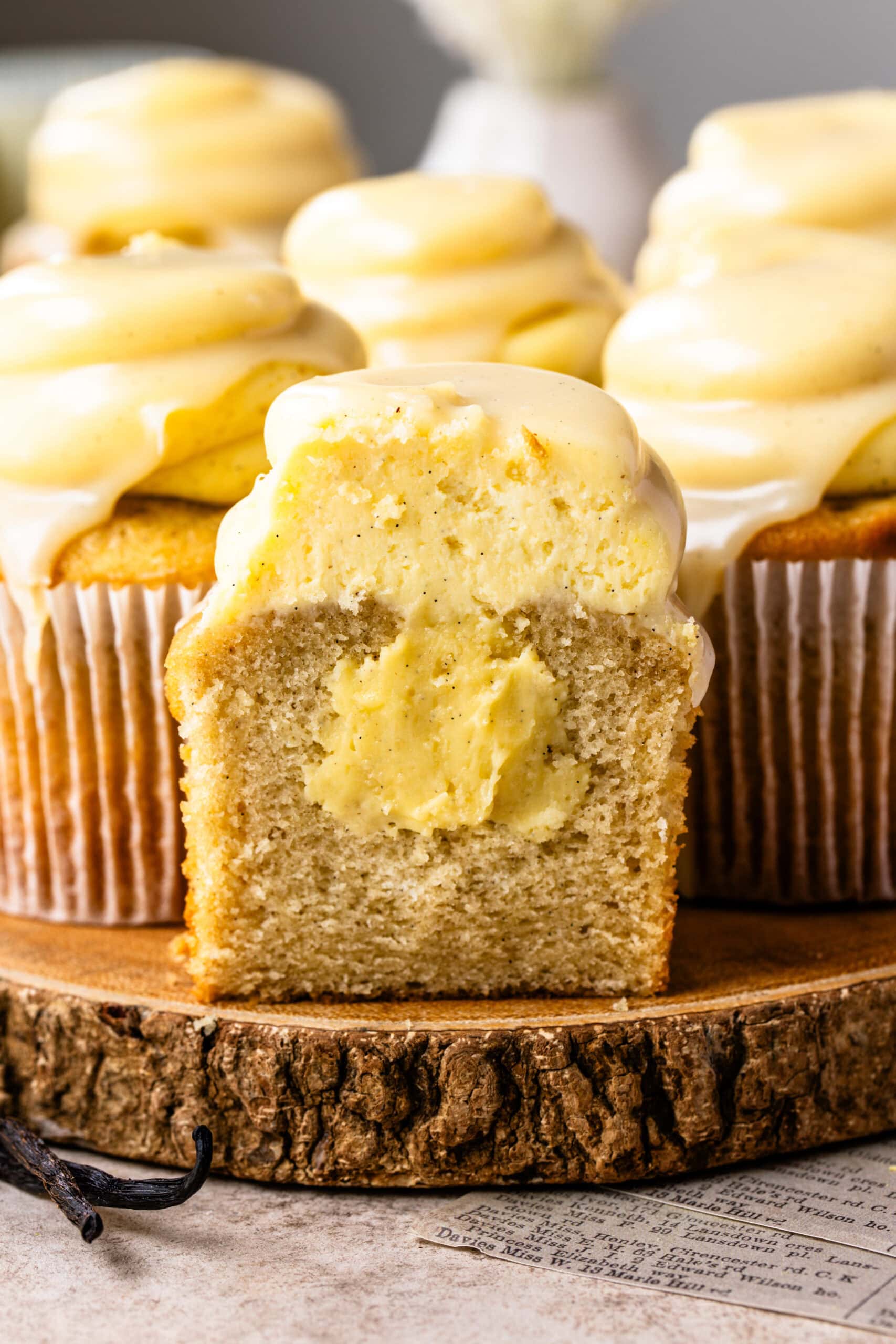
- The pastry cream does double duty. One batch is enough to fill the cupcakes and make the German buttercream.
- The frosting is silky and not overly sweet. German buttercream gets its texture from pastry cream rather than several cups of powdered sugar.
- The vanilla bean ganache adds just enough richness. I use a thin drizzle rather than a heavy coating so it doesn’t overpower the cupcake.
- You can make regular or jumbo cupcakes. The recipe makes 12 standard cupcakes or 6 jumbo cupcakes.
If you’re looking for something a little simpler that still has that classic vanilla flavor, my Vanilla Bundt Cake is another recipe I make when I want to keep things straightforward.
Key Ingredients & Why I Use Them
Cake flour: I prefer cake flour here because it gives the cupcakes a finer, softer crumb than all-purpose flour. Since these cupcakes are refrigerated after they’re filled and frosted, starting with a really tender cake makes a difference.
Sour cream: I like the extra moisture and richness sour cream adds without making the batter too thin. Full-fat Greek yogurt also works well if that’s what you have.
Vanilla extract and vanilla bean paste: Using both gives the cupcakes a more layered vanilla flavor. The paste also adds the little vanilla bean flecks that you can see throughout the cupcakes and ganache. I use this combination in other vanilla-forward recipes too, especially when I don’t want the flavor to disappear behind the other ingredients.
Vanilla bean: I especially love using a whole vanilla bean in the pastry cream. You can substitute vanilla bean paste, but the bean gives the custard a really clean vanilla flavor.
White chocolate: I recommend using a good-quality white chocolate bar or couverture for the ganache rather than white chocolate chips. I typically use Lindt white chocolate bars and chop them before melting. Chips contain stabilizers and don’t always give me the same smooth consistency.
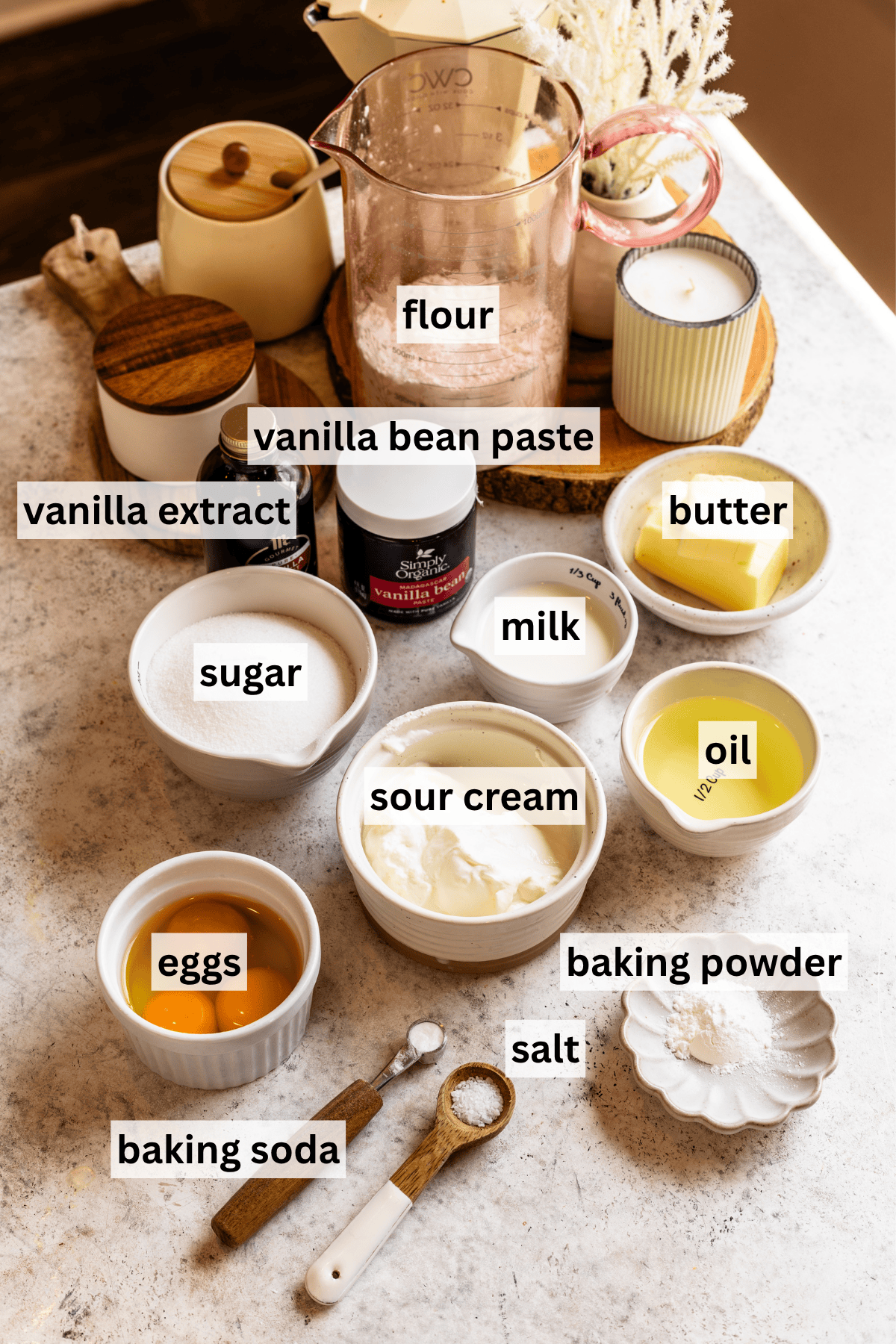
How to Make Vanilla Cupcakes
The complete measurements and instructions are in the recipe card below, but here’s how I make each component and what I pay attention to along the way.
Make the Vanilla Cupcakes
Preheat the oven to 350°F (175°C). Line a standard cupcake pan with 12 liners or a jumbo cupcake pan with 6 liners.
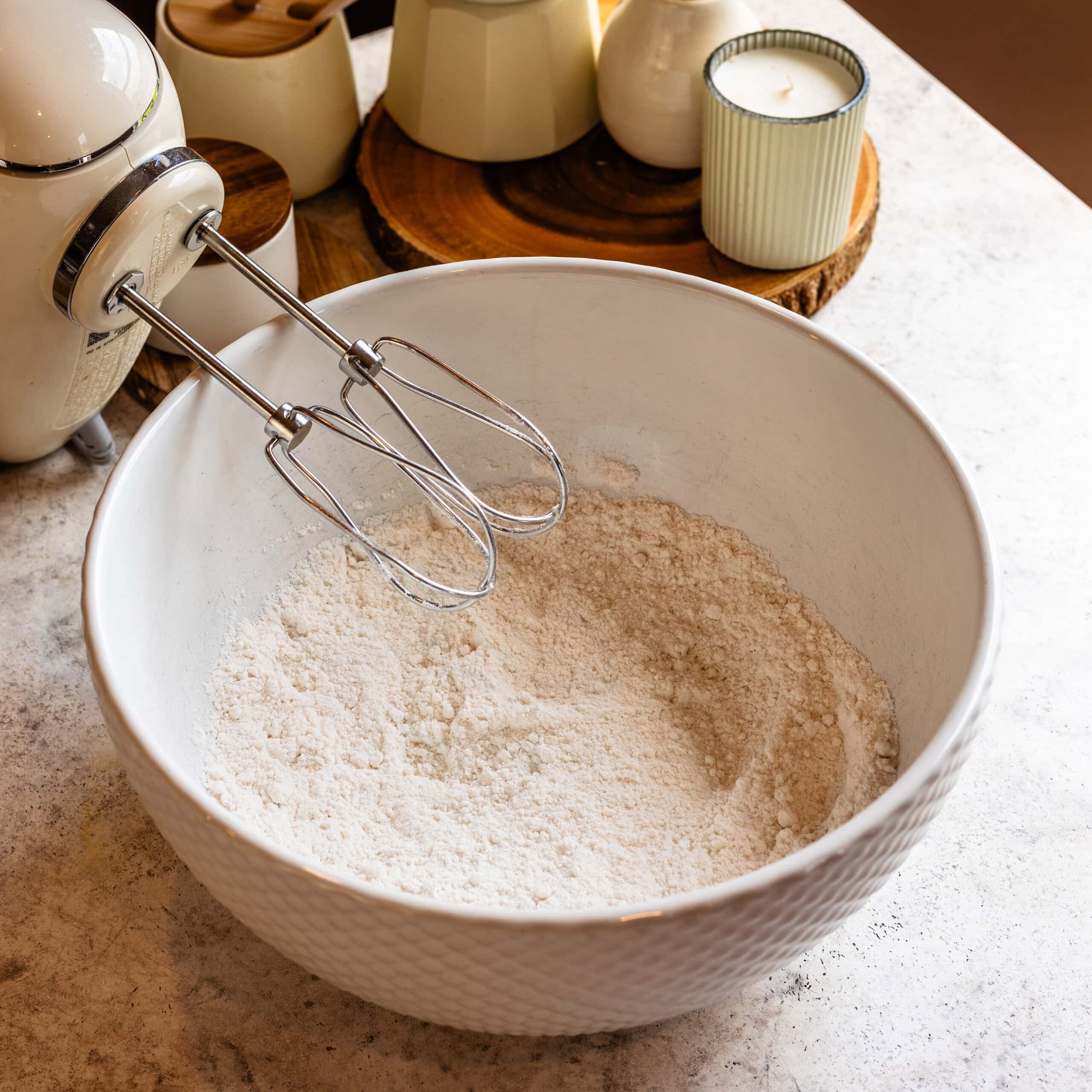
In the bowl of a mixer, whisk together the cake flour, granulated sugar, baking powder, baking soda, and salt.
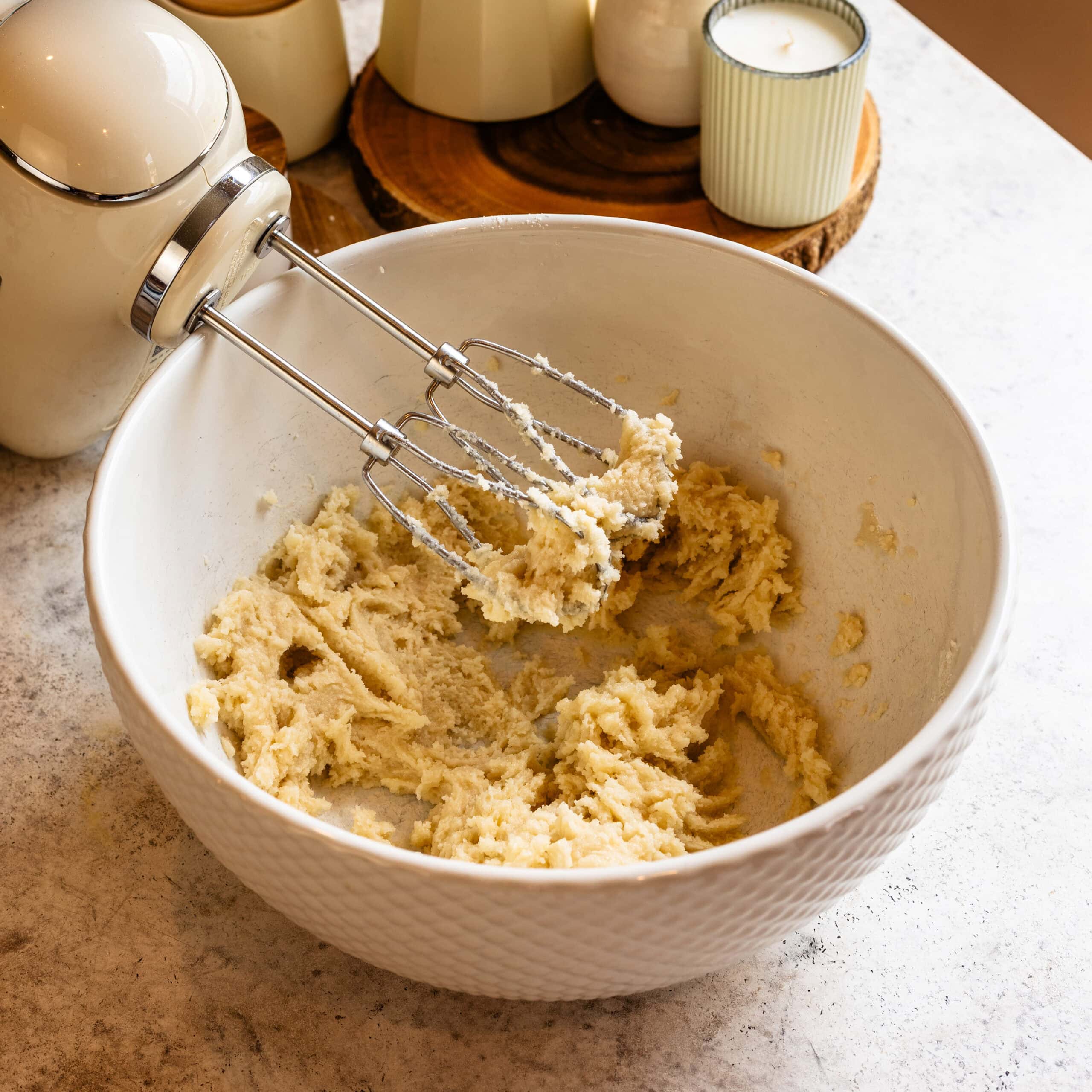
Toss in the Butter and Oil
Add the softened butter and neutral oil. Mix on low speed until the butter is evenly distributed and the mixture resembles damp sand. This reverse creaming method coats the flour with fat before the liquid ingredients are added, which helps create a fine, tender crumb.
I wanted to use this method because I was looking for a velvety crumb that’s slightly dense, but still incredibly moist and soft.
Mix up the Wet Ingredients
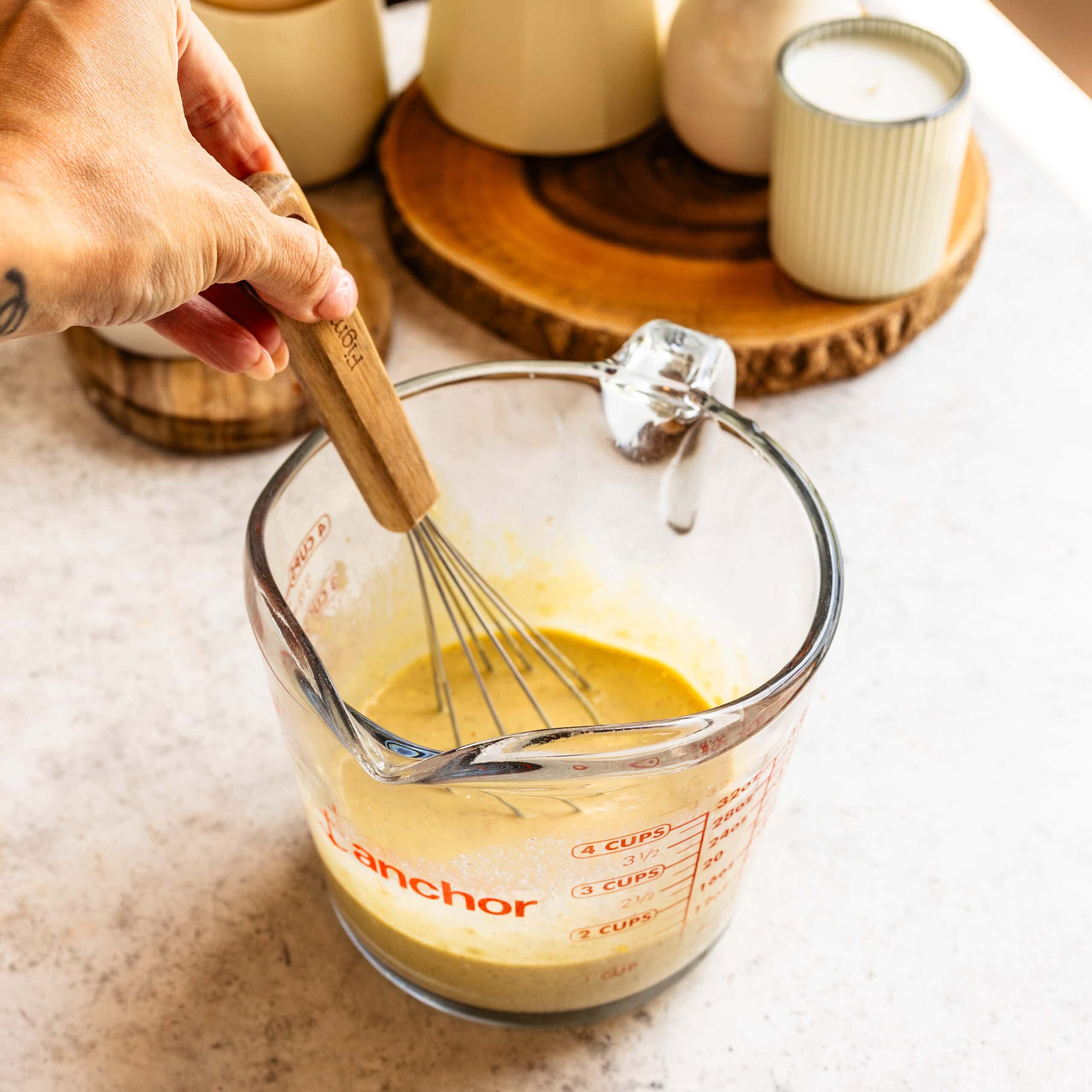
In a separate bowl, whisk together the egg, egg yolks, sour cream, whole milk, vanilla extract, and vanilla bean paste until smooth.
Mix the Batter Until Smooth
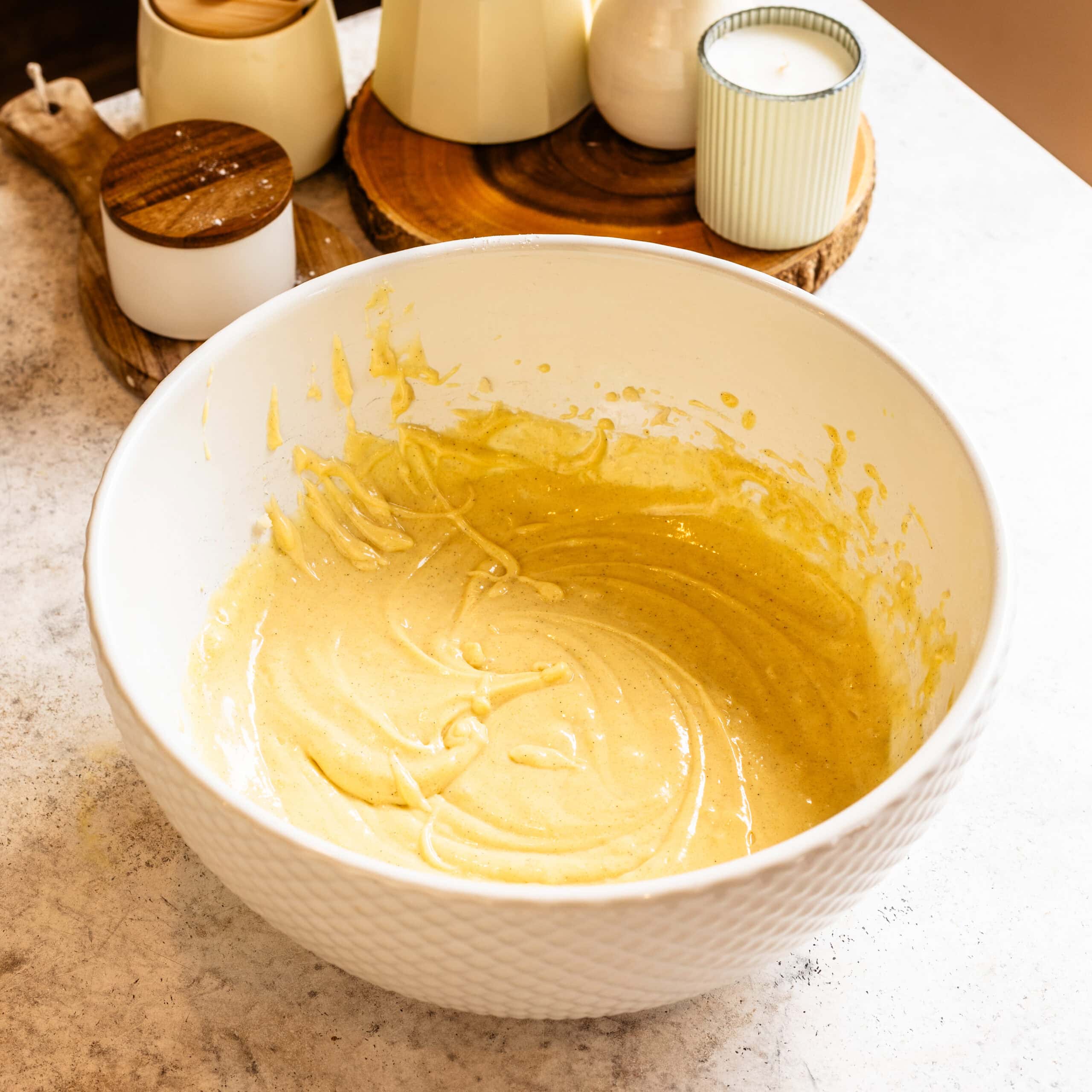
Pour the wet ingredients into the flour mixture. Mix on low speed just until you have a smooth batter, stopping to scrape the sides and bottom of the bowl as needed.
I stop mixing as soon as everything comes together. Continuing to work the batter at this point can make the cupcakes tougher rather than giving us that soft crumb we’re looking for.
Fill & Bake
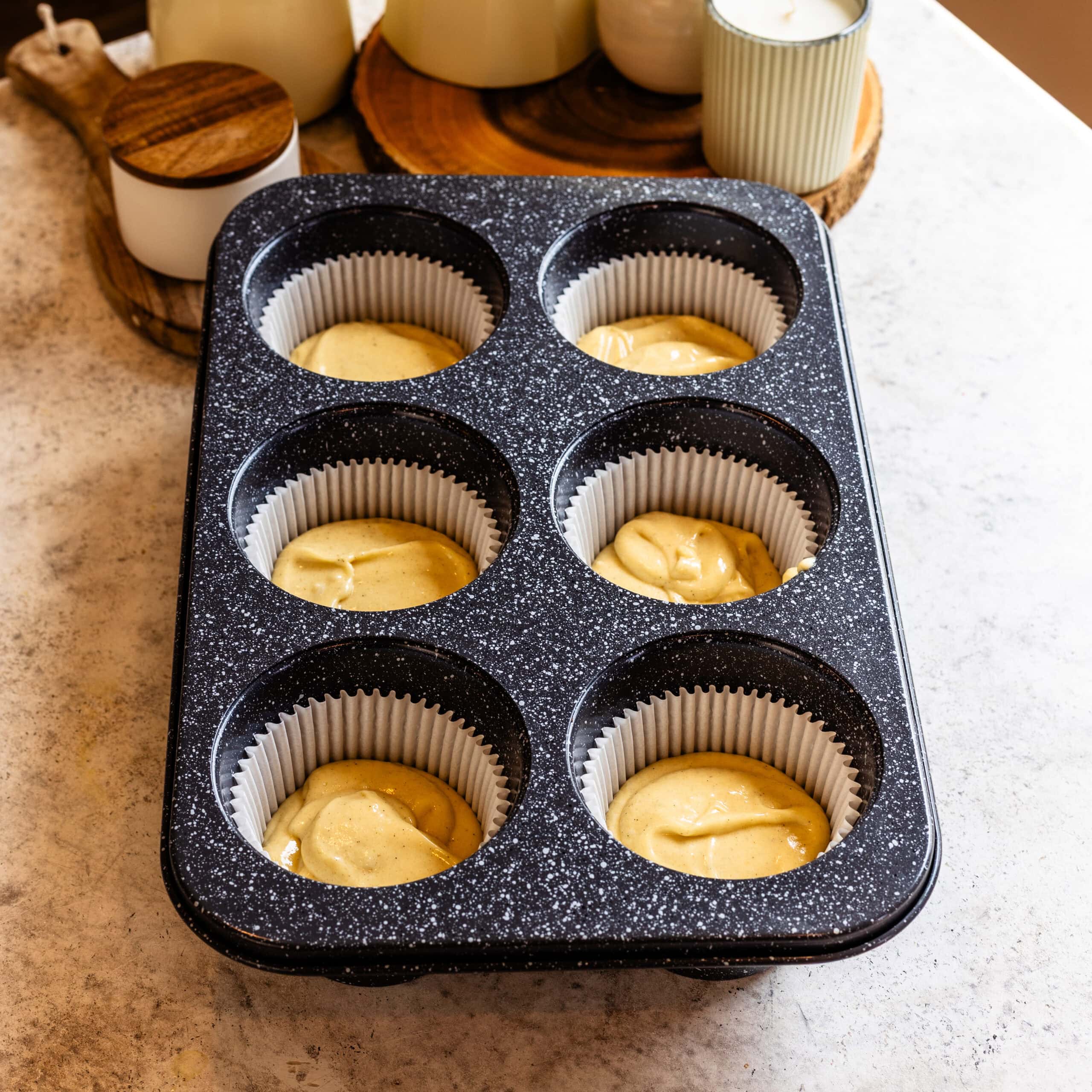
Divide the batter between the prepared liners, filling each about ⅔ full.
Bake regular cupcakes for 18 to 22 minutes. Jumbo cupcakes will need about 22 to 27 minutes.
The cupcakes are ready when the tops spring back when gently touched and a toothpick inserted into the center comes out clean or with a few moist crumbs.
Let them cool in the pan for about 5 minutes, then transfer them to a wire rack to cool completely before filling.
Make the Vanilla Pastry Cream
This is easily the best part and what makes these cupcakes feel extremely elevated! It will need at least 2 hours to chill, so you can make this ahead of time if you like!
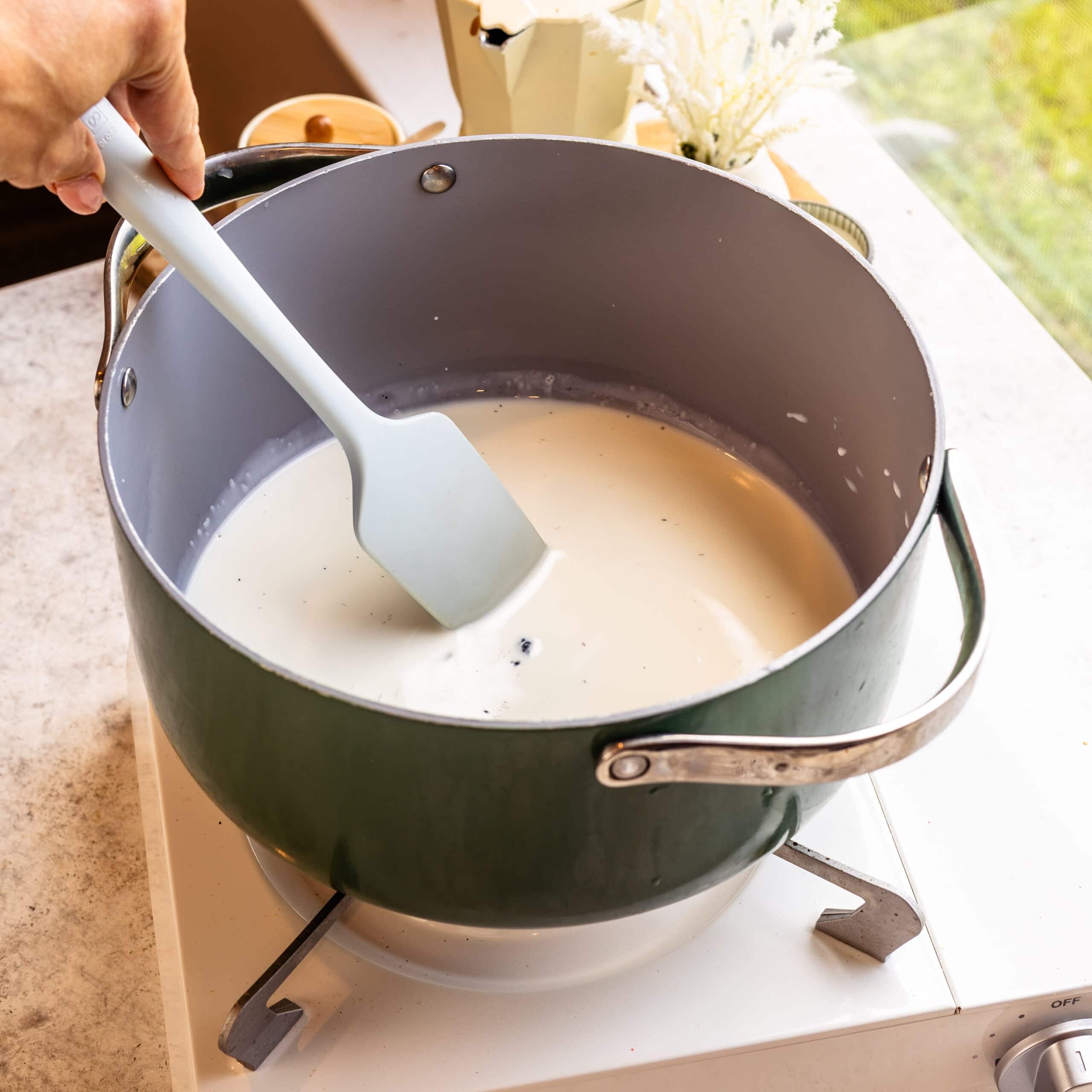
In a medium saucepan, combine the whole milk, heavy cream, half of the granulated sugar, and the scraped seeds from the vanilla bean. If you’re using vanilla bean paste instead, add it here.
When I’m using a whole vanilla bean, I like to add the scraped pod to the saucepan too. It gives us a little more flavor, and I’ll usually save the pod afterward to make vanilla sugar.
Heat the mixture over medium heat until it’s steaming and just beginning to simmer around the edges. Don’t let it come to a full boil. Turn off the heat and set it aside.
Mix the Remaining Pastry Cream Ingredients
Meanwhile, whisk together the egg yolks, remaining sugar, cornstarch, and salt in a medium bowl until smooth.
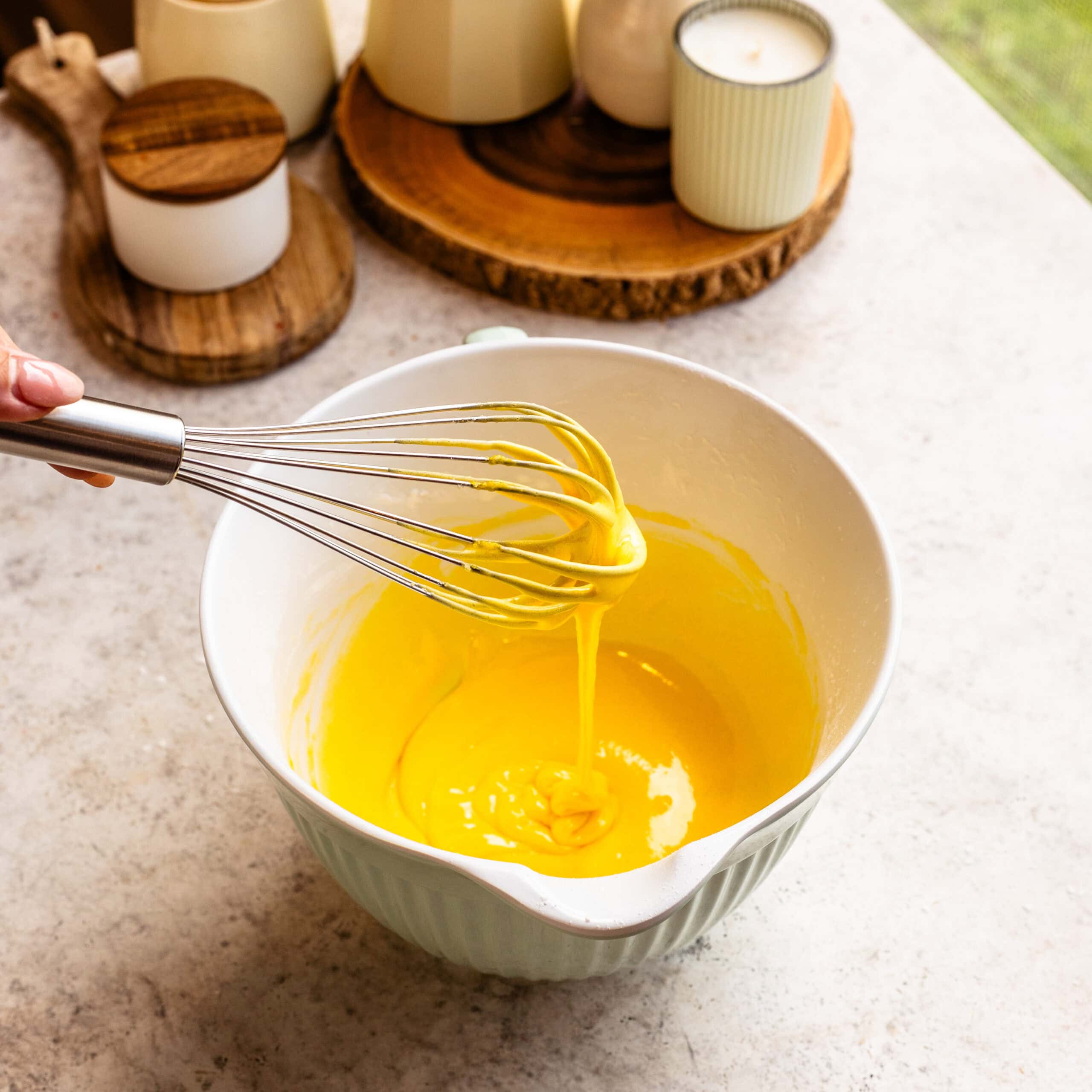
Temper the Yolks
Slowly pour about half of the hot milk mixture into the yolks while whisking constantly. This gradually brings up the temperature of the eggs rather than shocking them with the hot liquid.
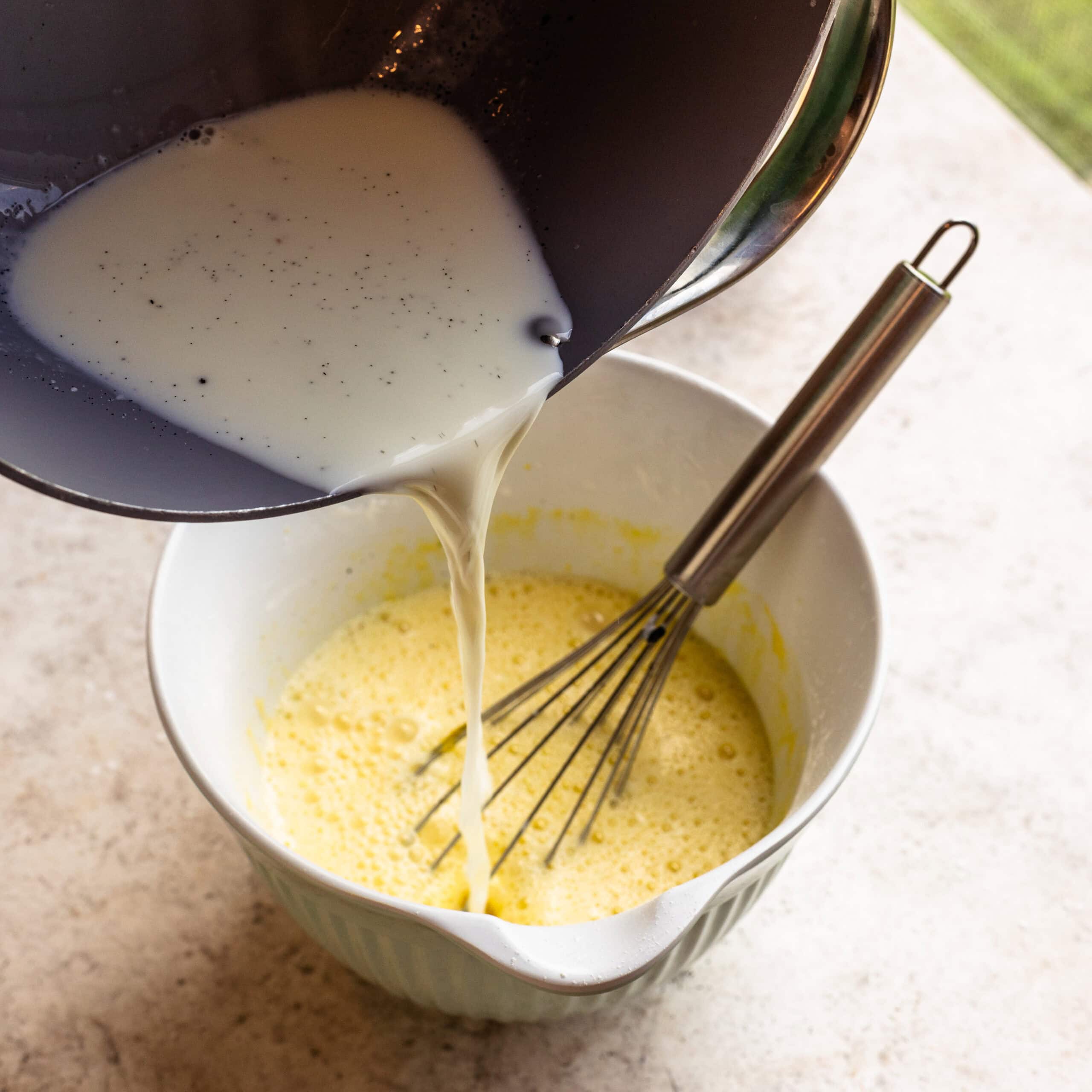
Return the Mixture to the Pan
Pour the tempered egg mixture back into the saucepan through a fine-mesh strainer. If you added the vanilla bean pod, the strainer will catch it.
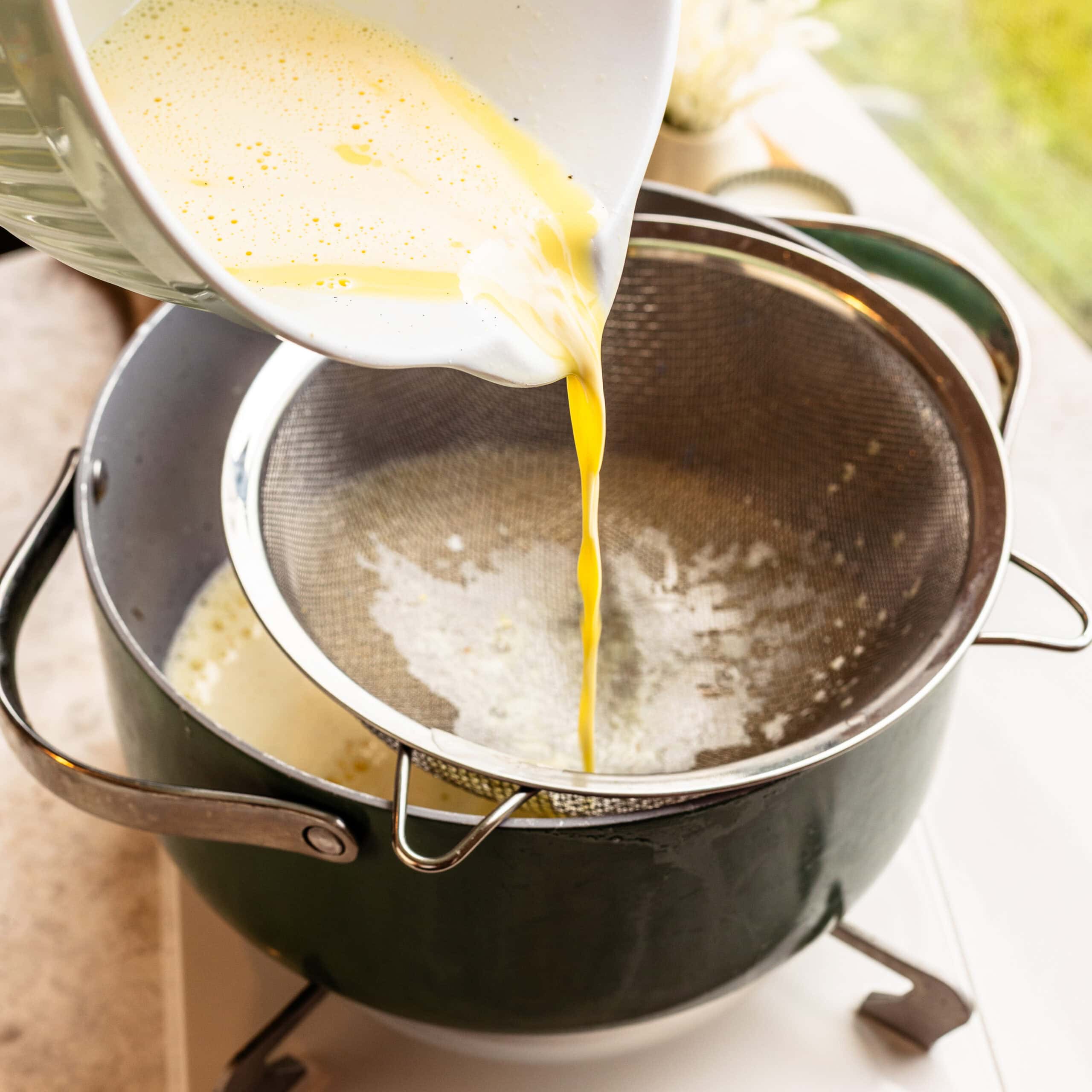
Cook Until Thickened
The pastry cream may start looking slightly uneven or lumpy as it thickens. Keep stirring. It can take several minutes to become completely thick and smooth, and this is one step I don’t rush. The cornstarch needs to cook properly or the pastry cream can be too loose, which will also affect the German buttercream later.
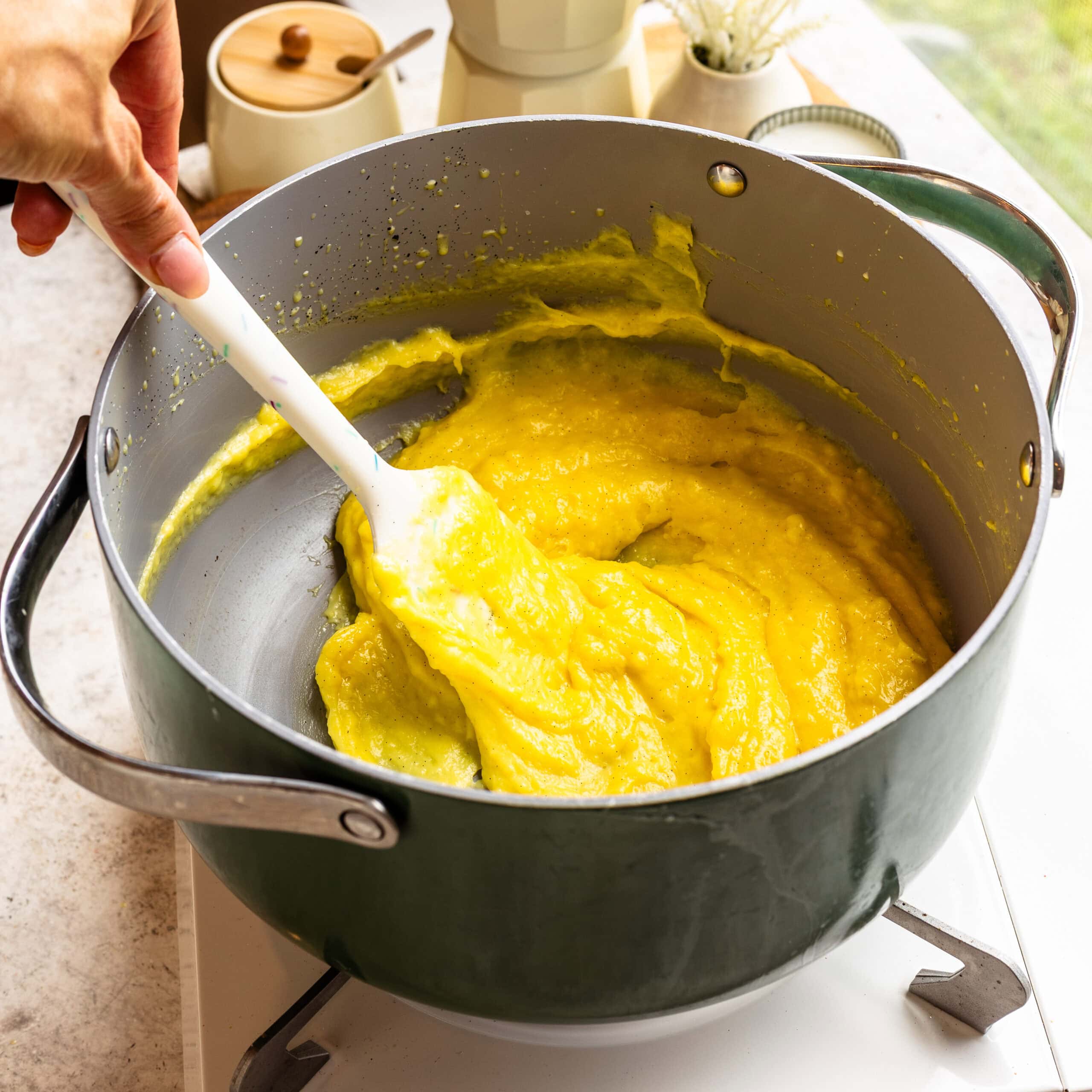
Add the Butter, Vanilla, & Let Cool
Remove the pan from the heat and stir in the butter and vanilla extract until smooth.
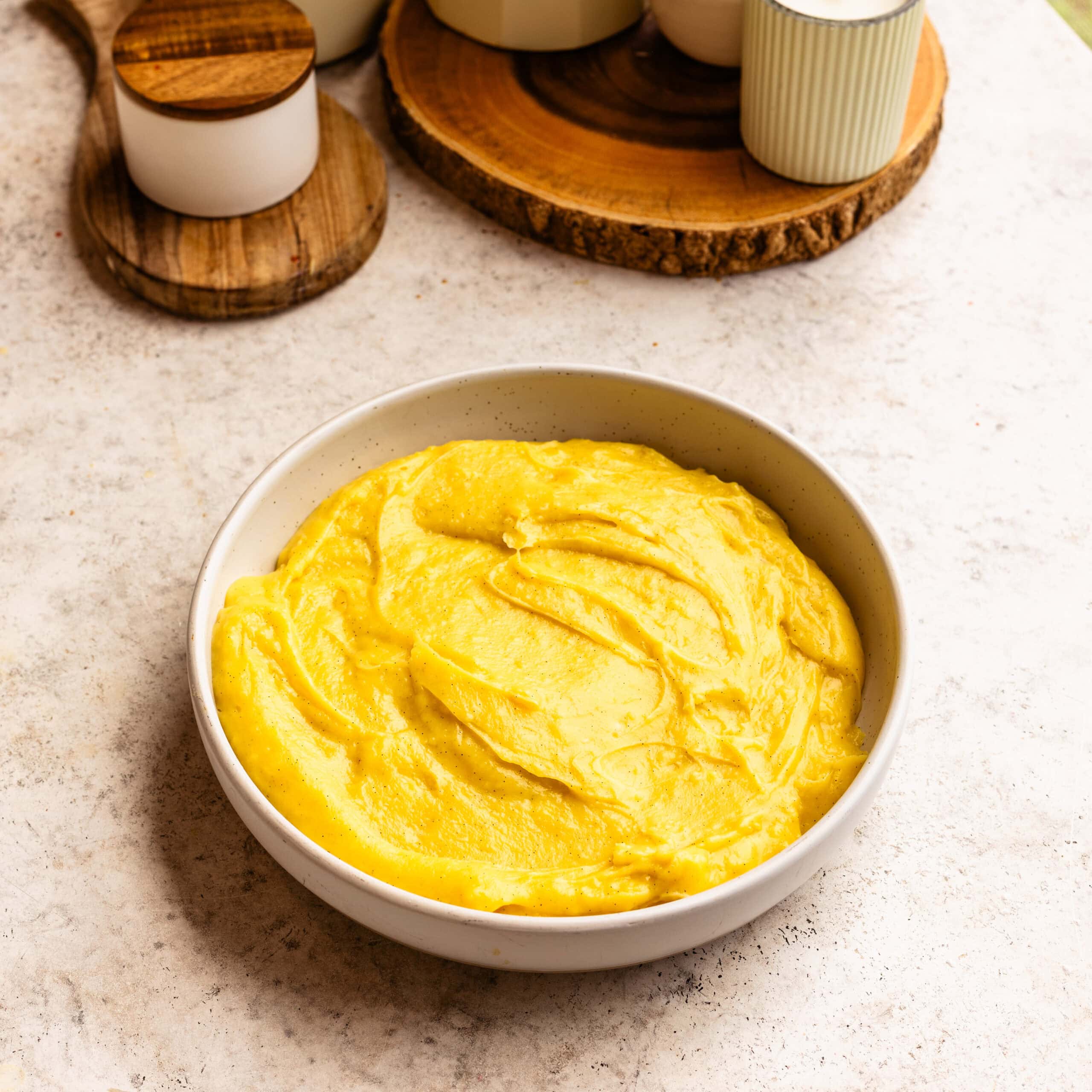
Transfer the pastry cream to a shallow bowl or container and press plastic wrap directly against the surface. Refrigerate for at least 2 hours, until completely chilled.
Once chilled, reserve approximately ¾ cup (200 grams) for filling the cupcakes and measure 1½ cups (350 grams) for the German buttercream.
Make the German Buttercream
German buttercream is one of my favorite frostings when I want something really creamy without a lot of sweetness. Since we’ve already made the pastry cream, most of the work is done.
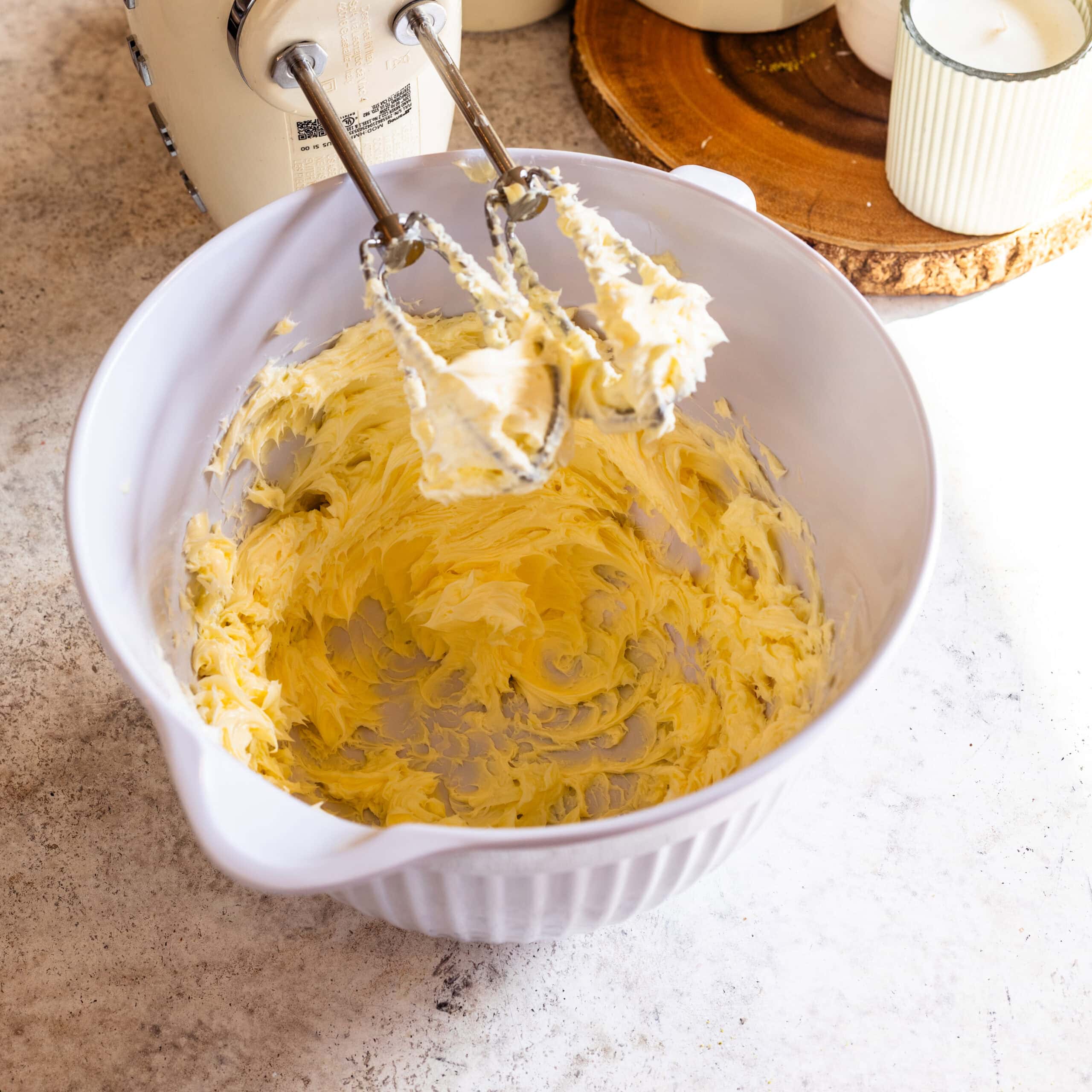
Before starting, let the measured pastry cream sit at room temperature until it’s cool rather than refrigerator-cold. I want the pastry cream and softened butter to be fairly close to the same temperature before combining them.
When ready, beat the softened butter with an electric mixer for 3 to 5 minutes, until very light and fluffy.
Add the Pastry Cream
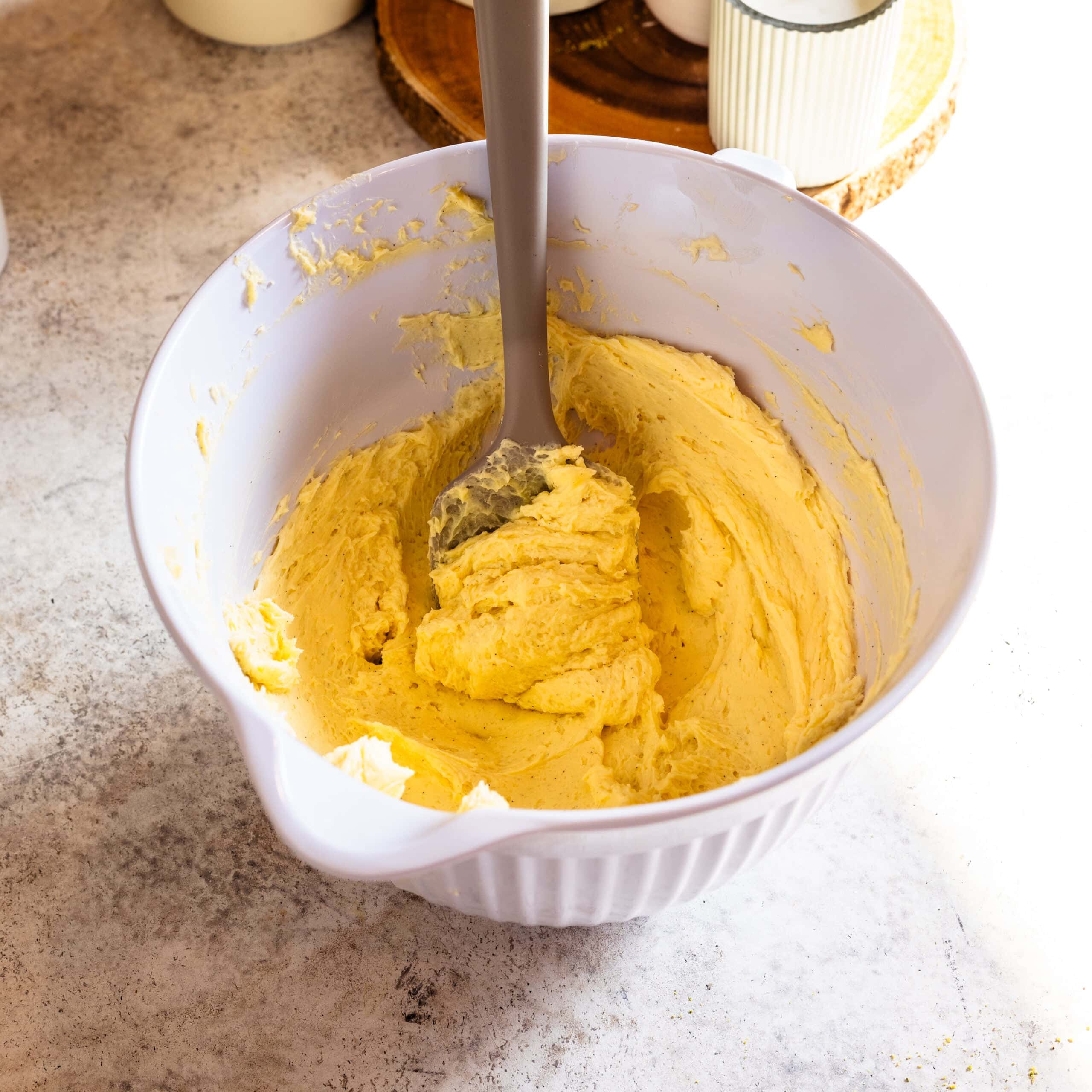
Add the pastry cream and mix until incorporated. Increase the speed to medium-high and beat for another 1 to 2 minutes, until the frosting is fluffy and silky. Add the vanilla extract and mix to combine.
If the buttercream feels too soft for piping, refrigerate it for about 10 to 15 minutes, then beat it briefly again. If you’re having more trouble, scroll lower in the post. I have some troubleshooting tips!
This frosting is much lighter in sweetness than the kind of buttercream I might pair with a richer cake like my Vanilla Bean Caramel Cake, which is one reason I think it works so well with the pastry cream filling here.
Make the Vanilla Bean Ganache
I wanted something to finish these cupcakes that would add another layer of vanilla without covering the entire top in something heavy. A thin drizzle of white chocolate vanilla bean ganache does exactly that.
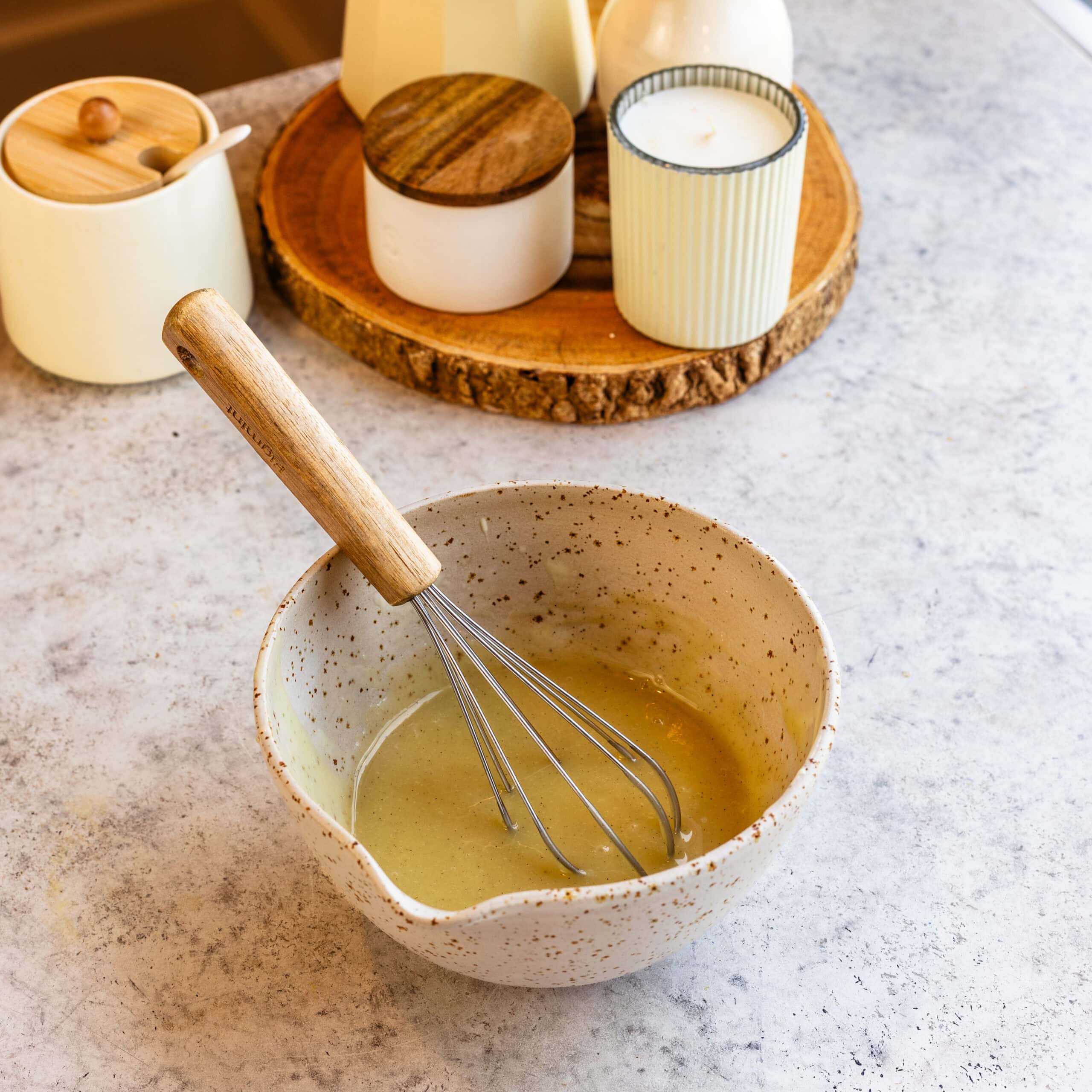
Place the finely chopped white chocolate in a heatproof bowl. Set aside. Heat the heavy cream and corn syrup together until they reach approximately 110°F (43°C).
Pour the warm cream mixture over the melted white chocolate and stir slowly until completely smooth and combined. Add the vanilla bean paste and stir again.
Let the ganache cool at room temperature for about 1 hour, until it’s slightly thickened but still fluid enough to drizzle.
I use corn syrup because it helps the ganache stay smooth and glossy, but it’s optional. The most important thing is letting the ganache cool before it goes anywhere near the buttercream.
Assemble the Cupcakes
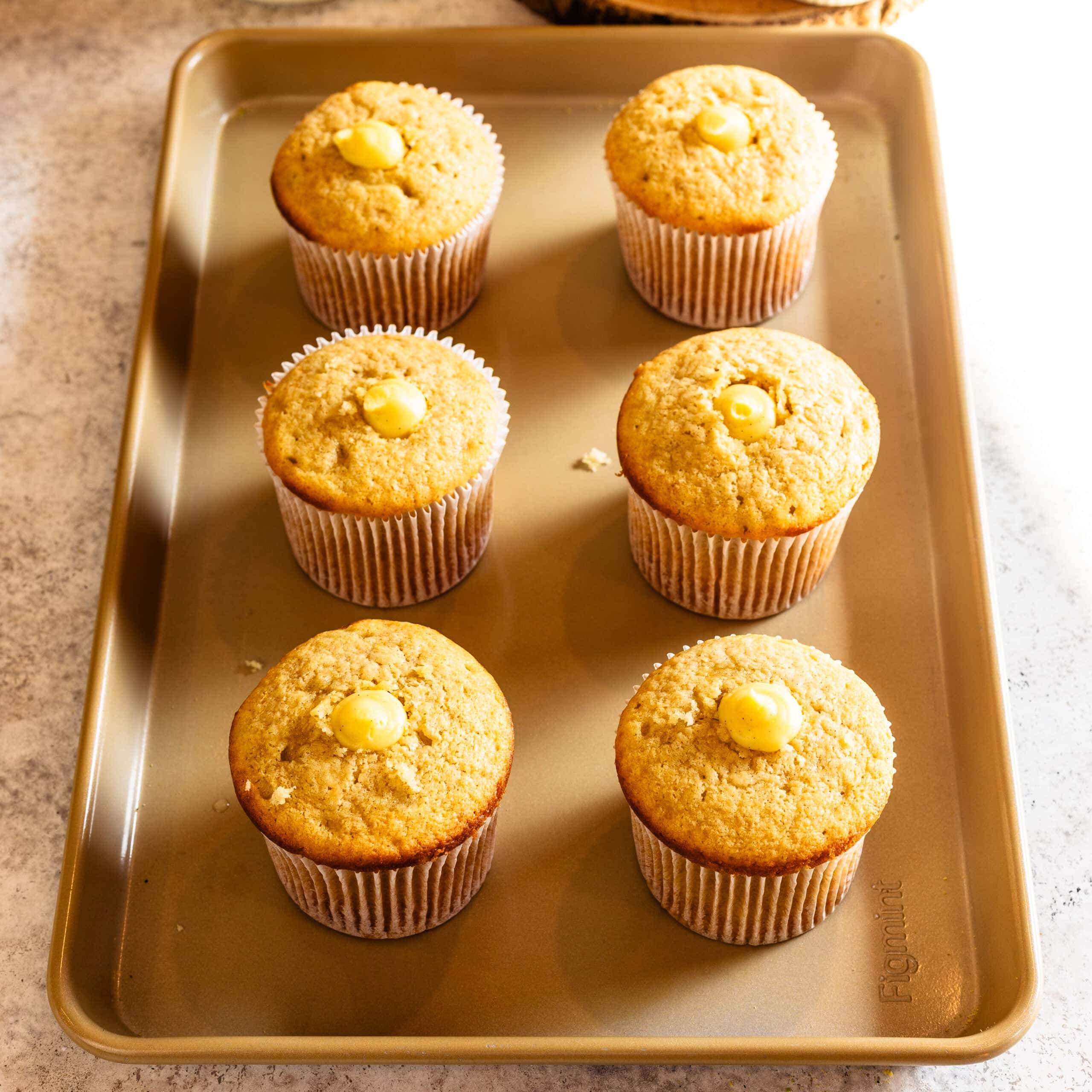
Once the cupcakes have cooled completely, use a cupcake corer or small paring knife to remove a small portion from the center of each one. Don’t cut all the way through the bottom. Fill each cavity with the reserved vanilla pastry cream.
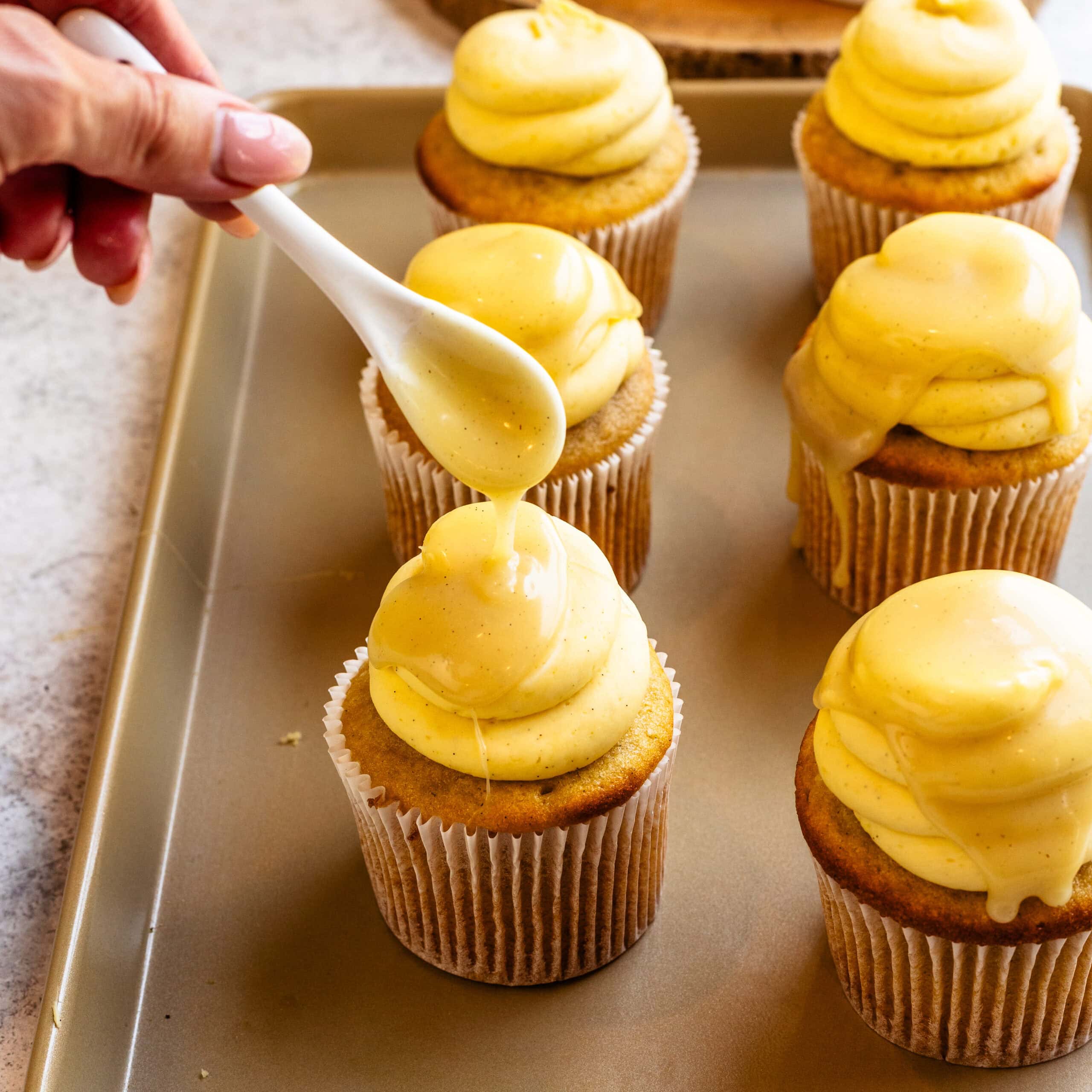
Transfer the German buttercream to a piping bag fitted with a large round piping tip and pipe it over the cupcakes. Refrigerate the frosted cupcakes for about 10 to 15 minutes before adding the ganache. I always do this because it helps the buttercream hold its shape when the ganache is drizzled on top.
Make sure the ganache is cool and only slightly fluid before you use it. If it’s still warm, it can melt the buttercream.
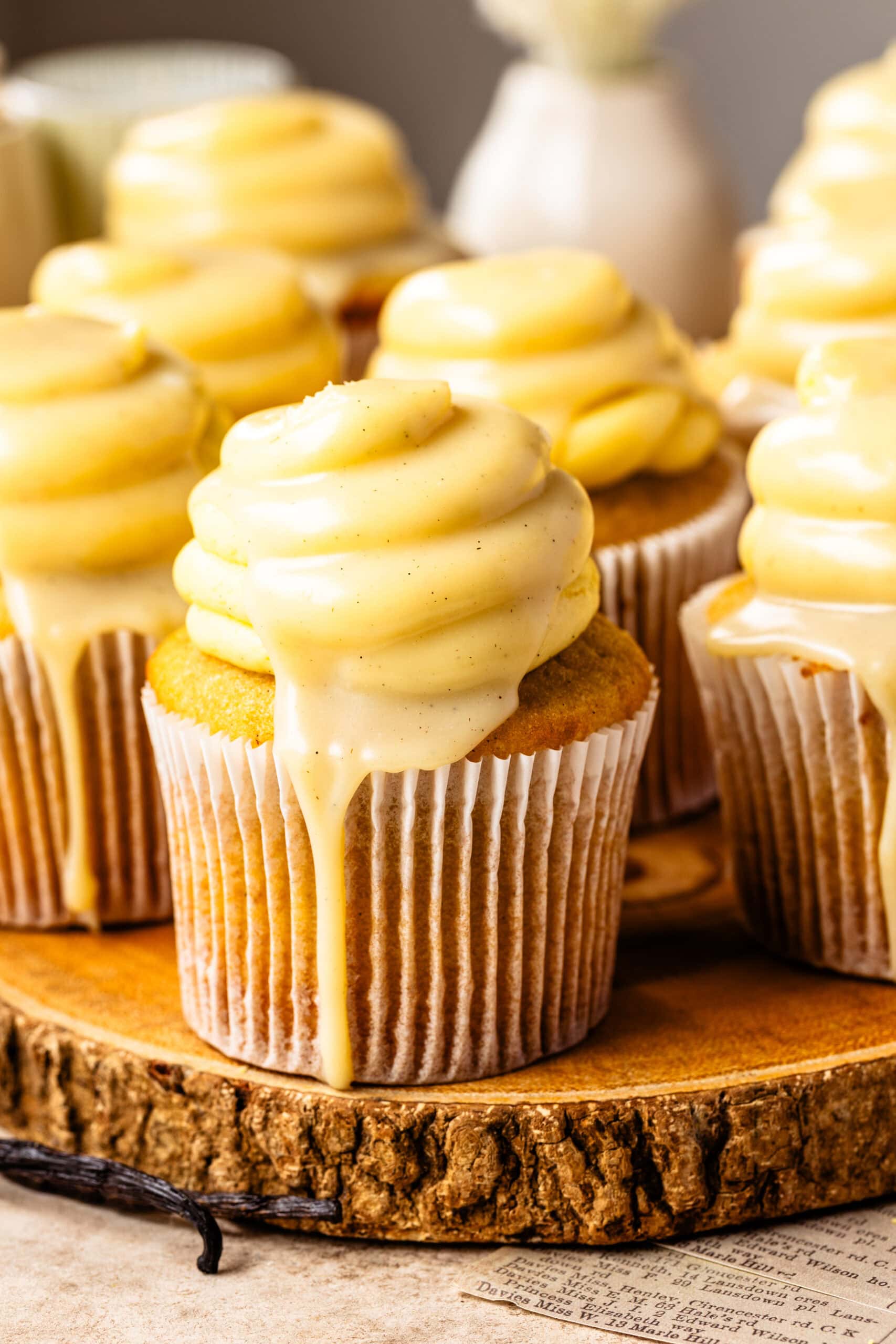
Drizzle the ganache over each cupcake. You can serve them right away or return them to the refrigerator until you’re ready to serve.
My Tips for the Best Vanilla Cupcakes
There are several components to this recipe, but each one is fairly straightforward. These are the details I think make the biggest difference:
- Use room-temperature ingredients for the cupcakes. I get a smoother batter and more even crumb when the egg, yolks, sour cream, and milk aren’t refrigerator-cold.
- Stop mixing once the batter comes together. Overmixing works against the soft, tender texture we’re trying to create.
- Cook the pastry cream thoroughly. This step matters more than it looks. The cornstarch needs enough heat to fully thicken the custard, especially because we’re using that custard to make the buttercream.
- Chill the pastry cream completely. Give it at least 2 hours. I usually make it ahead rather than trying to rush the cooling process.
- Pay attention to temperature when making the buttercream. The butter and pastry cream should be close to the same temperature.
- Use good white chocolate. A bar or couverture containing cocoa butter melts much more smoothly than most white chocolate chips.
- Don’t drizzle warm ganache over the frosting. When in doubt, let it cool a little longer.
- Serve the cupcakes slightly cool rather than refrigerator-cold. I give them about 20 to 30 minutes at room temperature before serving.
Troubleshooting Vanilla German Buttercream
German buttercream is very fixable, and most problems come down to either the temperature of your ingredients or the consistency of your pastry cream.
- If the buttercream is too soft: The pastry cream may not have been cooked long enough to fully activate the cornstarch, which can leave it too loose to properly support the buttercream. It can also happen if the pastry cream was still warm when you added it or if the butter became too soft. Refrigerate the buttercream for 10 to 20 minutes, then whip it again. If the pastry cream itself was very thin even when chilled, the finished buttercream may remain softer than intended.
- If the buttercream looks curdled or separated: This is usually a temperature issue. If the mixture is too cold, gently warm the outside of the mixing bowl for a few seconds while beating until it comes together. If it’s too warm and looks loose or greasy, refrigerate it briefly and then whip again.
- If the buttercream is lumpy: The butter may have been too cold, or the pastry cream may not have been completely smooth before you added it. I like to whisk the pastry cream smooth before combining it with the butter. Small lumps will often work themselves out simply by continuing to beat the buttercream for another minute or two.
Storage & Make Ahead
I actually prefer breaking this recipe up over two days if I have the time. The pastry cream can be made up to 2 days ahead and kept refrigerated with plastic wrap pressed directly against the surface.
The cupcakes can also be baked a day ahead. Let them cool completely, then keep them tightly covered at room temperature until you’re ready to fill them.
Once assembled, the cupcakes need to be refrigerated because of the pastry cream and German buttercream. Store them in an airtight container in the refrigerator for up to 4 days.
For the best texture, take the cupcakes out of the refrigerator about 20 to 30 minutes before serving. I find the cake is softer, the pastry cream is creamier, and the buttercream has a much silkier texture once it loses that refrigerator chill.
Variations & Substitutions
I don’t change much about these because I really want vanilla to remain the focus, but there are a few substitutions that work well if you’re in the mood for something different!
- Cake flour: Substitute 1 cup + 1 tablespoon all-purpose flour (130 grams) plus 2½ tablespoons cornstarch (20 grams).
- Sour cream: Full-fat plain Greek yogurt can be substituted in equal amounts.
- Neutral oil: Vegetable, canola, or grapeseed oil all work. I recommend sticking with something neutral-flavored.
- Vanilla bean paste: Vanilla extract can be substituted in equal amounts. The cupcakes will still have plenty of vanilla flavor, but you won’t get the same vanilla bean flecks.
- Add Berry Jam Instead: Give yourself a little break and skip the pastry cream! The cupcakes can be filled with your favorite berry jam instead!
FAQ
Yes. This is actually how I prefer to make them. Make the pastry cream and bake the cupcakes the day before, then make the buttercream and ganache and assemble everything the following day.
It’s almost always a temperature issue. The pastry cream and butter need to be fairly close in temperature when you combine them. If the buttercream looks cold and curdled, gently warm the outside of the bowl while mixing. If it’s loose and greasy, refrigerate it briefly and then whip it again.
Yes. You can substitute vanilla extract in equal amounts. You’ll lose the visible vanilla bean flecks, but the recipe will still have plenty of vanilla flavor.
I recommend freezing the cupcakes before filling and frosting them. Once completely cool, wrap them well and freeze for up to 2 months. Thaw them completely before adding the pastry cream and German buttercream.
Reuse those Vanilla Bean Pods!
I never like throwing away a vanilla bean pod after using the seeds. Instead, I use it to make vanilla sugar.
Place the scraped pod in a container of granulated sugar and keep it tightly covered. The sugar will gradually absorb the vanilla aroma, and you can use it in cakes, cookies, coffee, or anywhere else you’d normally use granulated sugar.
If you simmered the pod in the pastry cream, rinse away any dairy residue and let the pod dry completely before putting it into the sugar.
More Vanilla Recipes
If you love a really vanilla-forward dessert like this one, try my Vanilla Bundt Cake next for something simple and classic, or the Vanilla Bean Caramel Cake if you want vanilla paired with a richer caramel flavor. My Vanilla Muffins are another good option when you’re looking for something a little more casual but still want that soft vanilla flavor.
If you make these Vanilla Cupcakes, be sure to leave a rating or comment below and let me know how they turned out. And if you share them on Instagram, tag me so I can see them!
Vanilla Cupcakes

Ingredients
Vanilla Cupcake Batter
- 1¼ cups cake flour 150 g
- ¾ cup + 1 tbsp granulated sugar 160 g
- 1¼ tsp baking powder
- ¼ tsp baking soda
- ½ tsp fine sea salt
- 5 tbsp unsalted butter, softened (70 g)
- ¼ cup neutral oil 50 g
- 1 large egg, room temperature
- 2 large egg yolks, room temperature
- ½ cup sour cream, room temperature (120 g)
- ¼ cup whole milk, room temperature (60 ml)
- 2½ tsp vanilla extract
- 1 tbsp vanilla bean paste
Vanilla Pastry Cream
- 1¼ cups whole milk 300 ml
- ⅓ cup heavy cream 80 ml
- ½ cup granulated sugar 100 g, divided
- 1 vanilla bean, split and seeded, or 1 tbsp vanilla bean paste
- 4 large egg yolks
- ¼ cup cornstarch 32 g
- ¼ tsp salt
- 2 tbsp unsalted butter 28 g
- 2 tsp vanilla extract, or more vanilla bean paste
Vanilla German Buttercream
- 1½ cups prepared vanilla pastry cream 350 g
- 1 cup unsalted butter, softened (225 g)
- 1 tsp vanilla extract
Vanilla Bean Ganache
- ½ cup finely chopped white chocolate 90 g
- 3 tbsp heavy cream 45 ml
- 2 tsp light corn syrup, optional (8 g)
- 1 tsp vanilla bean paste
Instructions
Vanilla Cupcakes
- Preheat the oven to 350°F (175°C). Line a regular cupcake pan with 12 liners or a jumbo cupcake pan with 6 liners.
- In the bowl of a mixer, whisk together the cake flour, sugar, baking powder, baking soda, and salt.
- Add the softened butter and oil. Mix on low speed until the butter is evenly distributed and the mixture resembles damp sand. This reverse creaming method coats the flour with fat before the liquid ingredients are added, which helps create a fine, tender crumb.
- In a separate bowl, whisk together the egg, egg yolks, sour cream, milk, vanilla extract, and vanilla bean paste until smooth.
- Add the wet ingredients to the flour mixture. Mix on low speed just until the batter is smooth and combined, scraping the bowl as needed. Avoid overmixing.
- Divide the batter between the prepared liners, filling each about ⅔ full.
- Bake until the tops spring back when gently touched and a toothpick inserted into the center comes out clean or with a few moist crumbs. Regular cupcakes should bake for 18 to 22 minutes. Jumbo cupcakes should bake for 22 to 27 minutes.
- Let the cupcakes cool in the pan for about 5 minutes, then transfer them to a wire rack. Cool completely before assembling.
Vanilla Pastry Cream
- In a medium saucepan, combine the milk, heavy cream, half of the sugar, and the scraped seeds from the vanilla bean, or the vanilla bean paste. If using a vanilla bean, you can also add the pod to the saucepan for extra flavor, or reserve it for making vanilla sugar. See notes.
- Heat over medium heat until the mixture is steaming and just beginning to simmer around the edges. Do not let it come to a full boil. Turn off the heat and set aside.
- Meanwhile, whisk the egg yolks, remaining sugar, cornstarch, and salt in a medium bowl until smooth.
- Slowly pour about half of the hot milk mixture into the yolk mixture while whisking constantly to temper the eggs. Don't pour too fast; otherwise you risk scrambling the eggs! Slow and steady!
- Pour the tempered yolk mixture back into the saucepan through a fine-mesh strainer. If you added the vanilla bean pod to the milk, the strainer will catch it.
- Cook over medium heat, stirring constantly with a spatula, making sure to scrape the bottom and corners of the pan as you go. Keep the heat at medium so the custard thickens evenly without scorching or cooking the eggs too aggressively.
- The pastry cream may look slightly uneven and full of lumps as it begins to thicken. Keep stirring constantly. It can take several minutes to become fully thick and smooth.
- Remove from the heat and stir in the butter and vanilla extract until completely smooth.
- Transfer the pastry cream to a shallow bowl or container. Press plastic wrap directly against the surface to prevent a skin from forming.
- Refrigerate until completely chilled, at least 2 hours.
- Reserve approximately ¾ cup (200 grams) pastry cream for filling the cupcakes. Measure 1 ½ cups (350 grams) for the German buttercream.
Vanilla German Buttercream
- Before making the buttercream, allow the measured pastry cream to sit at room temperature until it is cool rather than refrigerator-cold. The butter and pastry cream should be close to the same temperature for the smoothest buttercream.
- Beat the softened butter with an electric mixer for 3 to 5 minutes, until very light and fluffy.
- Add the pastry cream and mix until incorporated. Raise the speed to medium-high and beat for 1 to 2 minutes until fluffy and silky.
- Add the vanilla and mix to combine.
- If the buttercream feels too soft for piping, refrigerate it for about 10 to 15 minutes, then beat briefly again before using.
Vanilla Bean Ganache
- Place the finely chopped white chocolate in a heatproof bowl.
- Melt the chocolate in the microwave in 15- to 30-second intervals, stirring well between each interval, until completely smooth.
- Heat the heavy cream and corn syrup together until they reach about 110°F (43°C).
- Pour the warm cream mixture over the melted white chocolate.
- Stir slowly until completely smooth and combined.
- Add the vanilla bean paste and stir to combine.
- Let the ganache cool at room temperature until slightly thickened but still fluid enough to drizzle, about 1 hour.
Assembly
- Use a cupcake corer or small paring knife to remove a small portion from the center of each cooled cupcake. Do not cut all the way through the bottom.
- Fill each cavity with the reserved vanilla pastry cream.
- Pipe the German buttercream over the cupcakes. I used a large round piping tip.
- Refrigerate the frosted cupcakes for about 10 to 15 minutes. This helps the buttercream hold its shape when the ganache is added.
- Make sure the ganache is cool and only slightly fluid before drizzling it over the buttercream. If it is warm, it can melt the frosting.
- Drizzle the ganache over each cupcake. Serve right away or refrigerate until ready to serve.

These were delicious!!! I’ve made a lot of cupcakes over the years, but these were moist and rose tall and never sinked in lol
I used your chocolate frosting recipe to pair it with and we’re a big hit!
Thank you so much! 😊 I’m so happy to hear they turned out so well for you! And pairing them with the chocolate frosting sounds delicious! Thanks so much for taking the time to leave a review, it really means a lot. ❤️
This might be a dumb question, but can i use brown sugar in the cupcakes? Or part brown sugar part granulated?
Not a dumb question at all. Very valid. Yes you can. You can substitute either 100% with brown sugar or just some. Here are a few things to consider: the cupcakes might be a bit sticky or heavy with brown sugar if you substitute 100%. So I usually like to have either 50% or 75% of the sugar be brown sugar, and the rest white. This will help preserve the structure, but it will add flavor and moisture to the cupcakes.
Hello – your calculator that allows you to double or triple the recipe does not increase the grams. Unfortunately I was relying on it and using grams. Please fix so others don’t ruin their batch like you did.
Do you have a chocolate Swiss meringue buttercream recipe?
Hi my Swiss meringue butter cream got curdled and my butter was very cold . So was it because of that??
yes that would be why
Hello, can I ask a weird question? is there a difference between vanilla cupcakes and vanilla bean cupcakes? thank you
Vanilla bean would have actual vanilla bean seeds in it, and vanilla cupcakes can have just the extract.
Que delícia 😋😋😋😋 são os melhores!!
I’ve tried a couple of swiss meringue buttercreams and they’d never turn out. But this recipe it always turns out flawless I make 1.5 batches of this cream to cover cakes and decorate! Thank you for your tips and amazing recipe!
Hi! Could I make this into a cake? (1 layer 10 x 10) is there anything I would have to change?
This recipe makes about 3.5 cups of batter, and you’d need about 10 cups of batter to fill a 10 inch cake pan.
Ficaram fantásticos!!!!!!!