

Lemon Curd Recipe
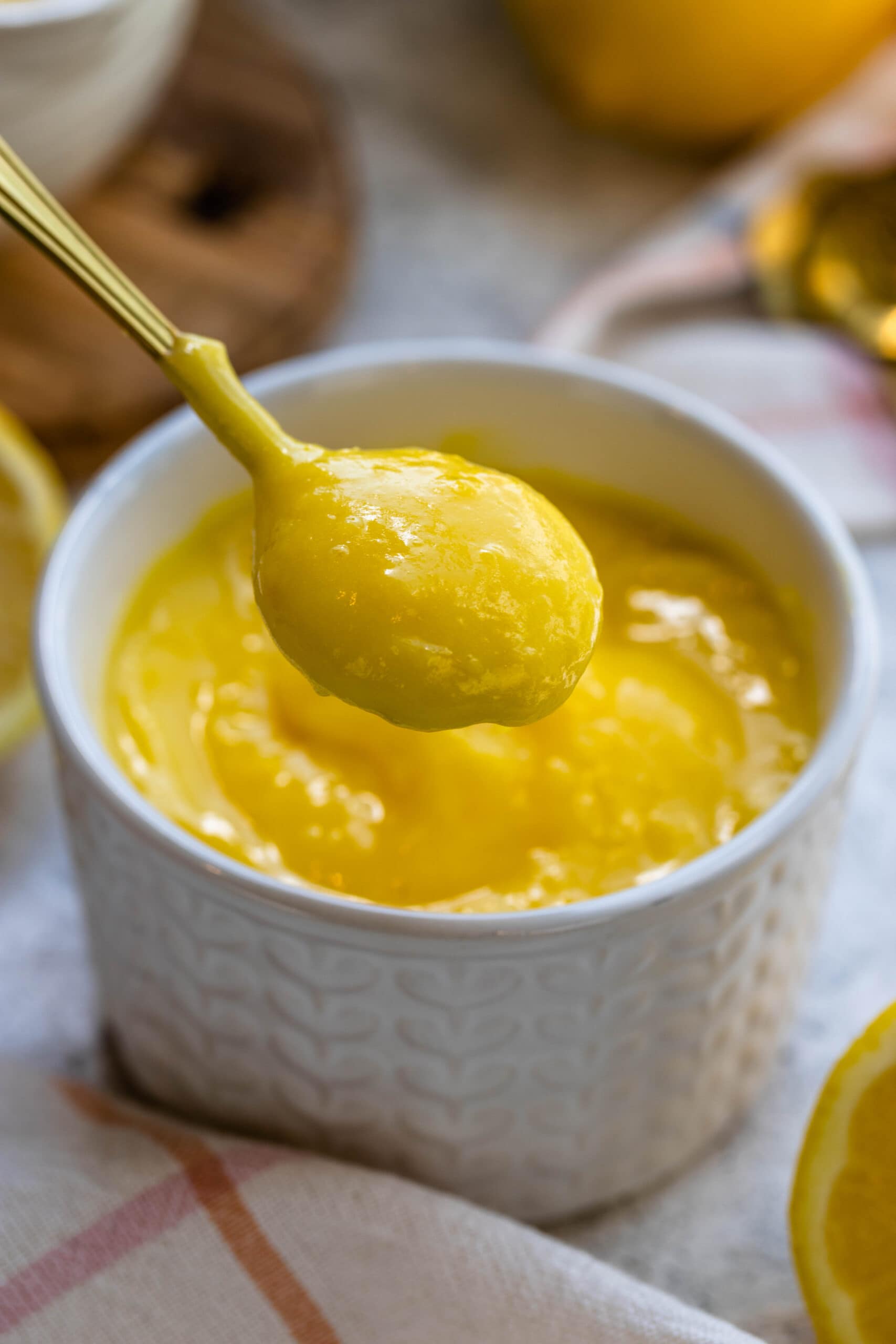
I make lemon curd this way every time because it’s faster, smoother, and doesn’t have that eggy aftertaste that can sometimes happen. It’s bright, tangy, and thick enough to use in just about anything—from cakes to macarons to just eating it straight off a spoon.
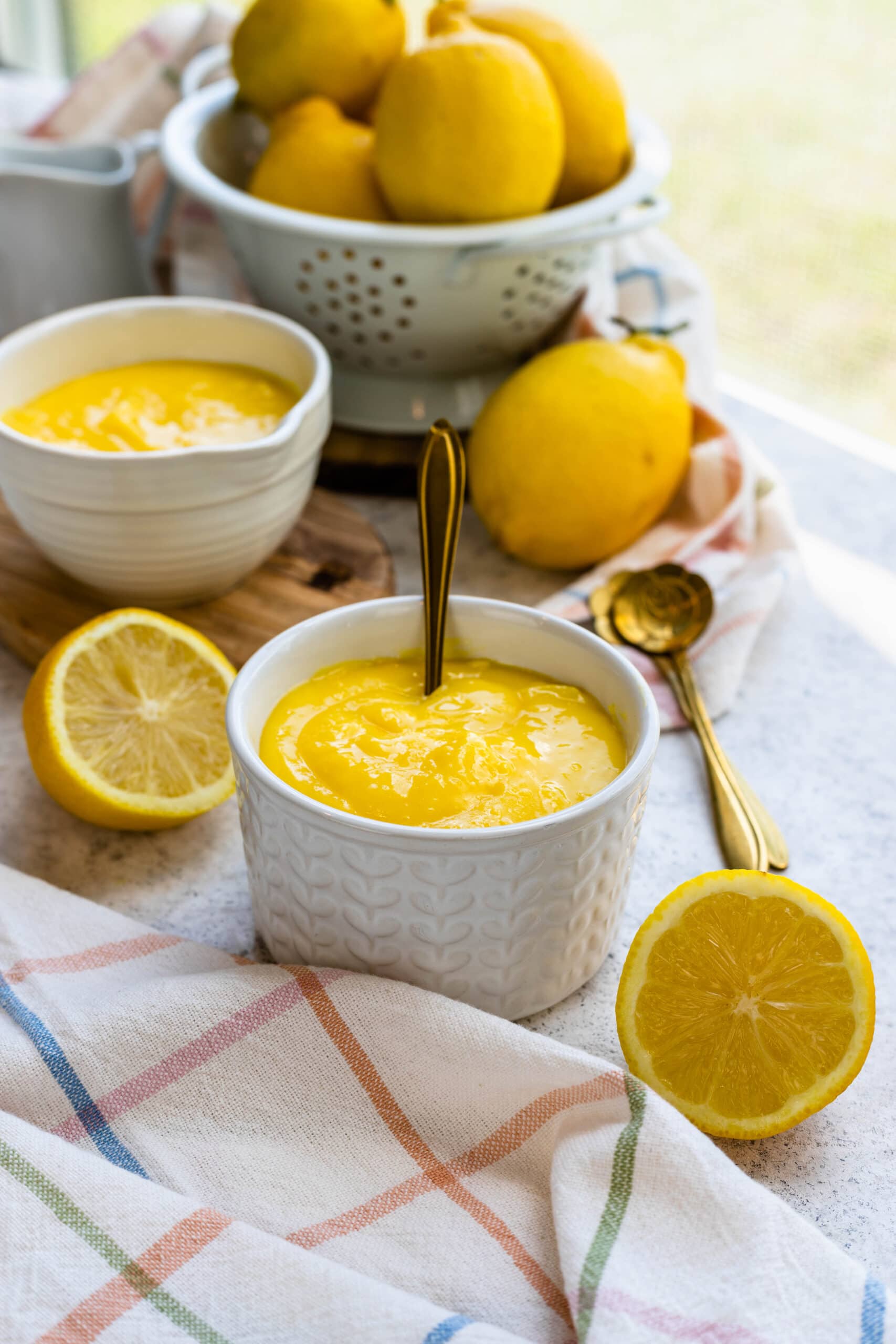
Why you’ll love this lemon curd
This version skips the double boiler and uses whole eggs, which keeps things simple while still giving you a silky, rich curd.
- No double boiler needed—this comes together directly on the stove
- Smooth, thick texture without being overly heavy
- Uses whole eggs (no waste, no eggy flavor)
- Comes together quickly compared to traditional methods
- Perfect for filling, topping, or layering into desserts.
What ingredients do I need?
- Lemons: Fresh lemon juice and zest are essential here. Bottled juice just doesn’t give the same brightness.
- Eggs: I use whole eggs instead of just yolks. It creates a balanced texture and avoids that overly rich, eggy taste.
- Butter: Adds richness and helps create that smooth, creamy consistency. Use unsalted so you control the flavor.
- Sugar: Balances the tartness and helps with structure.
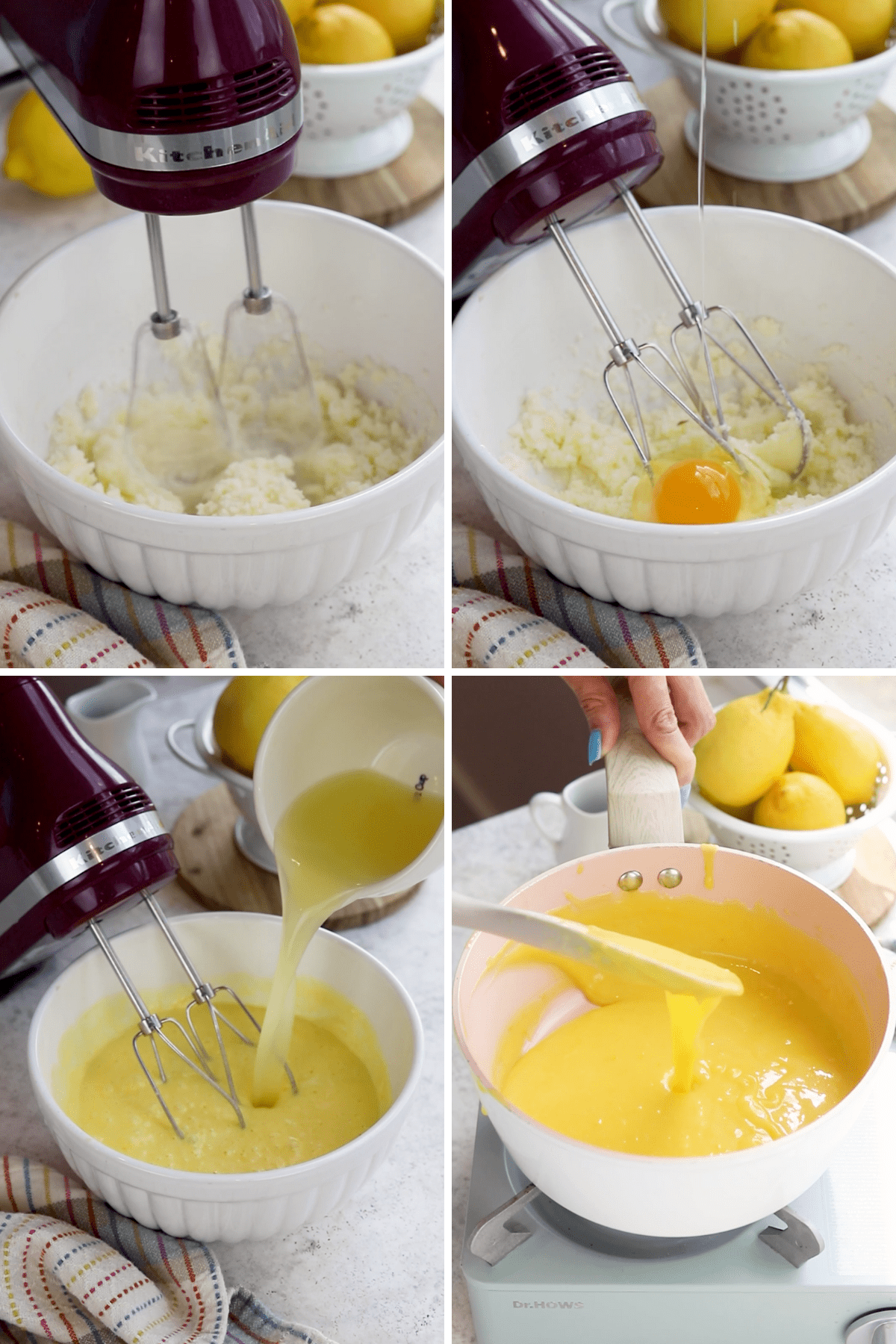
How I make lemon curd
If you’ve never tried making lemon curd before, I highly recommend you read my tips below! This method is easy and reliable!
- Zest and juice the lemons: I always zest first, then juice—it’s much easier that way.
- Beat the butter and sugar: In a bowl, I mix the butter and sugar until combined.
- Add the eggs: I beat the eggs into the butter and sugar mixture. This step is key—it helps prevent the curd from tasting eggy later.
- Add lemon juice and zest: Mix everything together until smooth.
- Transfer to a saucepan: Use a heavy-bottom stainless steel pan—this helps prevent curdling.
- Cook over medium-low heat: I cook it slowly, stirring constantly. Don’t rush this step or turn up the heat.
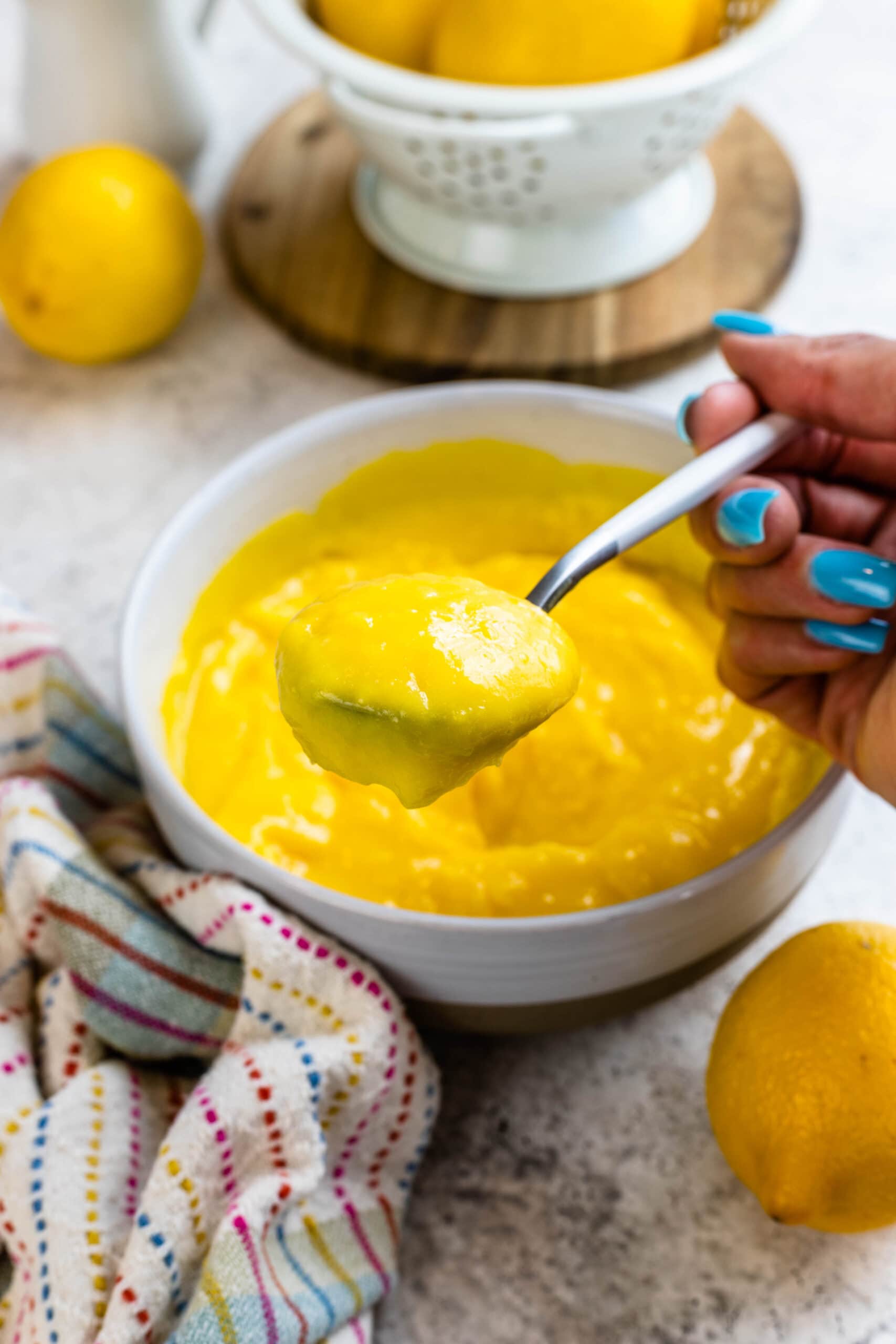
- Cook until thickened: After about 10–15 minutes, it should thicken enough to coat the back of a spoon, or reach about 170°F.
- Cool the curd: Transfer to a bowl and let it chill in the fridge for a few hours. I place plastic wrap directly on the surface to prevent skin from forming.
Expert Tips
- Always beat the eggs with the butter and sugar before cooking
- Use a heavy-bottom pan to avoid curdling
- Keep the heat low and steady—don’t rush it
- Stir constantly while cooking
- Avoid aluminum pans—they can give a metallic taste
Storage
Store in an airtight container in the fridge for up to 2 weeks. You can also freeze it for up to 1 month—just thaw it in the fridge overnight before using.
This post may contain affiliate links. I earn a commission from qualified purchases. Please read our Privacy policy here.

Ways to use lemon curd
I use this all the time in different desserts:
- Fill cupcakes or layer into cakes. Like in my Lemon Curd Cake or Lemon Cheesecake
- Spread on scones or toast
- Use in macarons or cookies like my Lemon Poppyseed Cookies or Lemon Macarons
- Swirl into yogurt or cottage cheese
- Spoon over pancakes, waffles, or ice cream
- Let it shine in Lemon Meringue Pie!
FAQ
It’s probably caused by your lemon juice reacting with the metal in your bowl. Similarly, metal can react with the acid in the eggs and sugar in your curd. While lemons have a natural sulphuric flavor, their high acid content can react with aluminum. To prevent this, use stainless steel pans or glass mixing bowls. If you’re using a metal bowl, consider a non-reactive pot instead.
Lemon curd will smell eggy if you over cook it, or let it cook too fast. That’s why you should use a pan with a heavy bottom, and make sure to cook it low and slow.
You can if you want it extra smooth, but keep in mind it will remove the zest.
Vegan Lemon Curd is a little more complicated, but it absolutely can be done. Instead of using just unsalted butter, substitute coconut butter or vegan margarine with cornstarch, cold water and a pinch of turmeric for color. My Lavender Lemon Vegan Macarons use a vegan lemon curd and it is scrumptious!
A few recipes you might like
If you’re making lemon curd, you’ll probably want to use it in something like my Strawberry Lemonade Macarons, Lemon Poppy Seed Cupcakes, Lemon Blackberry Cake, or Mascarpone Puff Pastry.

Make sure to save this recipe, pin it to your pinterest board or share it on your Facebook feed so you always have it with you! With simple ingredients, this lemon curd recipe is something you can always throw together when you need to come up with a dessert quickly.
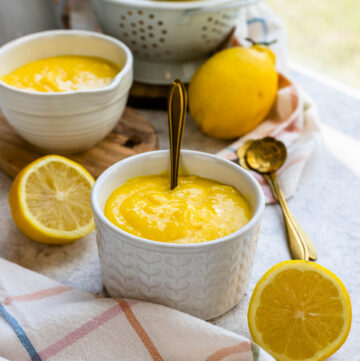
Lemon Curd

Ingredients
Lemon Curd
- 6 tbsp unsalted butter at room temperature 84 g
- 2/3 cup granulated sugar 133 g
- 4 large eggs
- 1/2 cup lemon juice 120 ml
- 3 tbsp lemon zest 15 g
- 1/4 tsp salt
Instructions
Lemon Curd
- To make the Lemon Curd, in a bowl, beat the butter with an electric mixer for 1 minute. Add the granulated sugar and beat for another minute, until creamy.
- Next, add the eggs, one at a time, and mix, making sure the first egg is incorporated before adding the next. Add the lemon juice, zest and salt and mix on low speed until combined. The mixture might look separated and that’s okay.
- Pour it into a small saucepan with a heavy bottom and place it over medium-low heat.
- Make sure you don’t let the curd come to a boil at any point, and don’t stop stirring at any point either, because that will lead to the eggs curdling, and the curd will taste like scrambled eggs.
- Heat the curd slowly until a candy thermometer reads 170ºF (76ºC). If you don’t have a thermometer, the curd should be thick and coat the back of a spoon. Once you achieve a nice thick curd, remove it to a bowl and place it in the fridge for at least 2 hours. The curd will set and get very thick as it cools.

I made this 48 hours ago, it was PERFECT. I used a thermometer and removed from heat at 170. Strained through a fine mesh sieve, placed in a glass bowl and covered with Saran Wrap. Last night I made your lemon cheesecake recipe, and tonight I pulled out the curd to top it. It’s a little grainy now! Why? What happened? It wasn’t before! Can I fix it somehow?
The graininess you noticed later most likely happened because of sugar crystallization or slight protein tightening over time. Even well-made lemon curd can develop a slightly grainy texture after a couple of days in the fridge, as the acidity continues to act on the eggs and sugar can sometimes recrystallize. To fix it, you can try whisking it or blending it briefly (an immersion blender works great) to restore its smoothness.I hope this helps!
I’ve made this curd and it’s delicious! Just wondering if it can be frozen?
Yes definitely! Up to 1 month
easy to make. can this be used in recipes where you must bake pie crust and meringue?
I do have a recipe for that here: https://www.piesandtacos.com/lemon-tart/
This is a really nice, tart lemon curd recipe!
My only issue is it is SO insanely lemon-ey. Personally, it is too much lemon zest. I used a little over half and it still was more than enough. It also definitely needs to be strained after its cooked or the zest will give it a grainy, unpleasant texture.
This is an amazing recipe, with clear instructions. I especially like that you gave a temperature indication for heating the curd. I’ll be using this for lemon poppyseed macarons. Thank you!
Love your easy to make Lemon Curd recipe. Thank you for the heads up on using a stainless steel pan versus aluminum. Since switching to a heavier stainless steel pot my lemon curd no longer has a metal taste. Now knowing the temperature to reach is 170 degrees Fahrenheit I have confidence knowing it will be a thick curd. I find your recipe 100 percent full proof. Thanks again and again for sharing your knowledge .
Is it possible to half the sugar if you want a less sweet curd?
I dont know how its going to impact the taste, but you can try.
Oh my goodness, this was so easy to make! I followed the instructions exactly and it worked perfectly. IT IS SO DELICIOUS! I think I could eat it by the spoonful straight from the jar! So good!
Yay so happy you liked it!!! Thank you!
Delicious recipe. Easy to follow instructions.
The best lemon curd recipe ever!! Thank you so so much x
Thank you!!! 🙂
6 tbsp of lemon zest? How many lemons for this?
depends on the size of the lemon. about 5-6 medium lemons but it will vary
Can you do this in a microwave instead of the stove top?
i havent tried it! if i try soon ill update the recipe with microwave instructions. I have to make more curd this week, so maybe Ill give it a go.
Hi, can I make this curd with just the yolks, using whites for meringue on top? Thanks!
I havent tried this recipe with just the yolks, sorry!
I used 3 yolks and two whole eggs. Turned out great. I had a lot of extra yolks around.
Que creme gostoso… imagino num bolo, no doce folhado… que coisa boa!!
Can you use this same process for other types of curd?
most definitely