

Dulce de Leche Recipe
Hello friends! Today we’re diving into the ultimate dulce de leche recipe made from sweetened condensed milk. This guide walks you through the three most popular methods—oven, stovetop, and pressure cooker—so you can choose the one that gives you the exact texture and color you’re after. Each technique has its own timing, quirks, and ideal uses, and I’ll break down what to expect from each.
Whether you grew up eating dulce de leche (like I did in Brazil) or you’re discovering it now, this guide will help you make a perfect batch every time and show you simple, delicious ways to use it.
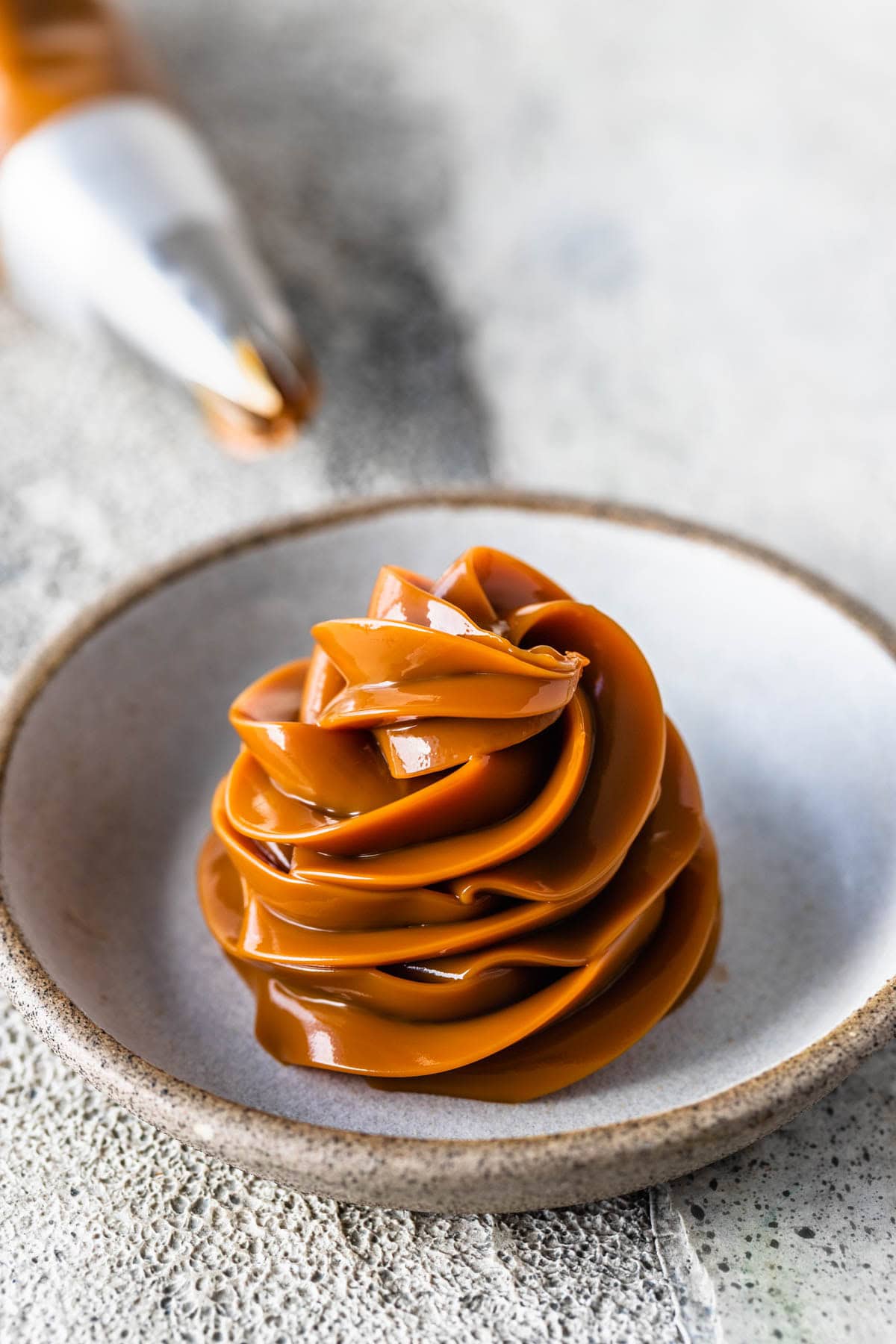
What is dulce de leche?
Dulce de leche is a Latin America staple, basically a caramel made from sweetened milk! It was created in Argentina, however, it’s widely popular across all Latin America.
This post may contain affiliate links. I earn a commission from qualified purchases. Please read our Privacy policy here.
I grew up in Brazil, where it’s is extremely popular and abundant, we call it “doce de leite”. And we put it on everything! In Spanish dulce means sweet, and leche means milk. The translation would be something like: “candy (or dessert) made from milk”
Traditionally, dulce de leche is made by slowly cooking down milk and sugar, at a very low heat. However, my very favorite way of making it is from a can of condensed milk.
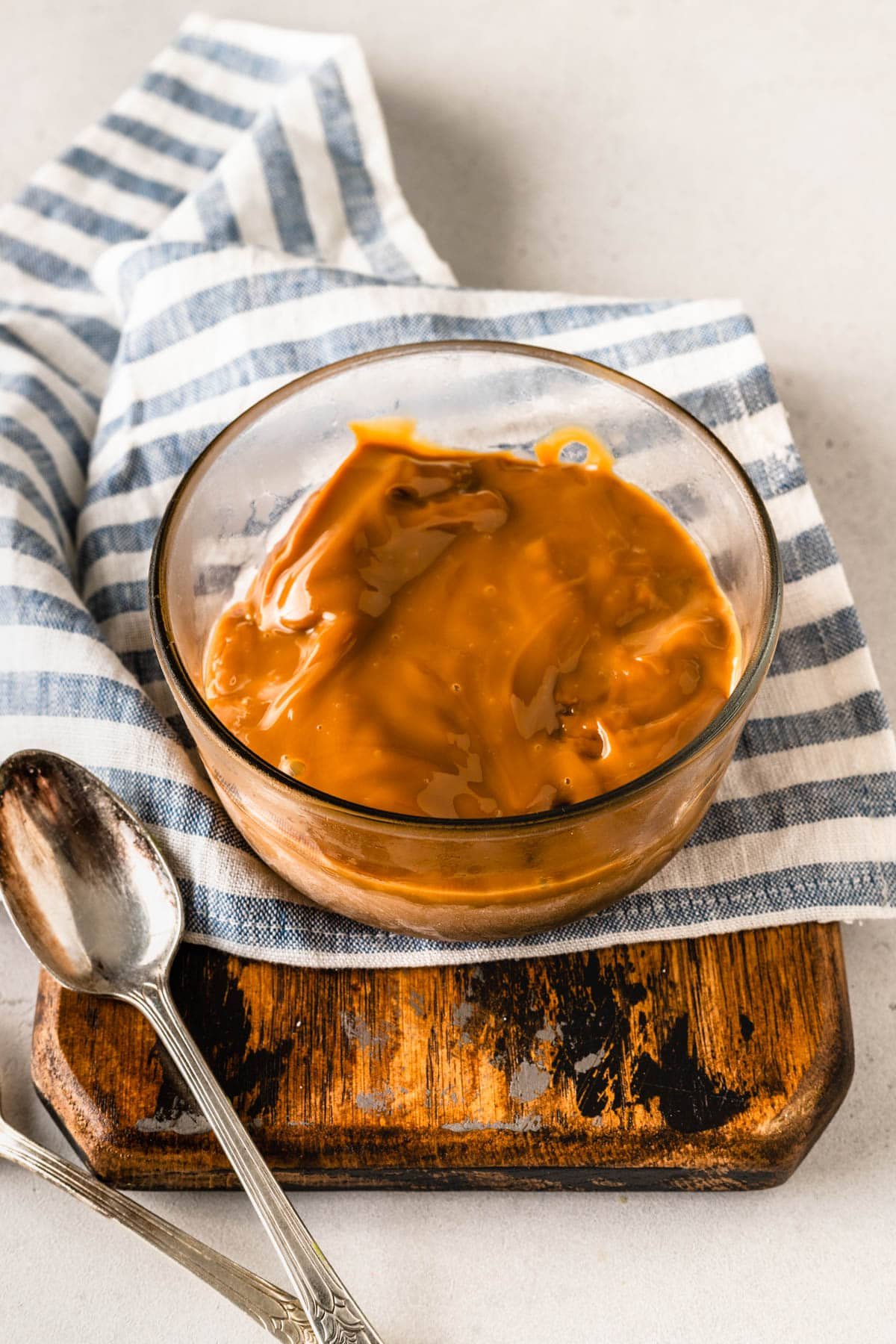
Is dulce de leche the same as caramel?
No—they’re different. Caramel is made by cooking sugar until it melts and browns, sometimes with water, butter, or cream added. Dulce de leche starts with milk and sugar and cooks low and slow until it thickens and deepens in color.
The result is a completely different flavor and texture—richer, thicker, and more fudge-like, with warm, toasty notes. Caramel is lighter, sweeter, and made in a fraction of the time.
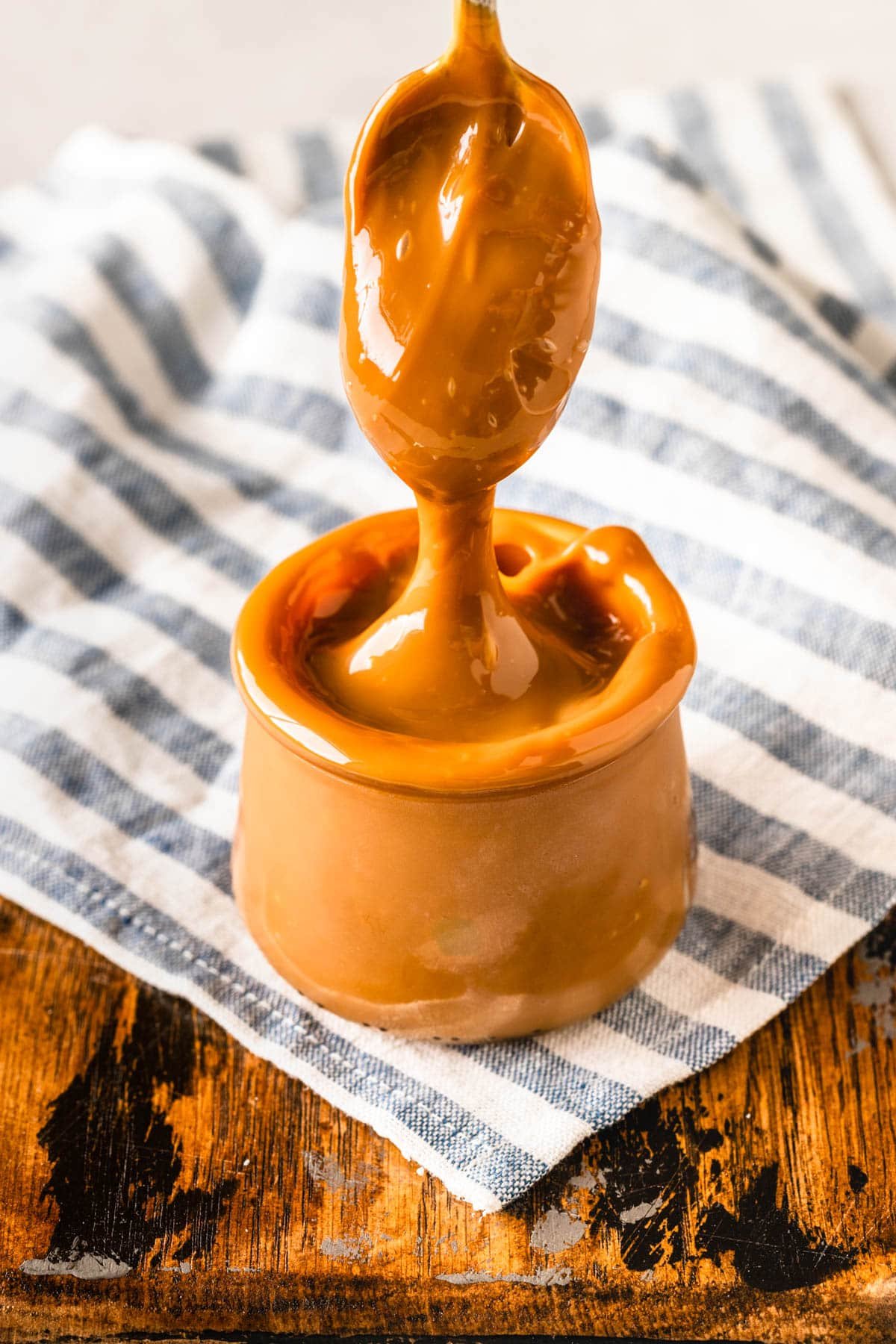
How to make dulce de leche?
Like I said above, dulce de leche is made of sweetened milk, cooked down until Maillard reaction occurs between the sugar and milk.
The byproducts of the Maillard reaction are the complex flavors and aromas and the caramelization.
But basically, what you have to understand is that: the longer you cook, the darker and the thicker the dulce de leche will be. However, each method has its own cooking time in order to achieve the really thick and rich results.
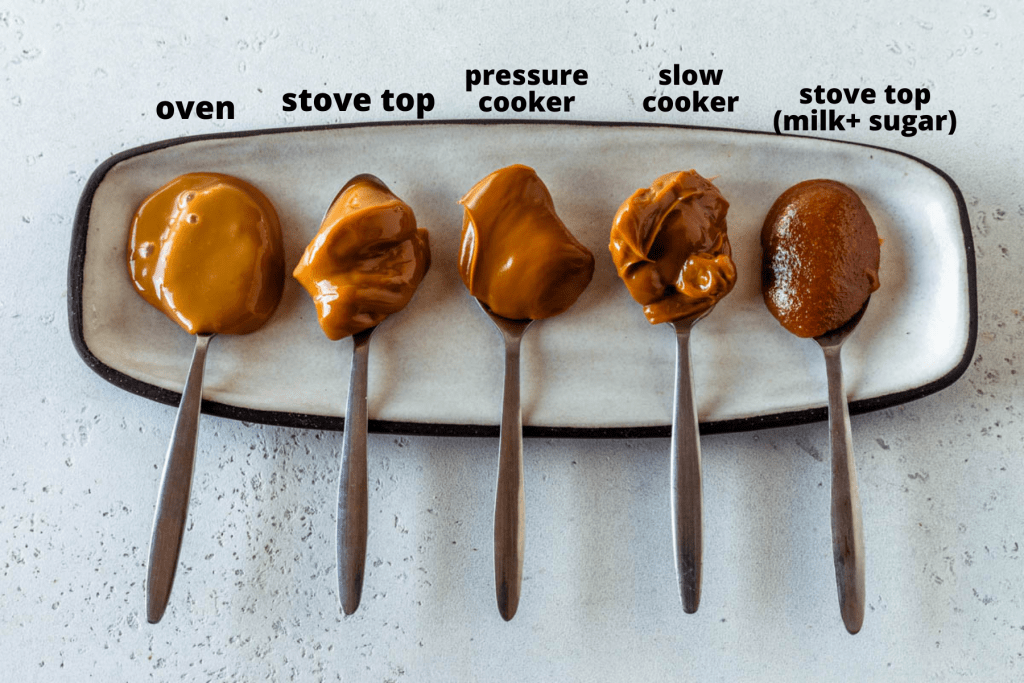
Let’s talk about the methods. On this video on YouTube, I am comparing the 5 different methods.
Oven method
This method involves baking sweetened condensed milk in a roasting pan, covered with foil, and set inside a hot water bath.
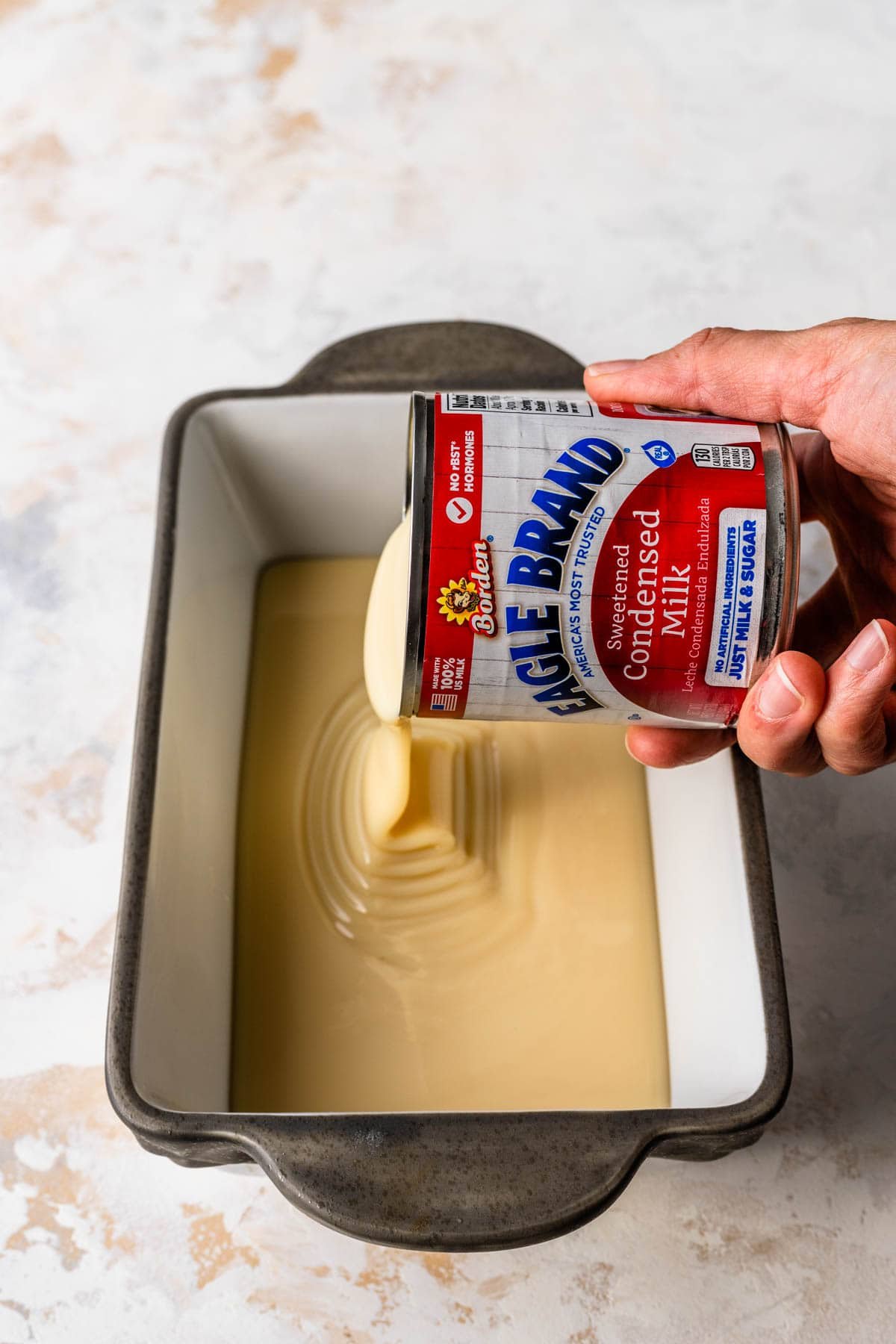
It’s a safe, reliable way to make dulce de leche, but the texture tends to be a little lumpy and not as thick, since you can’t let it cook too long without risking scorching. It works well for general use, but it won’t always give you the ultra-smooth consistency you’d want for frosting or glaze.
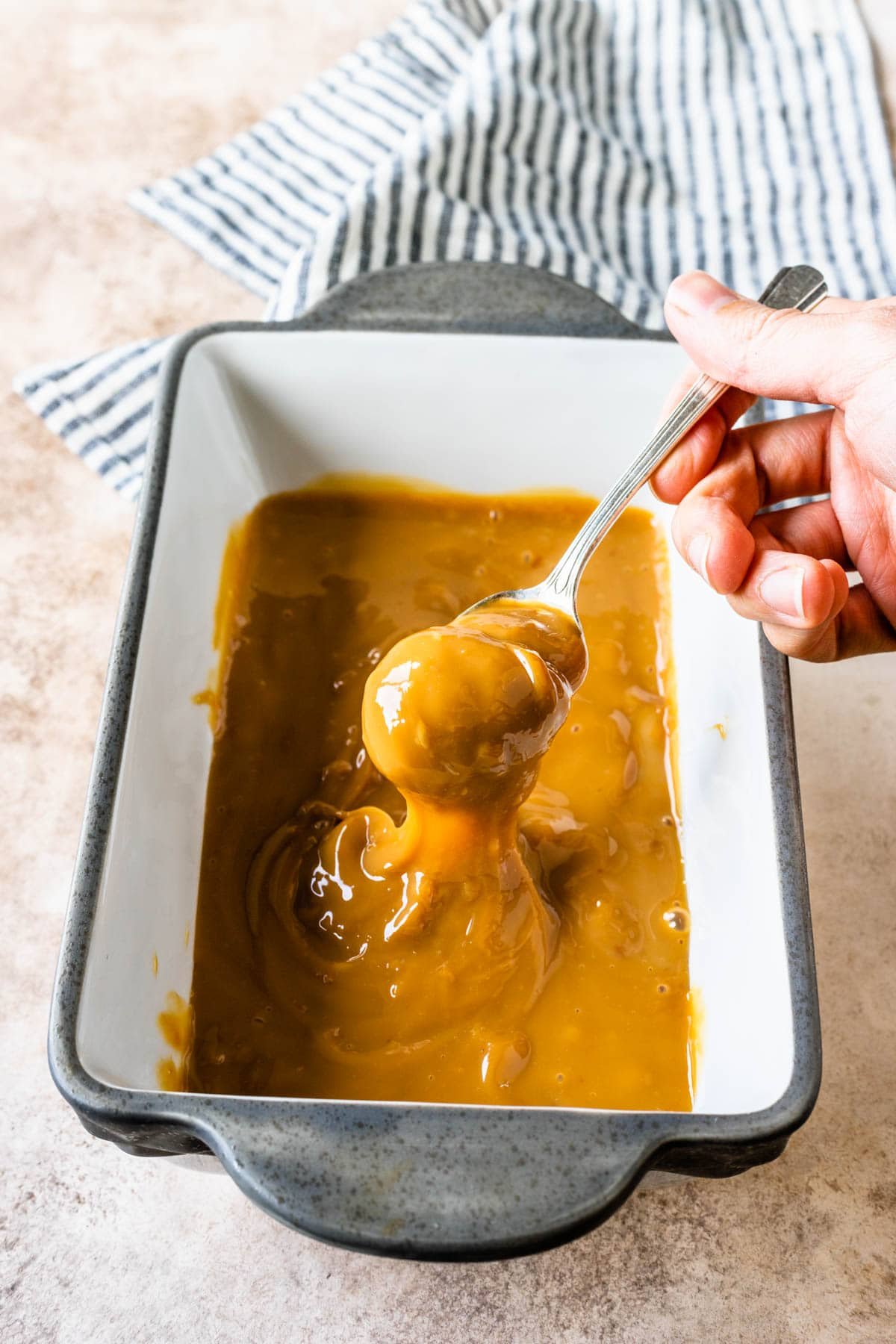
Stove top method
This method uses a sealed can of sweetened condensed milk simmered in a large pot or heavy-bottomed saucepan for several hours. The can must stay fully submerged the entire time, so you’ll need to check periodically and add hot water as needed. After cooking, let the can cool completely before handling or opening it.
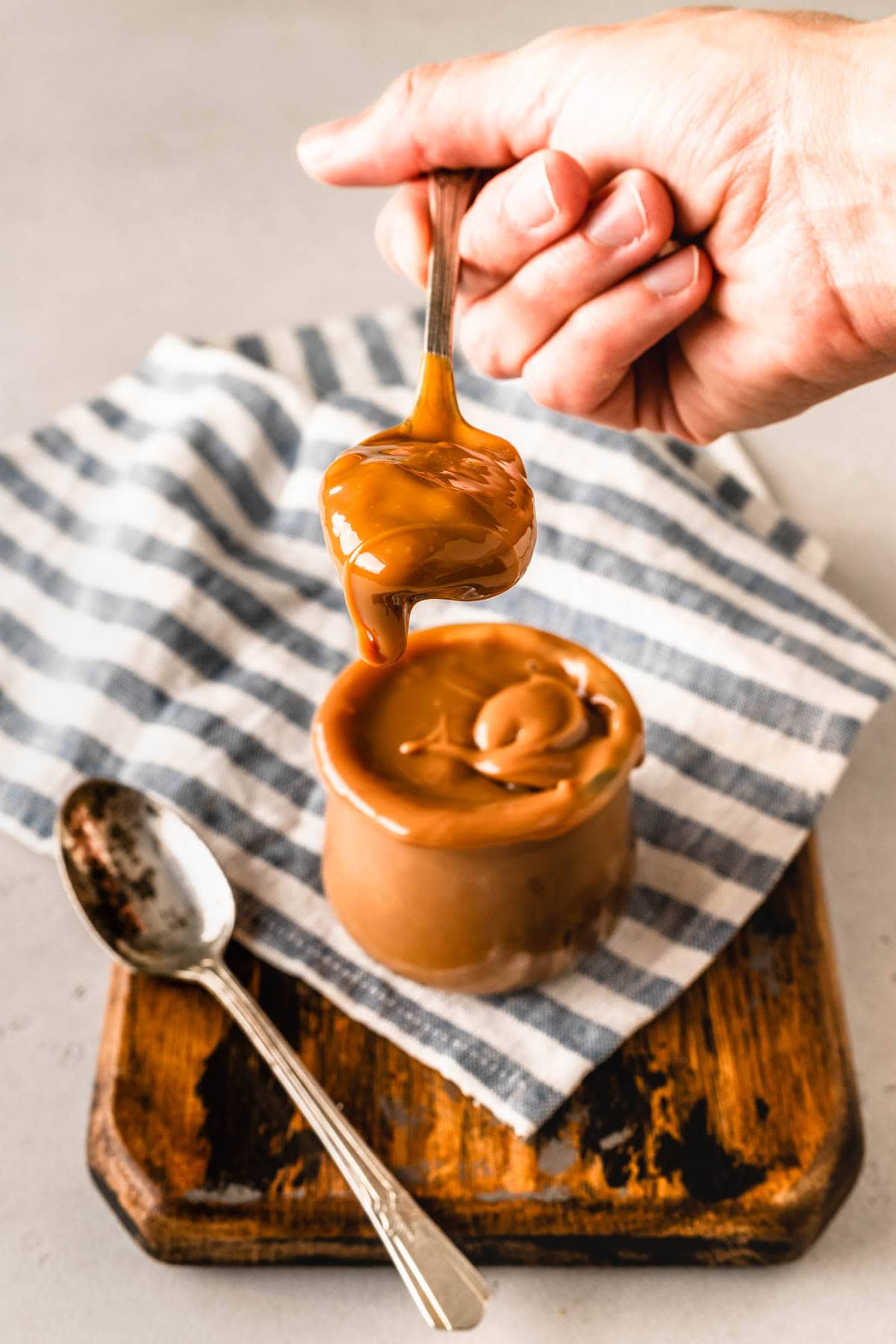
The result is a thick, dark, deeply flavored dulce de leche. The longer it simmers—typically anywhere from 2½ to 4 hours—the darker and firmer it becomes. As long as you keep the can fully covered with water and at a gentle simmer, this method produces a consistently rich, caramelized result.
Pressure cooker method
This is my favorite method by far. It involves simmering a sealed can of sweetened condensed milk in a large pot or heavy-bottomed saucepan for several hours. The can must remain fully submerged, so check it periodically and top off the pot with hot water as needed. Once the cooking time is up, let the can cool completely before touching or opening it.
What you get is a thick, dark, intensely flavored dulce de leche. The longer it cooks—usually between 2½ and 4 hours—the deeper the color and the firmer the texture. As long as the can stays covered with water at a gentle simmer, this method delivers a reliably rich, caramelized result.
Slow cooker method
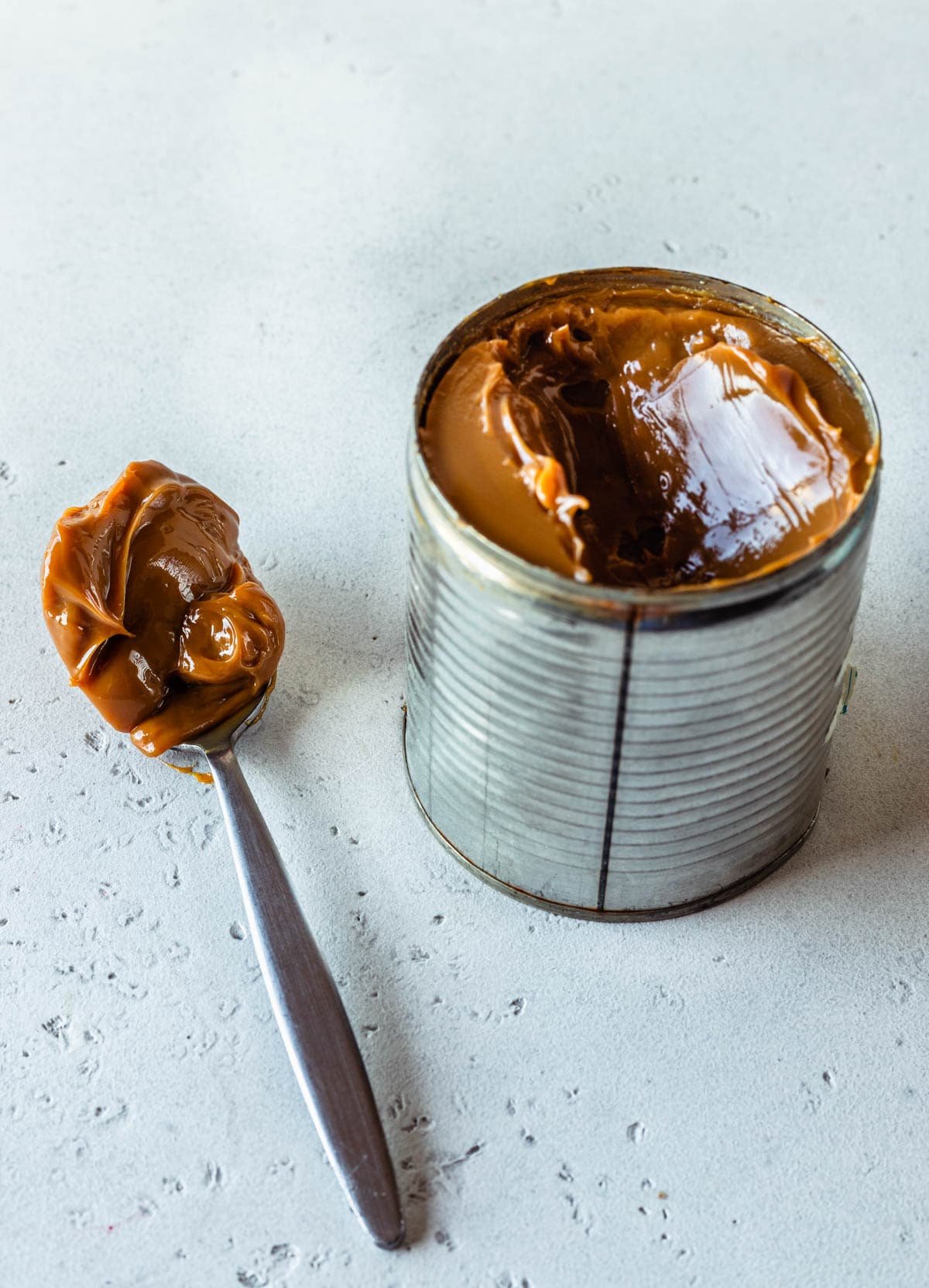
In the slow cooker method, you also cook a sealed can of condensed milk, but this time in the slow cooker, for 8 hours, and always making sure the can is completely cooled down before moving it and opening.
The results: a very thick and luscious dulce de leche as well! The downside: it takes forever to make it.
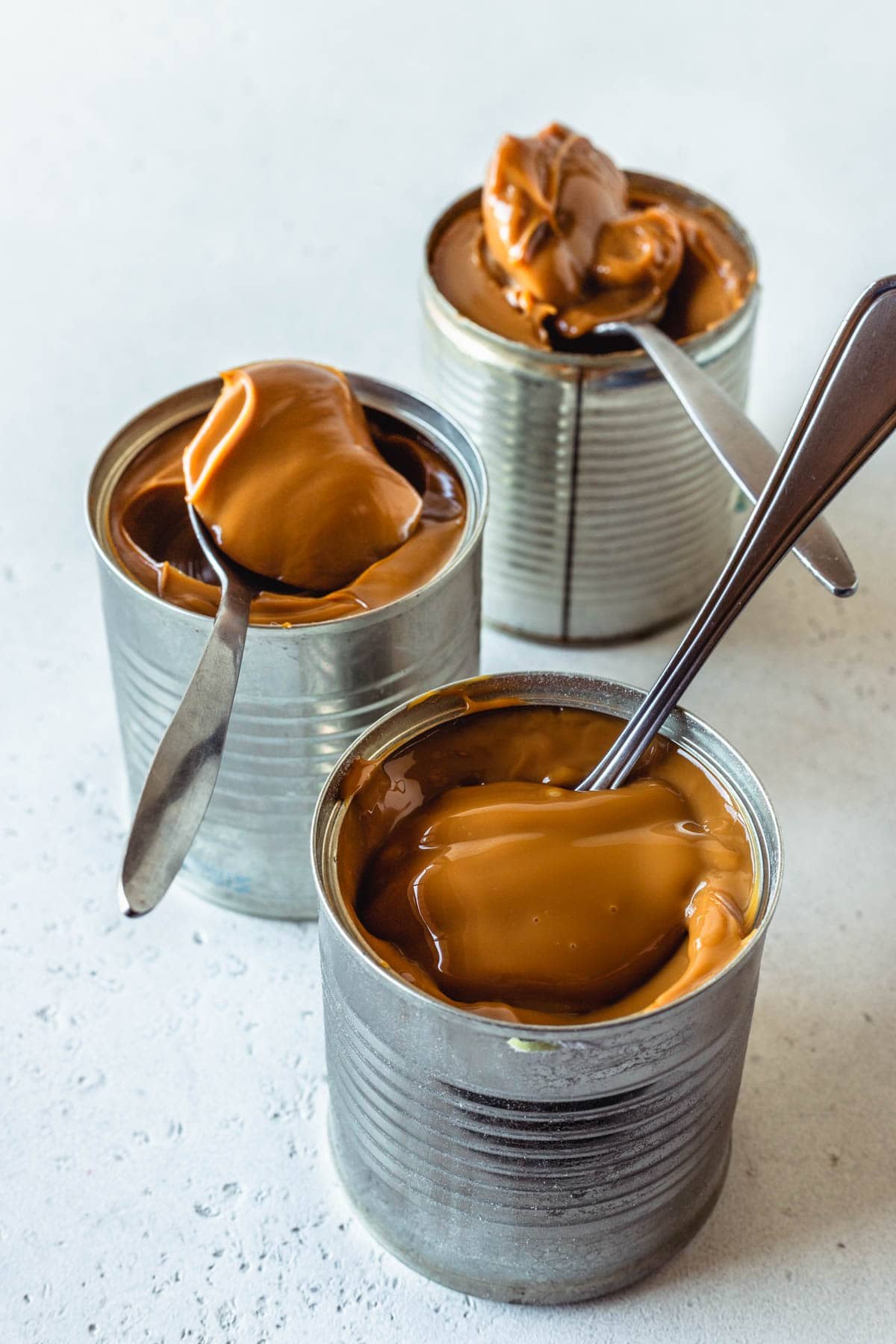
Stove top method (milk + sugar + baking soda)
If you’d like to skip the sweetened condensed milk, there’s a method using milk, sugar, and baking soda. It works by cooking down milk and sugar in the stove top, with the addition of baking soda to help the reactions that occur in order to form a thick and rich dulce de leche.
The results: A dark sauce, slightly gritty, thick but not pipeable. And it tastes more similar to caramel.
Click here for a full recipe you can use to make it.
Is it safe cooking a can of condensed milk?
As long as you take the safety measures below you will be fine cooking the can of condensed milk. Make absolute sure to pay attention to this the whole time:
- Before cooking the condensed milk can inspect it and make sure it is not dented or have any damages.
- Always be VERY careful, make sure to cover the can with water completely. Set a timer to check on the water every 20 minutes!
- Let the can cool down completely in the water before removing it and opening.
- Don’t knock, shake, or jostle the pan containing the hot can of sweetened condensed milk.
- Never leave the can unattended, check on it constantly while it’s cooking.
If you don’t feel safe with these options, make the dulce de leche using the oven method, or the stove top method.
Storage
Dulce de leche will last for quite a bit, which means it’s great for making ahead!
You can store it in the fridge for up to 2 weeks. Some people even say 3 weeks. Make sure it’s well covered.
And you can also freeze it, by placing in an air tight container, and placing in the freezer for 1 to 2 months, even though some people say it will last even longer.
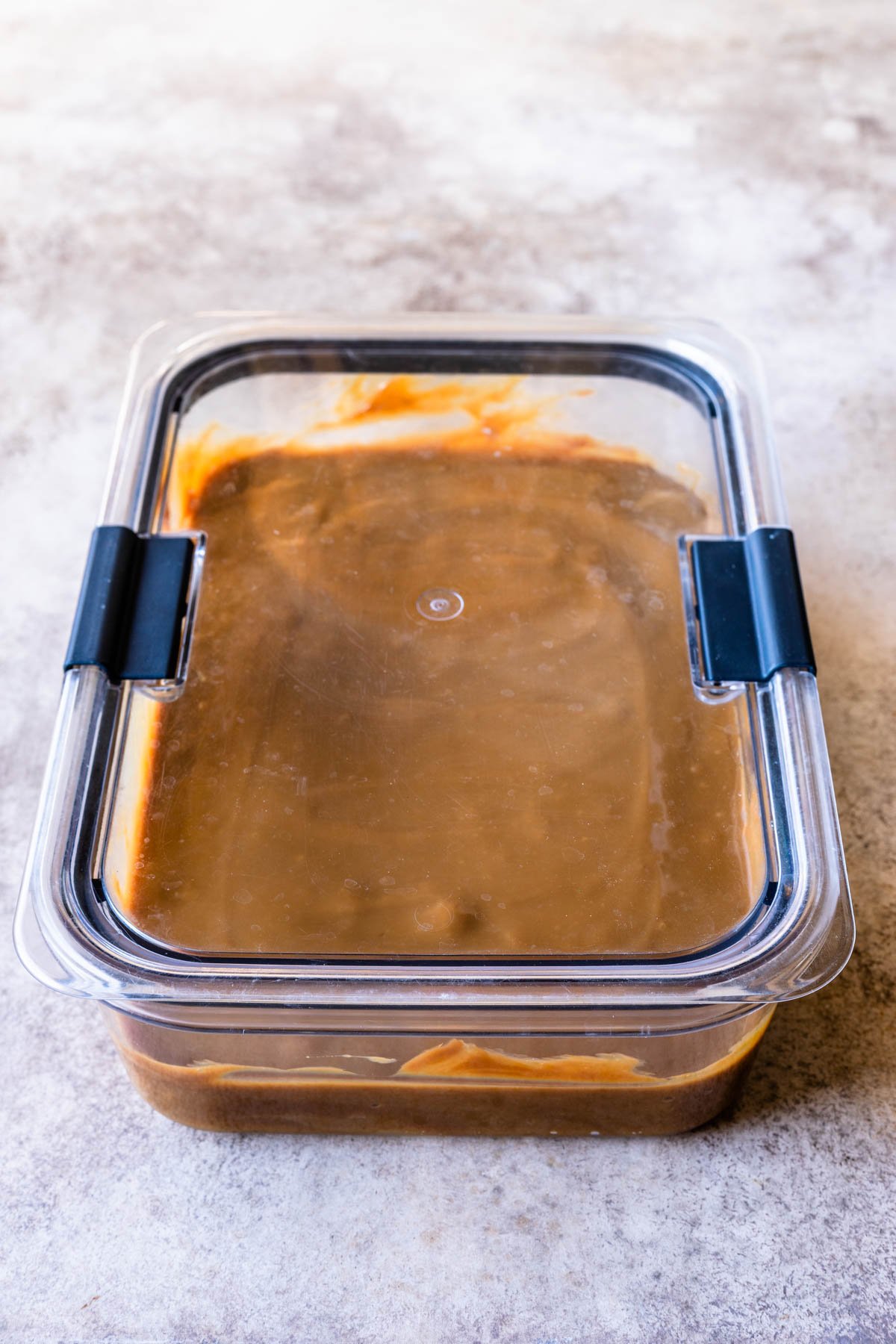
I’ve tried freezing dulce de leche in a ziploc bag, but it’s very messy and hard to get it out, and you will end up wasting quite a bit that will be stuck in the bag, so I prefer to store in an air tight container.
To thaw, place it in the fridge, however, it will still be scoopable even straight from the freezer.
Where to buy dulce de leche
Dulce de leche is becoming each time more accessible in the US, because of its increasing popularity.
In Brazil you can find it pretty much anywhere and everywhere. The artisan ones are basically some of the best things I’ve ever tasted in my life. Argentinian dulce de leche is very popular in Brazil, since Argentina is right nextdoor, and also since they make arguably the best in the world.
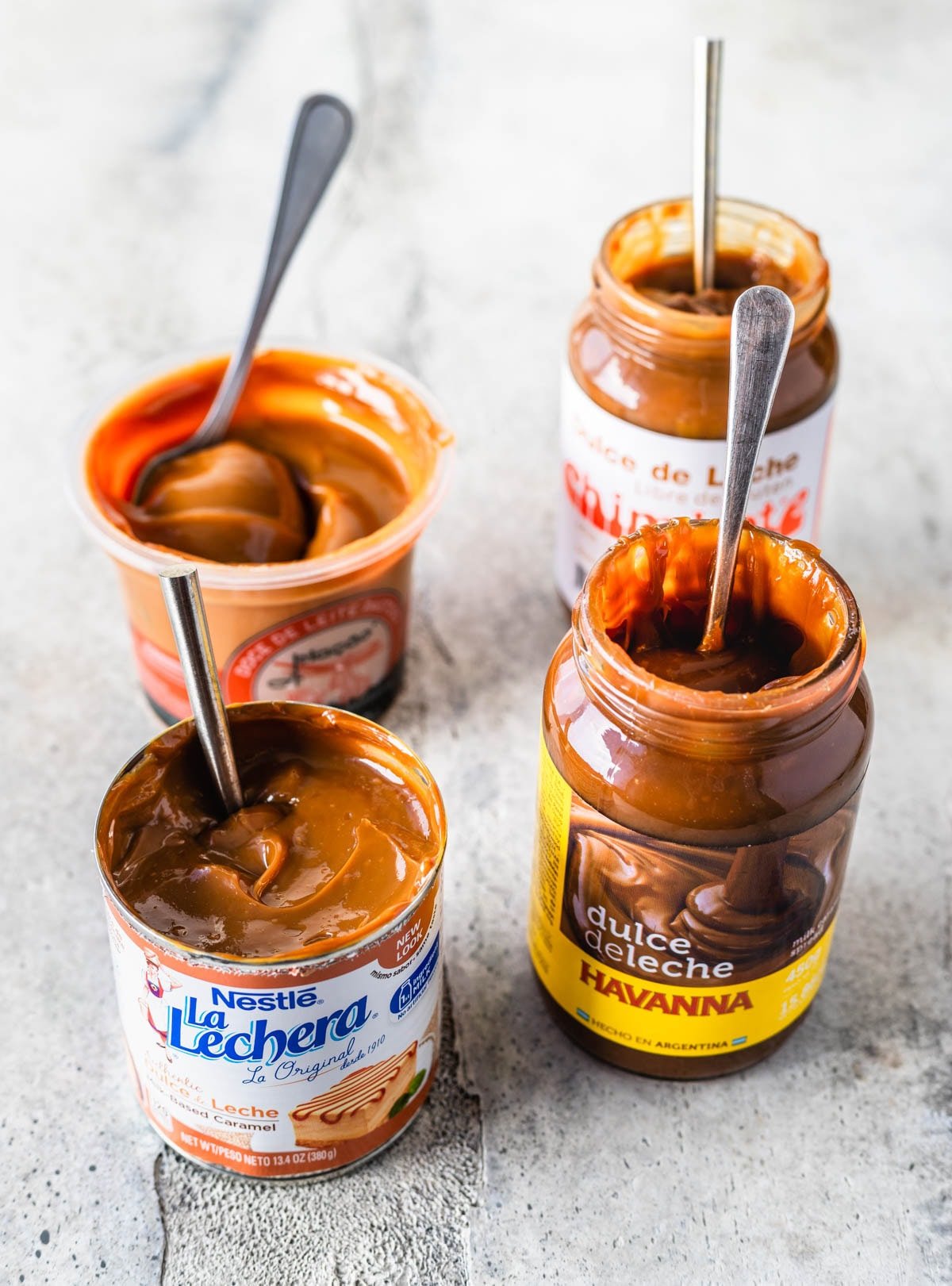
Lucky for you, you can find both Argentinian and Brazilian dulce de leche here in the US! You can buy it online, or at the grocery store. Usually you can find it by the sweetened condensed milk, or in the Latin food aisle. Some of my favorites brands are: Havanna, San Ignacio, La Lechera, Chimbote, Aviacao (Brazilian brand).
If you want a dulce de leche that holds its shape without leaking or melting and you don’t want to use a pressure cooker, go with a store-bought variety made specifically for pastry work. Look for dulce de leche repostero or repostería—these are formulated to be thicker and firmer, perfect for piping and filling.
If the dulce de leche you have isn’t super thick, you can mix it with butter and powdered sugar, which will stabilize it and give you the structure you need for piping. For example in this recipe for this Salted Dulce de Leche Cupcake Recipe.
What to do with dulce de leche
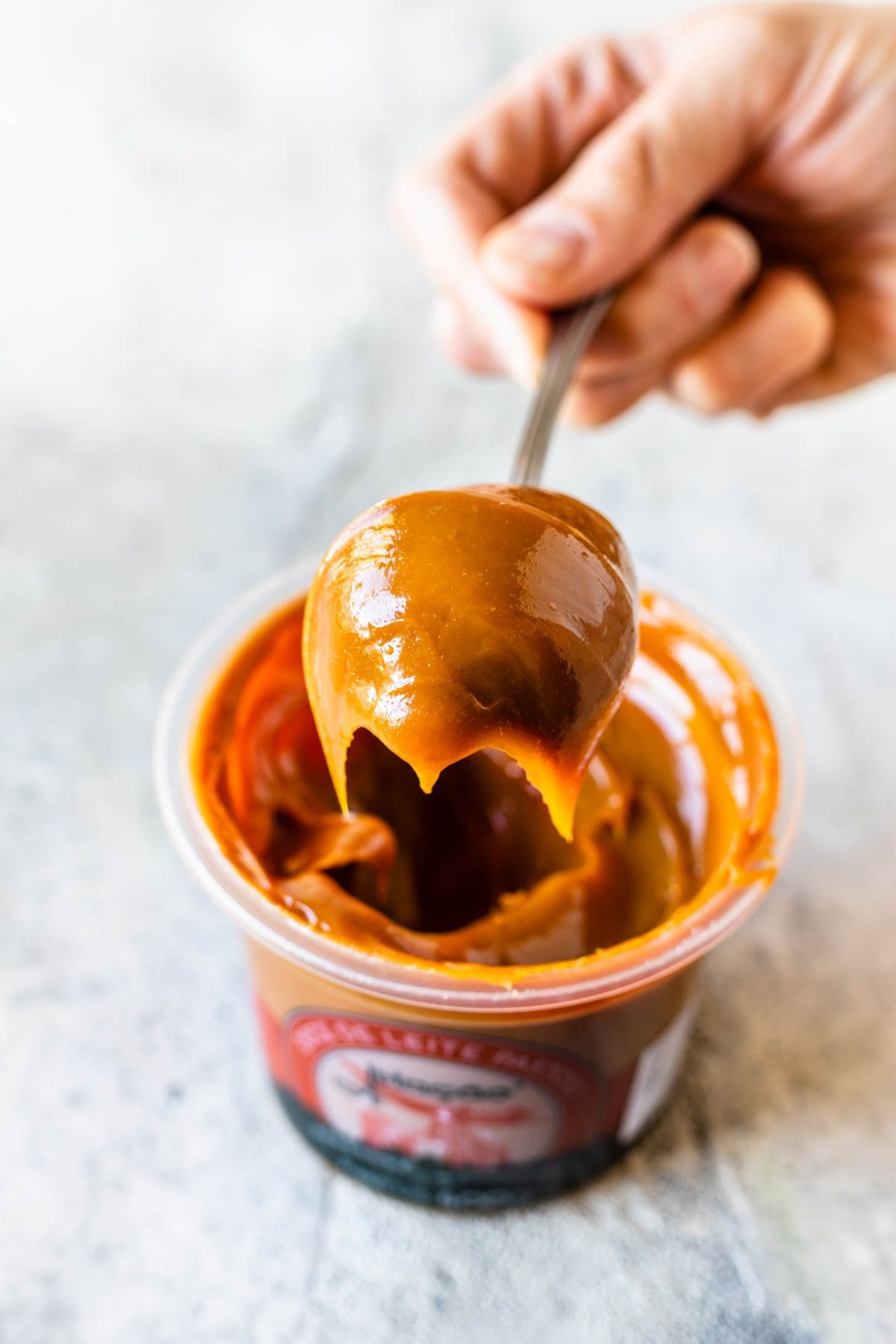
Dulce de leche is incredibly versatile. Sure, you can eat it straight from the spoon—my personal favorite—but it also works beautifully in simple everyday uses.
But, of course, you can use it many other ways. For example:
- With cheese (yes in Brazil that’s a very popular way of eating it, spread on white cheese, maybe with toast, or as filling for empanadas, even pizza)
- On top of waffles, pancakes, pound cake
- Spreading on toast
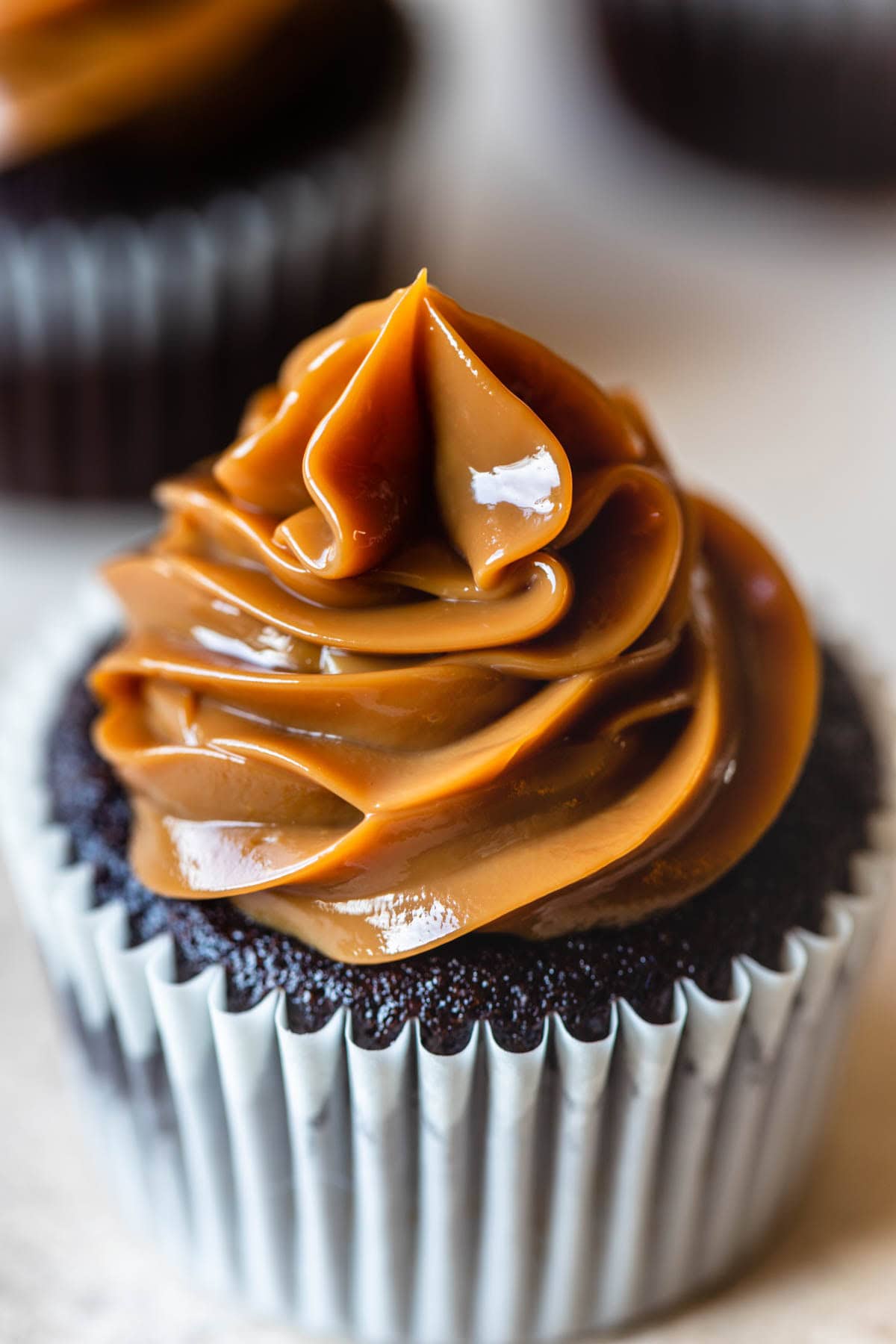
And here are some recipes that showcase it beautifully:
Thanks for reading!
Dulce de Leche Recipe – Three Easy Ways!

Ingredients
- 1 can 1 sweetened condensed milk 14 oz, 396 grams
Instructions
Oven Method
- Pre-heat the oven to 350ºF.
- Open the can of sweetened condensed milk. Pour the contents in a loaf pan or any smaller baking pan.
- Place the loaf pan inside a larger baking pan.
- Fill the baking pan with hot water until it is at the same level, or higher, as the sweetened condensed milk, to form a water bath to prevent scorching.
- Cover the loaf pan with foil.
- Place in the pre-heated oven.
- Bake for the minimum of 2 and a half hours, up to 4 hours. The longer you bake, the thicker and darker it will be.
- It's important to stir a few times during baking. Also, make sure to replenish the water from the water bath as it evaporates.
- Let it cool down completely before consuming and serving.
- Once the dulce de leche has cooled down, store it in a sealed container in the fridge for up to 15 days, or in a freezer-safe container for up to 2 months.
Stove Pot Method
- Remove the label of the can. Keep the can sealed.
- Inspect the can to ensure it doesn’t have any dents.
- Place the sealed can in large pot, filled up with water, making sure the can is covered by a few inches at least.
- Bring to a boil, reduce the heat, and let the water simmer for 2.5 hours to 4 hours.
- Check on it constantly to make sure the water level isn’t below the can, and that the can is submerged several inches.
- Set a timer to check on the water every 20 minutes! This is extremely important, because the can can explode if exposed while cooking. It needs to be submerged in water at all times.
- After the desired cooking time, turn the heat off. For a lighter, more runny dulce de leche, cook for 2.5 hours, for a dulce de leche that’s easy to pipe, fill cookies, and will be able to hold its shape, cook for 3.5 to 4 hours.
- Let the can cool down all the way in the water before removing and opening, which may take a few hours.
Instant Pot Method
- Remove the label of the can of sweetened condensed milk. Keep the can sealed.
- Inspect the can to ensure it doesn’t have any dents.
- Place the sealed can in an instant pot or pressure cooker, filled up with water to capacity.
- Set the pressure for high.
- As soon as the pressure cooker is under pressure, start timing 35 minutes.
- It's very important to not move or jostle the pan around while the dulce de leche is cooking.
- After 35 minutes, turn the pressure cooker or instant pot off. Let the pressure release naturally. And let the can cool down all the way in the water before removing and opening, which may take a few hours.
Storage
- Once the can has completely cooled down, open it, scoop the contents out. Store it in a sealed container in the fridge for up to 15 days, or in a freezer-safe container for up to 2 months.
I use the stove top and usually make 4 cans at a time so I can share with friends. When I do buy it on line I always look for Conaprole Dulce De Leche. You must try this brand from Uruguay. Simply the best I’ve tasted and I’ve tasted many brands.
Thank you for the detailed side by side comparisons. As I don’t own a pressure cooker, I’m going to use the stovetop method and cook it a bit longer. Also I’m going to try whipping it for a lighter consistency in my Have you tried either of these?
Wish me luck!
Great!! When you whip it, the dulce de leche will become runnier and lighter in color I believe, but I’ve never whipped homemade dulce de leche, so the final consistency of it will vary depending on what the consistency was when you started whipping it. Let me know how it goes!
I tried the stovetop boiling method, but obviously didn’t let it go long enough, as it was far too light and thin. How can I thicken it up, I don’t want to throw it out? Thank you!
you can cook it longer by placing in a jar and using a method like this one for example https://cosmopolitancornbread.com/make-homemade-dulce-de-leche-easy-way/
I make my dulce de leche with a sous vide, and now I’m curious how it compares to the pressure cooker one you like! I’ll have to try that next time 🙂
Hummmmmm… que delícia 😋 😋 😋 😋
hai hai, one question, i want those dulce de leche old fashioned aluminum pressure cookers you have to put on the stove to cook, how high will the heat be for 35 minutes? low heat medium ? thanks
I used to have those old fashioned ones, I used medium heat.
Have you tried any of these methods with sweetened condensed coconut milk?
I haven’t, but I don’t think it will work.
It works! I’m vegan and I do the coconut based ones. You have to cook it longer though.
So I’ve recently become addicted to dulce de leche, which I’ve only ever tried it in the gelato 5 layer icecream. I came across your YouTube video when I was looking up, how to make it & honestly I’m so afraid to make it and have it come out good, because I know if it does I will probably stock up on it and gain a substantial amount if weight from eating it spoonful daily and on everything sweet I eat.!! That of course is not stopping me at all from asking you these questions or that I can make it until my last day on earth, which in that case I’ll be having the best dulce de leche for my last meal.!! I’m buying the pressure cooker you use in the video because I don’t want to stray from the recipe or mess it up, so…
I wanted to know what kind if crock pot you have that’s being used in the video, where you purchased yours from the brand, size etc.?
Is there a difference between an instant pot and pressure cooker, in your opinion?
Would you recommend which product to get to make dulce de leche concerning the pressure cooker and instant pot?
What’s your take on cooking two cans or more together in a pressure cooker or instant pot? Is it possible, or just better to do 1 at a time?
Can you over cook dulce de leche, if so how would you know? Also can it be undercooked? How would you know when it’s finished.
Also what brand of sweetened condensed milk do you recommend when making at home?
You mention in your videos and instructions to inspect the cans before hand. I was wondering what the importance of having no dents, dings or any damages to the can are? Why is it recommended to be perfect before use? & what would happen if you accidentally used one with a dent in it, even if it was a really small one? Also could you explain a bit in a video or unless you can in writing, about what would be acceptable on xans you can use and can’t use? If that is even possible.
Also when doing the oven method or the stovetop when you pour the condensed milk in the pan, to make it not so lumpy could you use a whisk or preferred use an electrical hand mixer top stir it?
Can you use vanilla extract in your dulce de leche or vanilla bean for flavoring?
What is the deal with the colors of dulce de leche, when some are way more lighter in color and some that are darker. Is it just preference or would it be that the lighter it is just means it’s not cooked enough?
Instant pot is simply the name of the brand.
Mine is a Crock-Pot Express.
I do cook two cans at a time sometimes, but not longer.
If the cans have dents in them they can explode because when the cans get dented, the anaerobic condition of the can is gone.
Great article! Do you think tins of ‘light’ condensed milk (made from skimmed milk and sugar, instead of full fat milk and sugar) would also work to make dulce de leche using the stove top method? Thank you!
I have never tried with that kind!
I’ve used the stove top method and had great results, just got to keep it topped up! Have you put multiple tins in the same pot? Once finished have you put unopened tins back in the cupboard for use at a later date?
So yes I have boiled 2 cans at the same time on the stove top method, just in case I boiled for extra 30 minutes.
And about the storage, I have heard people saying you can store the can for a few months like that, but I have never tried doing that so I cant recommend it.
Thank you Helen. Have a fabulous day!
Great article! Thank you for sharing so much great information. I just got an instant pot and cannot wait to make this now! I totally agree – eating it right off a spoon might be the best thing ever! 😁
Thank you Hazel! I am glad you liked it!
I tried this with a pressure cooker but I don’t think 35 min for my cooker was long enough, the milk barely turned color. Weird question, but is there any way to know when it’s “ready” since we can’t eyeball it with a can? Or is it possible to overcook this?
Did you cook on high pressure? And did you start counting 35 minutes after it took on pressure? There’s no way to know when it’s ready, because you can’t open the can. I’ve never been able to overcook it, but I never cooked over 40 minutes on the pressure cooker. I have a crockpot pressure cooker now, which is electric. And I used to have one of those old school aluminum pressure cookers that you have to put on the stove to cook, and both of them cook my dulce de leche at 35 min on high pressure.
Thank you so much for sharing this information! Can I make dulce de leche myself and then add it to the base of a buttercream? Also wondering if it can be used to drip on a cake or is it too thick of a sauce?
yes I add it to buttercream in all these recipes:
dulce de leche Russian buttercream
dulce de leche mocha swiss meringue buttercream
dulce de leche cream cheese frosting
and if using american buttercream yes you can just add like 1/2 cup of dulce de leche for about 10 oz of butter (probably have to adjust powdered sugar and add more to make it stiff)
and about the drip, yes it’s too thick for a drip, even if you don’t cook it as much, BUT I made a BEAUTIFUL dulce de leche drip this week, the recipe is coming on monday! It’s a gorgeous dulce de leche drip recipe, where I mixed dulce de leche with milk and powdered sugar and it turned out so gorgeous!
Oh, I had no idea that dulce de leche is essentially a caramel made from sweetened milk. I thought it was something completely different honestly. I’d like to try it out with some pastries.
Hi Camila! I’ve been following you for a while and hadn’t realized you had dulce de leche running through your veins! Haha I love how you’ve explainned everything about this delicious treat in your blog and the differences between them. I’m Argentinian and love that you are so in love with Havanna’s Dulce de leche. Very nice tips about how to make it thicker, I’m definatelly going to try. Xx
haha yes Havanna is my favorite!!!! Specially the alfajores!!!