

Olive Oil Cake
When someone asked me to create an olive oil cake inspired by the one served at Sixty Vines for a special birthday, I immediately accepted the challenge. Although I’d never tasted their version, I spent some time researching its flavors and texture before heading into the kitchen to create my own.
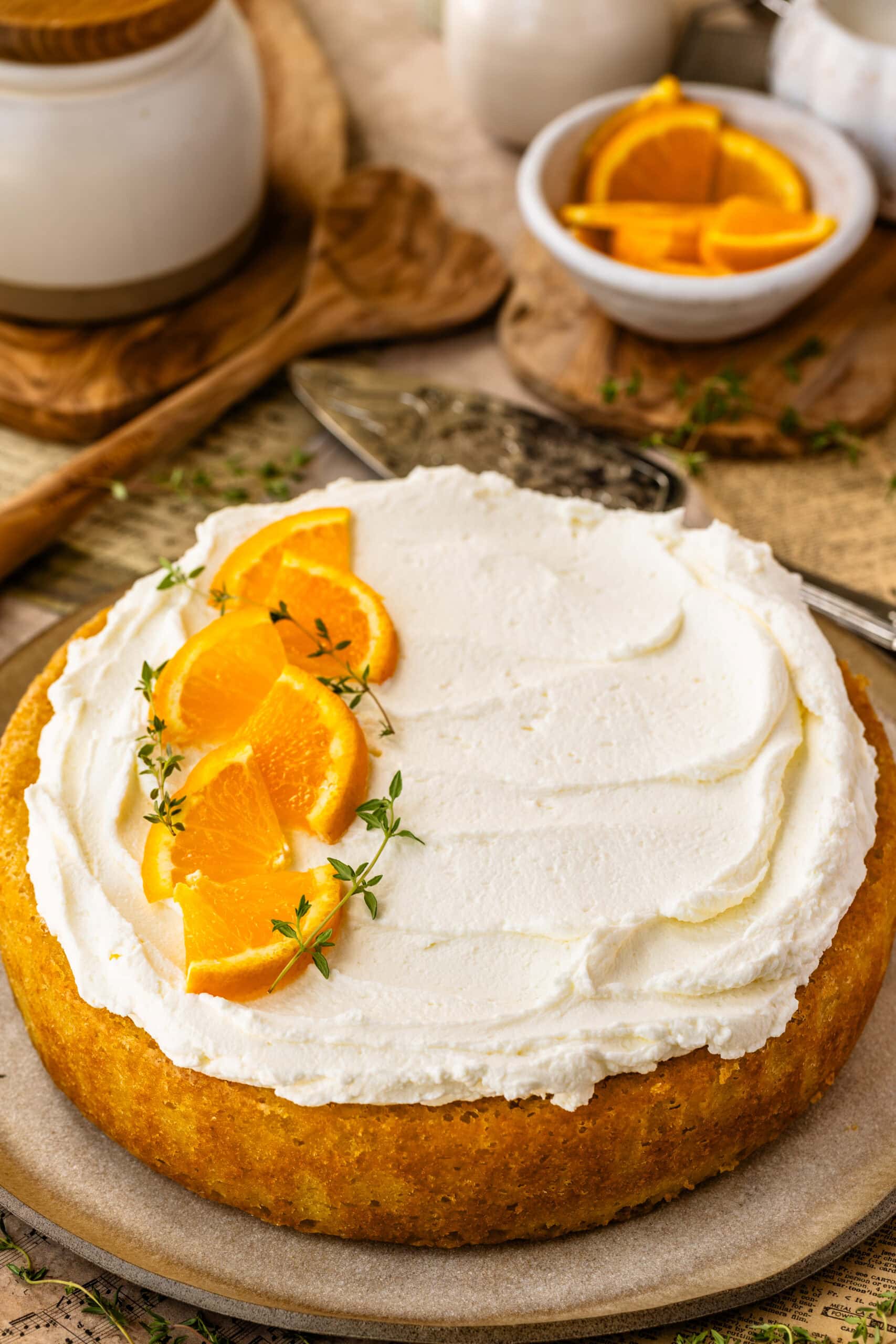
The result is an irresistibly moist olive oil cake flavored with lemon and orange, soaked with a citrus syrup, and topped with a light, fluffy mascarpone whipped cream. The cake itself is tender, airy, and not overly sweet, while the syrup adds even more moisture and helps create its exceptionally soft texture.

Why You’ll Love This Recipe
- Wonderfully moist thanks to olive oil and citrus syrup.
- Light, tender crumb that stays soft for days.
- Bright lemon and orange flavor in every bite.
- Mascarpone whipped cream is light, silky, and not overly sweet.
- Perfect for birthdays, brunches, holidays, or dinner parties.
- Even better after the syrup has had time to soak into the cake.
Key Ingredients
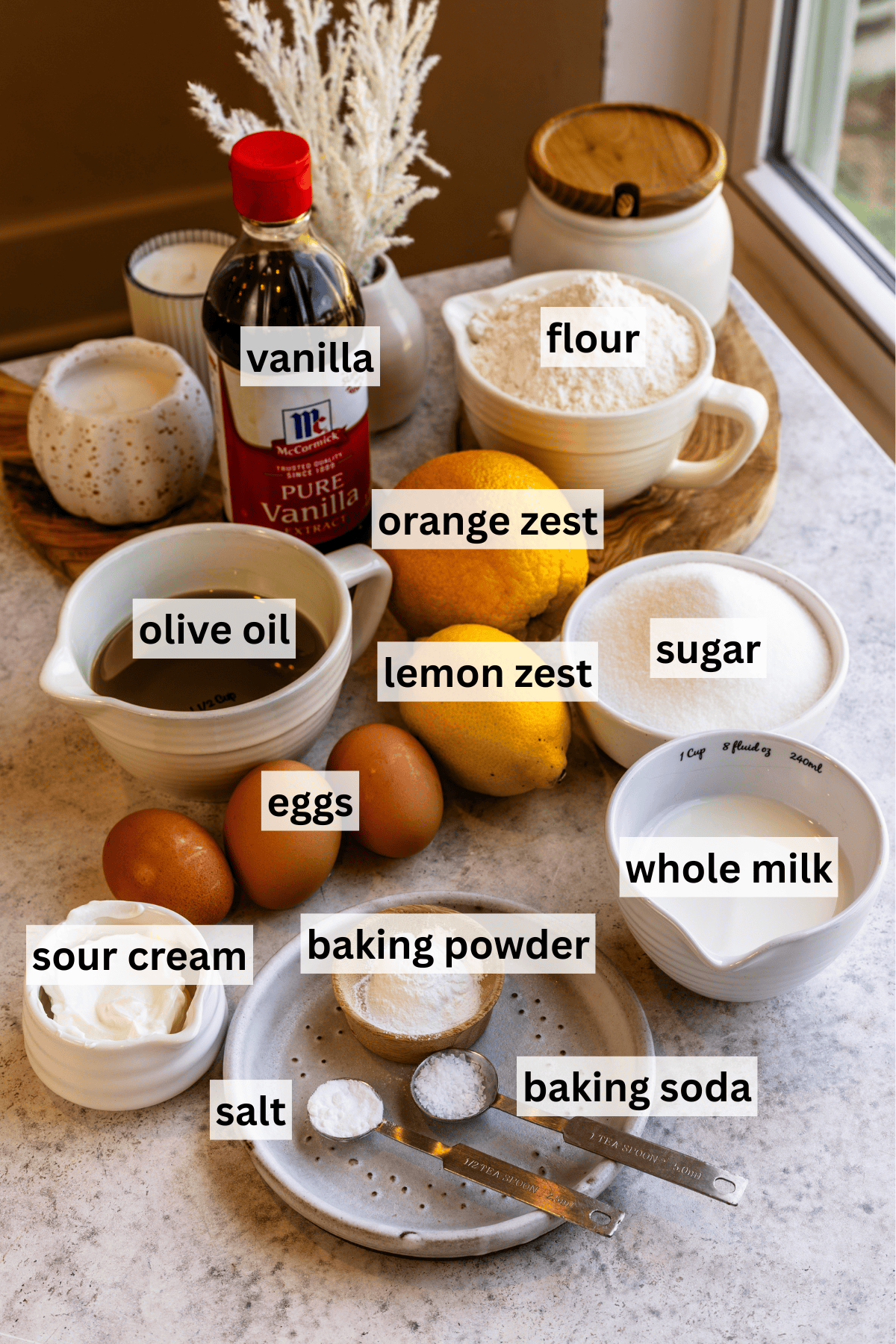
Extra-Virgin Olive Oil: A good-quality extra-virgin olive oil gives this cake its signature flavor and incredibly moist texture. Choose one that’s mild and fruity rather than intensely peppery so it complements the citrus beautifully.
This post may contain affiliate links. I earn a commission from qualified purchases. Please read our Privacy policy here.
Citrus Zest: Fresh lemon and orange zest perfume the batter with bright citrus flavor. Using both creates a balanced flavor that’s more interesting than using only one fruit.
Sour Cream: A little sour cream helps create an exceptionally tender crumb while adding richness without making the cake feel heavy. Full-fat Greek yogurt works just as well.
Orange Syrup: After baking, the cake is soaked with a simple orange syrup that keeps it incredibly moist while adding another layer of fresh citrus flavor.
Mascarpone: Instead of a traditional buttercream, this cake is finished with a light mascarpone whipped cream. It’s silky, airy, and the perfect complement to the delicate olive oil cake.
How to Make Olive Oil Cake
I have the full recipe card down below, but here I’ll walk you through this recipe step by step!
Prepare the Pan
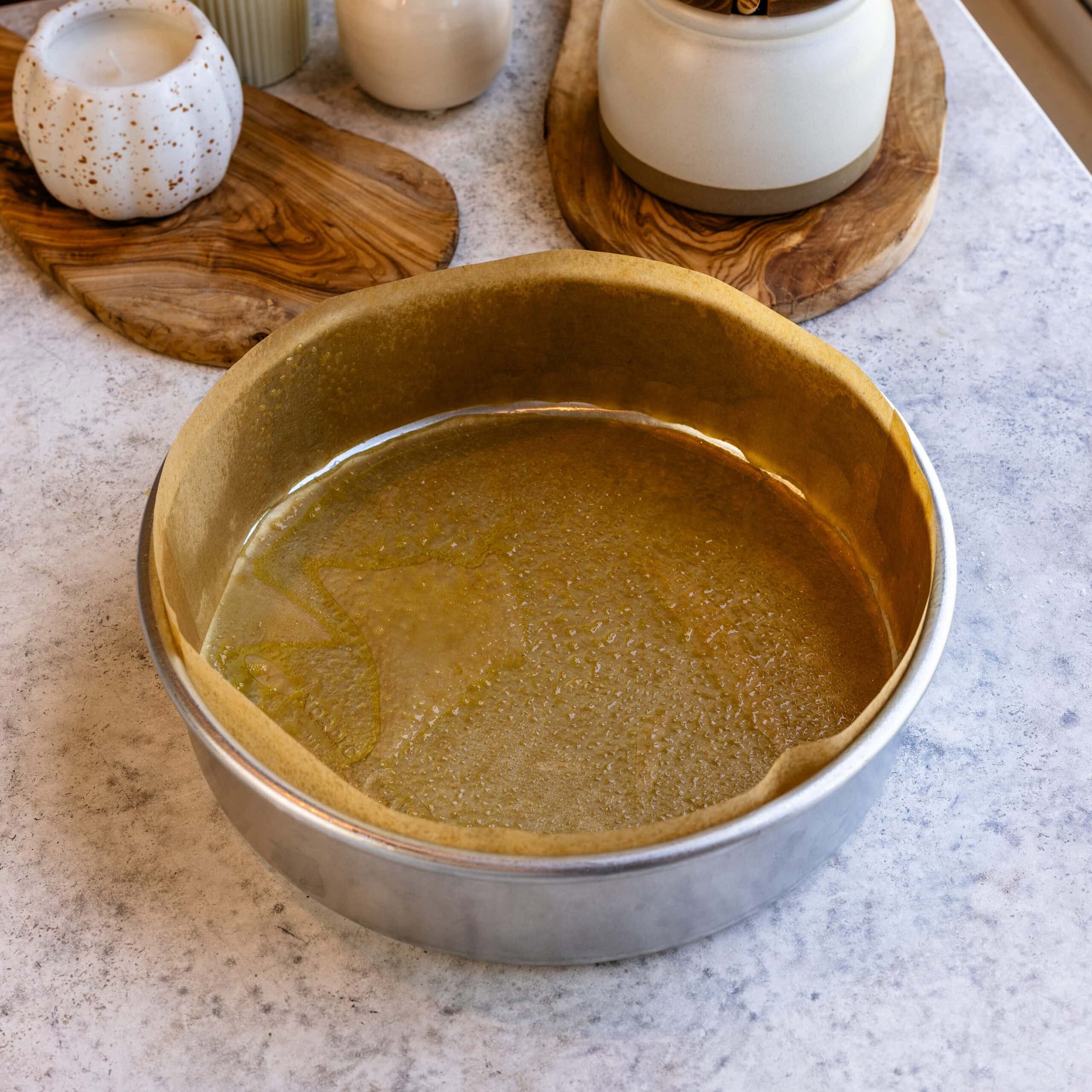
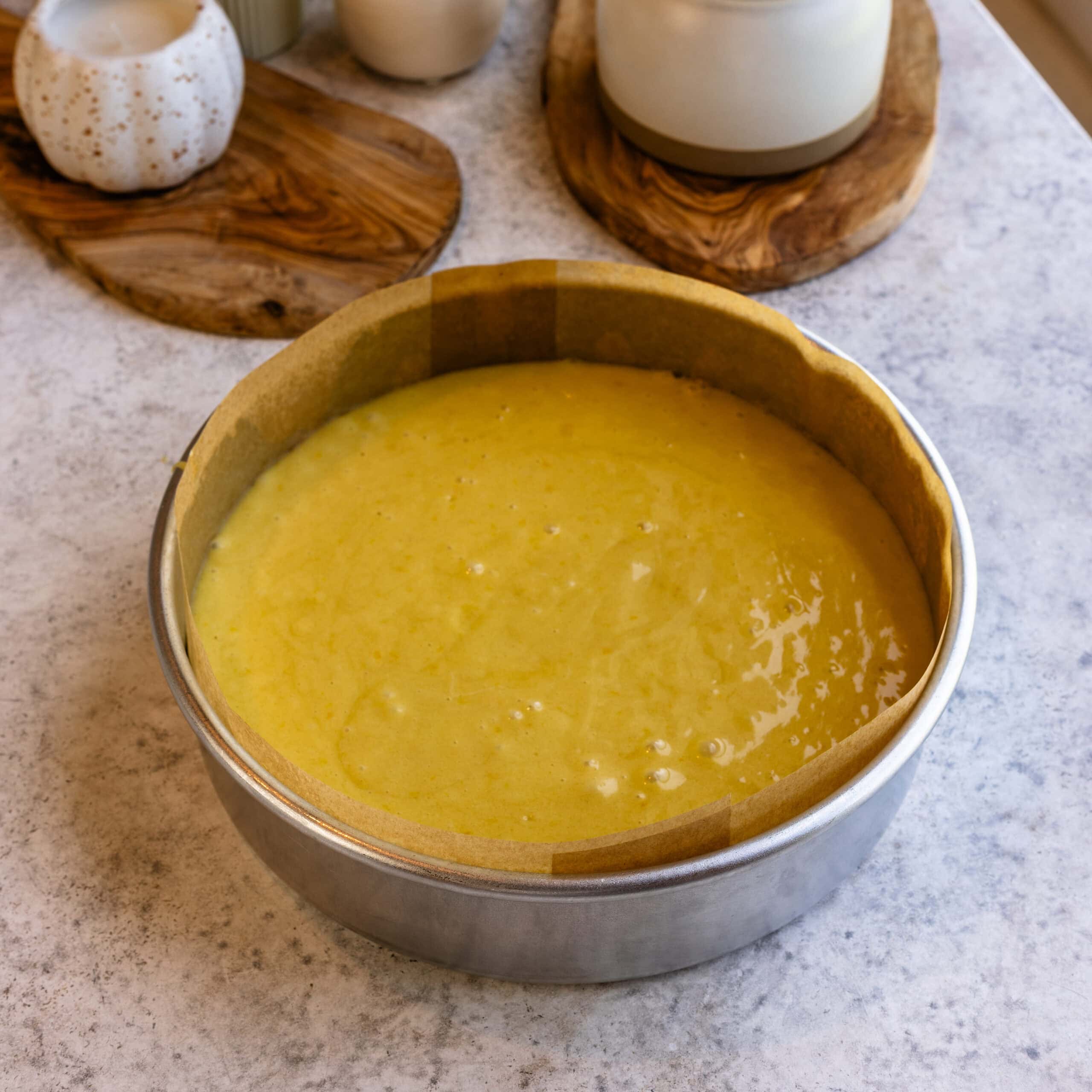
Preheat your oven to 350°F. Grease a 9-inch round cake pan and line the bottom with parchment paper. Add parchment strips around the sides of the pan for easy removal after baking.
Make the Cake Batter
In a medium bowl, whisk together the eggs, olive oil, milk, sour cream, vanilla, and lemon juice until completely smooth.
In a separate large bowl, whisk together the sugar, lemon zest, orange zest, flour, baking powder, baking soda, and salt until evenly combined.
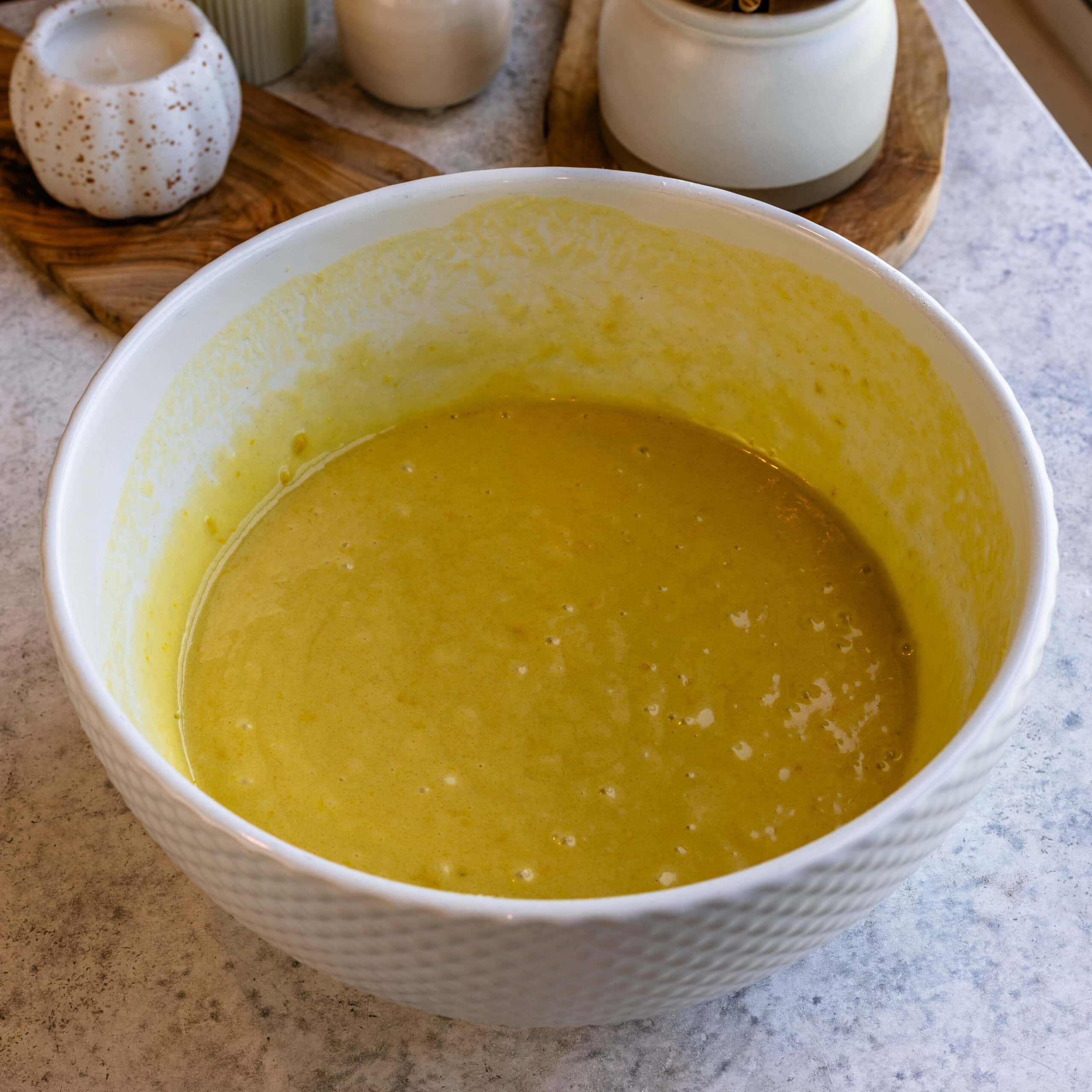
Pour the wet ingredients into the dry ingredients and whisk gently just until no dry streaks remain. Be careful not to overmix, as this can make the cake less tender.
Pour the batter into the prepared pan and smooth the top.
Bake
Bake for about 55 minutes, or until the cake is golden brown and the center springs back lightly when touched. A toothpick inserted into the center should come out clean or with just a few moist crumbs attached.
Leave the cake in the pan while you prepare the syrup.
Make the Orange Syrup
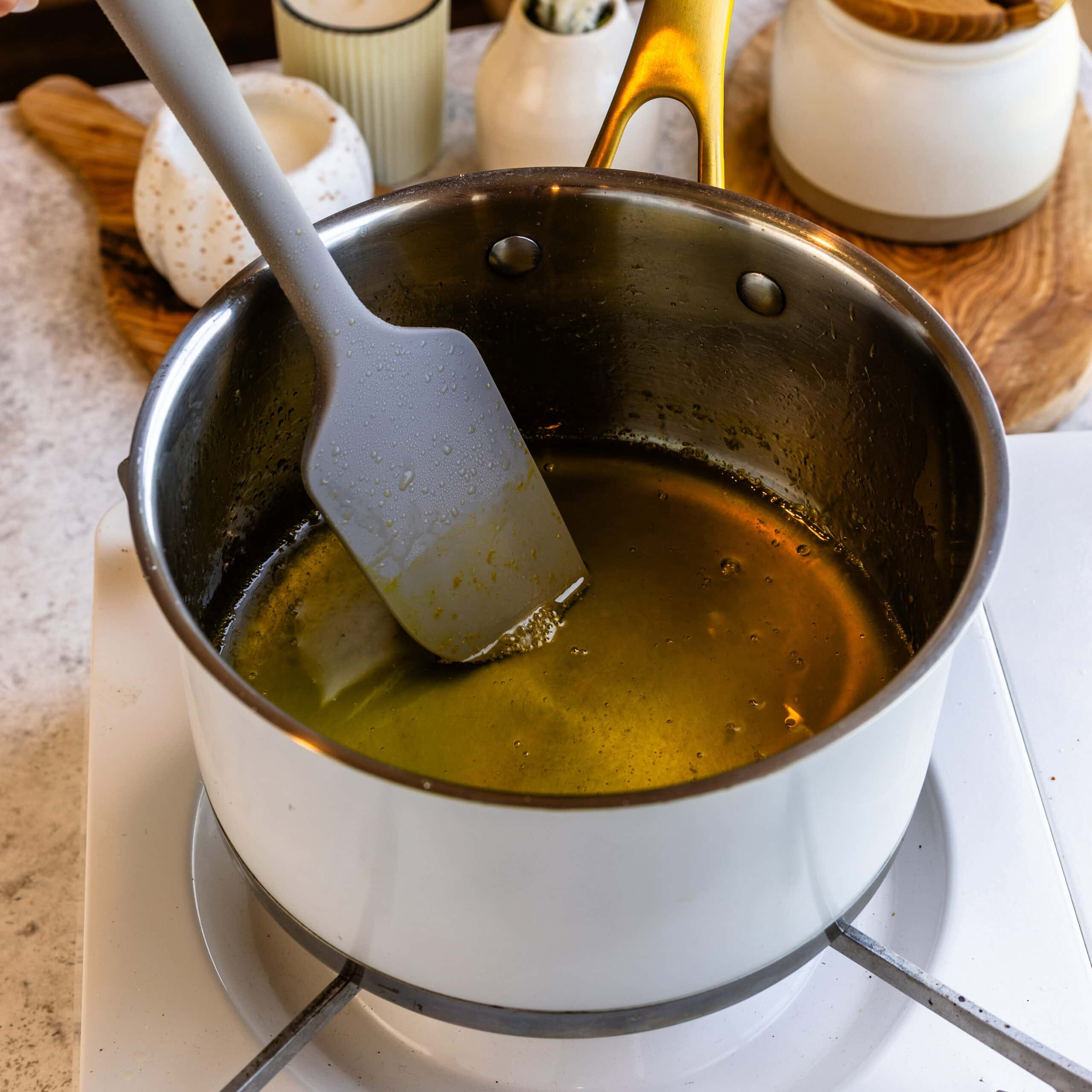
While the cake bakes, combine the orange juice and sugar in a small saucepan.
Bring the mixture to a gentle simmer, stirring until the sugar has dissolved. Simmer for another minute or two before removing it from the heat.
Soak the Cake
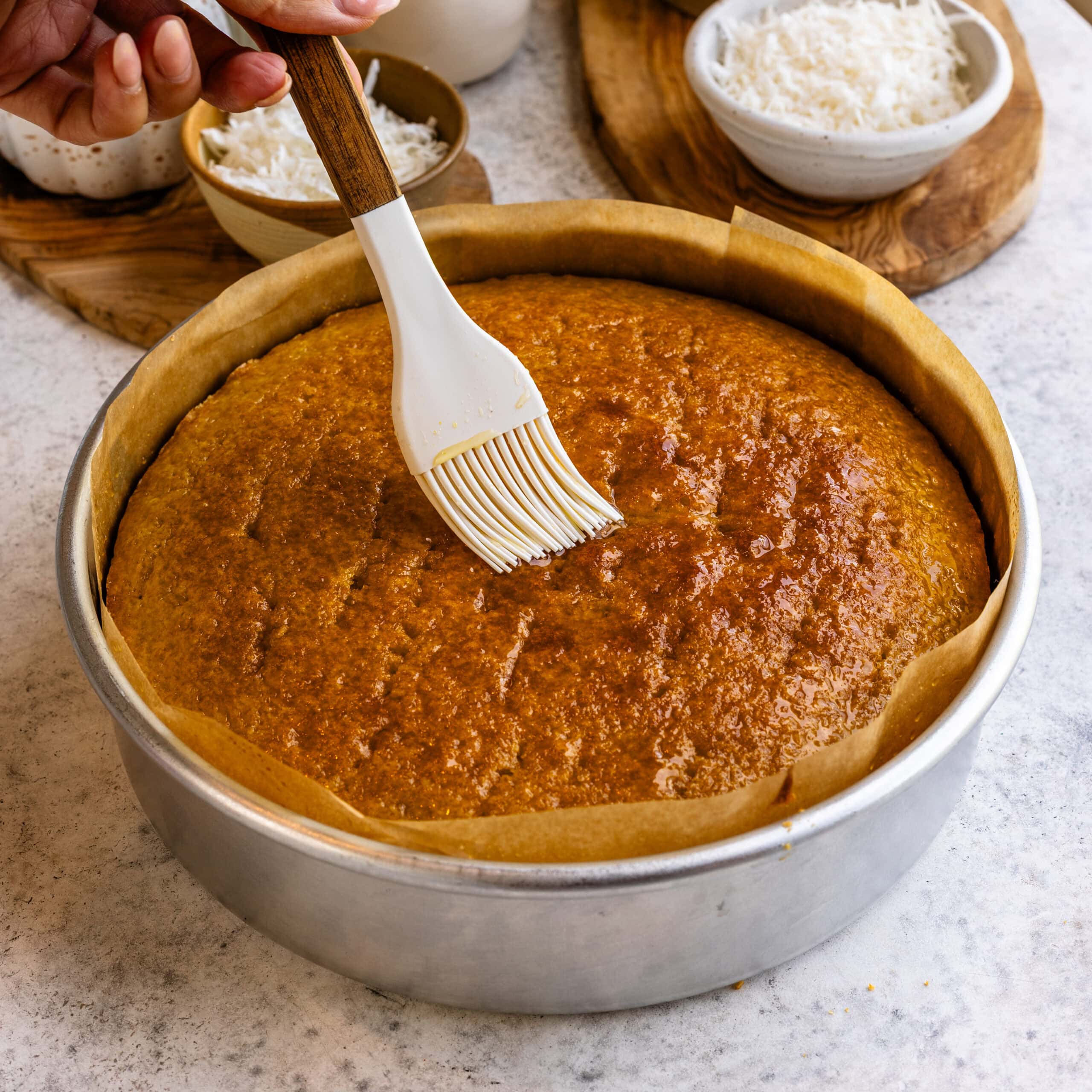
While the cake is still hot, use a toothpick or skewer to poke holes all over the surface. Slowly spoon the warm syrup over the cake, allowing each addition to soak in before adding more. This simple step gives the cake its incredibly moist texture.
Allow the cake to cool in the pan for about 30 minutes before carefully turning it out onto a wire rack to cool completely.
Make the Mascarpone Whipped Cream
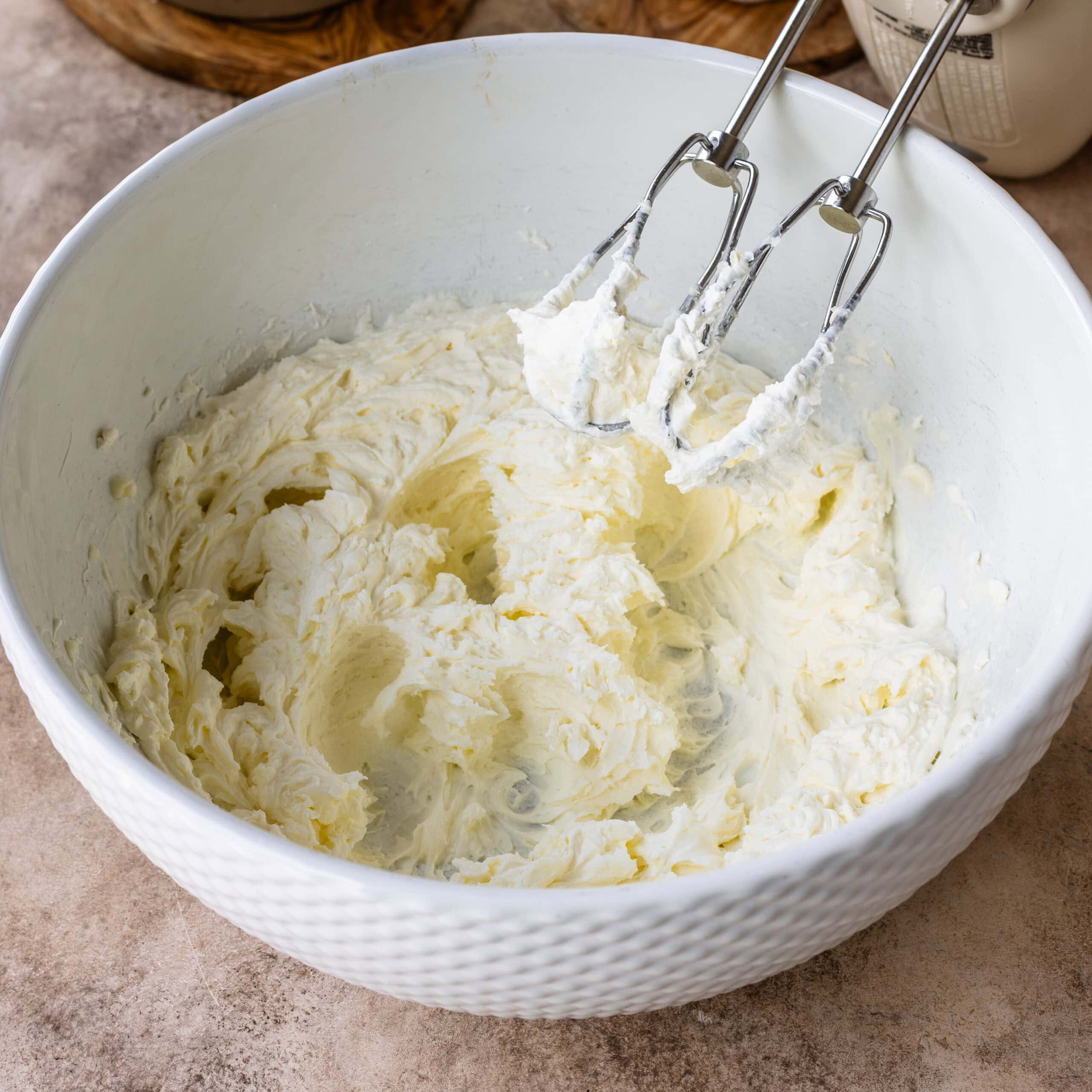
Place the cold mascarpone and powdered sugar into a large mixing bowl and mix just until smooth.
With the mixer running on low speed, slowly stream in the cold heavy cream.
Increase the speed to medium-high and whip until medium peaks form. Finish by mixing in the vanilla, stopping as soon as the frosting becomes thick and fluffy.
Decorate
Spread or pipe the mascarpone whipped cream over the cooled cake.
Garnish with fresh orange slices, a little extra citrus zest, or a few sprigs of fresh thyme for an elegant finishing touch.

Baking Tips
These simple tips will help guarantee a perfect olive oil cake every time.
- Use a mild, fruity extra-virgin olive oil.
- Bring the eggs, milk, and sour cream to room temperature before mixing.
- Mix the batter only until the flour disappears.
- Slowly pour the syrup over the warm cake so it has time to absorb.
- Keep the mascarpone and heavy cream cold before whipping.
- Stop whipping the frosting once medium peaks form to prevent it from becoming grainy.
Storage
Store the frosted cake covered in the refrigerator for up to 4 days.
The unfrosted cake can be wrapped tightly and stored at room temperature for up to 2 days, or frozen for up to 2 months. Thaw overnight in the refrigerator before frosting.

Variations
This cake is easy to customize.
- Use Meyer lemons or blood oranges for a different citrus flavor.
- Replace the orange syrup with lemon syrup for a brighter finish.
- Top with fresh berries for an elegant summer dessert.
- Sprinkle chopped pistachios over the mascarpone whipped cream for a little crunch.
- Serve alongside fresh fruit and espresso for an easy dinner party dessert.
FAQ
Choose a good-quality extra-virgin olive oil with a mild, fruity flavor. Very peppery or bitter oils can overpower the citrus.
Yes! In fact, it’s even better the next day after the syrup has had plenty of time to soak into the cake.
Absolutely. Full-fat plain Greek yogurt works perfectly in this recipe.
Mascarpone can separate if it’s overwhipped. Mix it just until smooth before adding the cream, then stop whipping as soon as medium peaks form.

More Citrus Cakes You’ll Love
If you enjoy bright citrus desserts, don’t miss a few of my other favorites. My Orange Cake is soft and bursting with fresh orange flavor, while Orange Cranberry Bread is perfect for breakfast or afternoon coffee. If you’re craving chocolate too, my Chocolate Orange Marble Cake combines rich cocoa with fresh citrus for a beautiful loaf that’s just as impressive as it is delicious. And if you’re curious about baking with olive oil, be sure to try my rich Olive Oil Chocolate Cake for a completely different take on this wonderful ingredient.
As always, if you make any of my recipes, be sure to tag me on instagram with your creations!

Olive Oil Cake

Ingredients
Dry Ingredients
- 2 cups all-purpose flour 240 g
- 2 tsp baking powder
- ½ tsp baking soda
- ½ tsp kosher salt
- 1⅓ cups granulated sugar 267 g
- 2 tbsp finely grated lemon zest
- 2 tsp finely grated orange zest
Wet Ingredients
- 3 large eggs room temperature
- ¾ cup extra-virgin olive oil 180 ml
- ½ cup whole milk room temperature (120 ml)
- ¼ cup sour cream or full-fat Greek yogurt room temperature (60 g)
- 2 tsp vanilla extract
- 2 tbsp freshly squeezed lemon juice 30 ml
Orange Syrup
- ⅓ cup plus 1 tbsp freshly squeezed orange juice 100 g
- ½ cup granulated sugar 100 g
Mascarpone Whipped Cream
- 6 oz mascarpone cold (170 g)
- ¾ cup plus 3 tbsp heavy whipping cream cold (225 ml)
- ⅓ cup powdered sugar 40 g
- ½ tsp vanilla extract
Instructions
- Preheat the oven to 350°F (175°C).
- Grease a 9-inch (23 cm) round cake pan. Line the bottom with a round of parchment paper. Cut two long strips of parchment paper about 2 inches (5 cm) wide and place them around the inside edge of the pan, overlapping them slightly to cover the sides. Lightly grease the parchment paper.
- In a medium bowl, whisk together the eggs, olive oil, milk, sour cream, vanilla extract, and lemon juice until smooth and fully combined. Set aside.
- In a large bowl, combine the granulated sugar, lemon zest, orange zest, flour, baking powder, baking soda, and salt. Whisk until evenly combined.
- Pour the wet ingredients into the dry ingredients. Whisk gently just until the batter is smooth and no dry streaks of flour remain. Do not overmix.
- Pour the batter into the prepared pan and smooth the top.
- Bake for about 55 minutes or until the top is golden, the center springs back lightly when touched, and a toothpick inserted into the center comes out clean or with a few moist crumbs. Begin checking the cake around the 50-minute mark, since baking times can vary depending on the oven and pan.
- The center of the cake should register approximately 200°F to 205°F (93°C to 96°C) on an instant-read thermometer.
- Place the cake, still in the pan, on a wire rack while you prepare the orange syrup.
Orange Syrup
- While the cake is baking, combine the orange juice and sugar in a small saucepan.
- Place the saucepan over medium heat and bring the mixture to a gentle boil, stirring until the sugar has completely dissolved.
- Simmer for 1 to 2 minutes, then remove the syrup from the heat.
- While the cake is still hot, use a toothpick or skewer to poke holes evenly over the top. Slowly spoon or pour the warm orange syrup over the cake, allowing each addition to soak in before adding more.
- Let the cake cool in the pan for about 30 minutes.
- Carefully turn the cake out of the pan, remove the parchment paper, and transfer it to a wire rack. Let it cool completely before adding the mascarpone whipped cream.
Mascarpone Whipped Cream
- Place the cold mascarpone and powdered sugar in a large mixing bowl.
- Using a hand mixer or stand mixer fitted with the whisk attachment, mix on low speed just until the mascarpone is smooth. Do not whip it for too long at this stage.
- With the mixer running on low speed, slowly pour in the cold heavy cream.
- Once the cream is incorporated, increase the speed to medium-high and whip until medium peaks form. The frosting should be thick enough to hold its shape while remaining smooth and creamy.
- Avoid overwhipping. Mascarpone frosting can quickly become grainy or begin to separate if mixed beyond the medium-peak stage.
- At the end, add the vanilla and mix.
Assemble the Cake
- Make sure the cake is completely cool before decorating.
- Spread or pipe the mascarpone whipped cream over the top of the cake. Decorate with orange slices. Serve immediately, or refrigerate until ready to serve.
