

Chocolate Macarons
Chocolate macarons are famous for being trickier than regular shells — the cocoa powder adds fat, the batter behaves differently, and even small changes can lead to cracking, wrinkling, or shells with no feet. After teaching macarons for years through my macaron course and developing over 150 macaron recipes here on the blog, I’ve learned exactly what makes chocolate shells succeed or fail.
In this guide, I’ll show you how to make perfect chocolate macarons using the Swiss method, with a step-by-step video, the best cocoa powders to use, and clear troubleshooting for every common issue. If your chocolate shells keep failing or you’ve never been able to get them quite right, this post will walk you through the science behind the recipe and everything you need to know to finally master them.

Why you will love this recipe
There are many chocolate macaron recipes out there, but this one stands out for a few key reasons:
This post may contain affiliate links. I earn a commission from qualified purchases. Please read our Privacy policy here.
- It uses the Swiss meringue method — the perfect balance of stability and simplicity.
Swiss meringue is far more stable than the French method and much less complicated than the Italian method, making it ideal for chocolate shells. Since cocoa powder adds weight and fat, a strong and reliable meringue is essential for preventing cracked, wrinkled, or hollow shells.
The Swiss method gives you consistent results, even if you’ve struggled with macarons before. - It includes two decadent filling options: A rich chocolate buttercream — smooth, dark, and ready in minutes. Or a chocolate ganache — perfect for those who prefer a less sweet, more balanced filling. Both fillings pair beautifully with chocolate shells and give you flexibility depending on the occasion.
- The post is packed with macaron knowledge and troubleshooting tips. This isn’t just a recipe, it’s a full guide. Whether you’re brand new to macarons or looking to perfect chocolate shells specifically, this recipe gives you the technique, science, and confidence to succeed.
Quick Success Tips
Before we dive in, here are the key things to know:
- Choose a low-fat cocoa powder (around 0.5 g fat per tablespoon).
- Make sure your almond flour is fresh and not oily. If it’s clumping up too much, it’s time to get a new bag, or switch brands of flour.
- Macaronage usually takes less time for chocolate batter than for classic shells.
- The Swiss method produces a stronger, more stable meringue for chocolate shells.
- If your shells consistently wrinkle or crack, try reducing the cocoa powder slightly, or rest them longer. The issue could also be due to not having a strong enough meringue. Always make sure to whip the meringue to the perfect stiff consistency.
These quick cues alone solve most chocolate macaron issues.

How to make Chocolate Macarons
This recipe uses the Swiss meringue method, which creates a stronger, more stable base for chocolate shells. Follow the steps carefully and focus on visual cues rather than rushing through the process.
1. Prepare Your Tools and Ingredients
- Line two baking sheets with silicone mats or parchment paper.
- Fit a large piping bag with a round tip (Wilton 12 or a ¼-inch round tip).
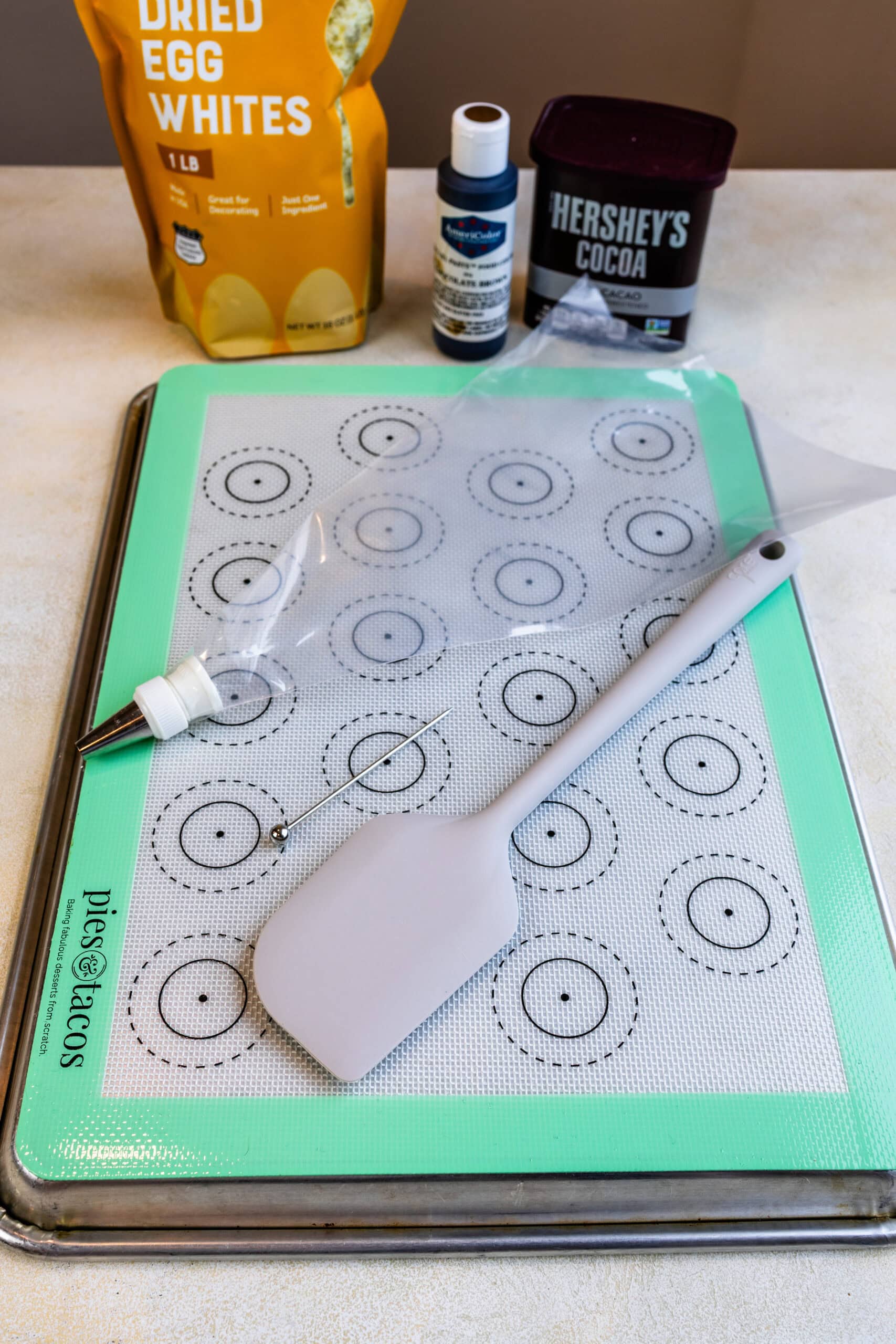
Gather all the tools and ingredients you will need for the recipe.
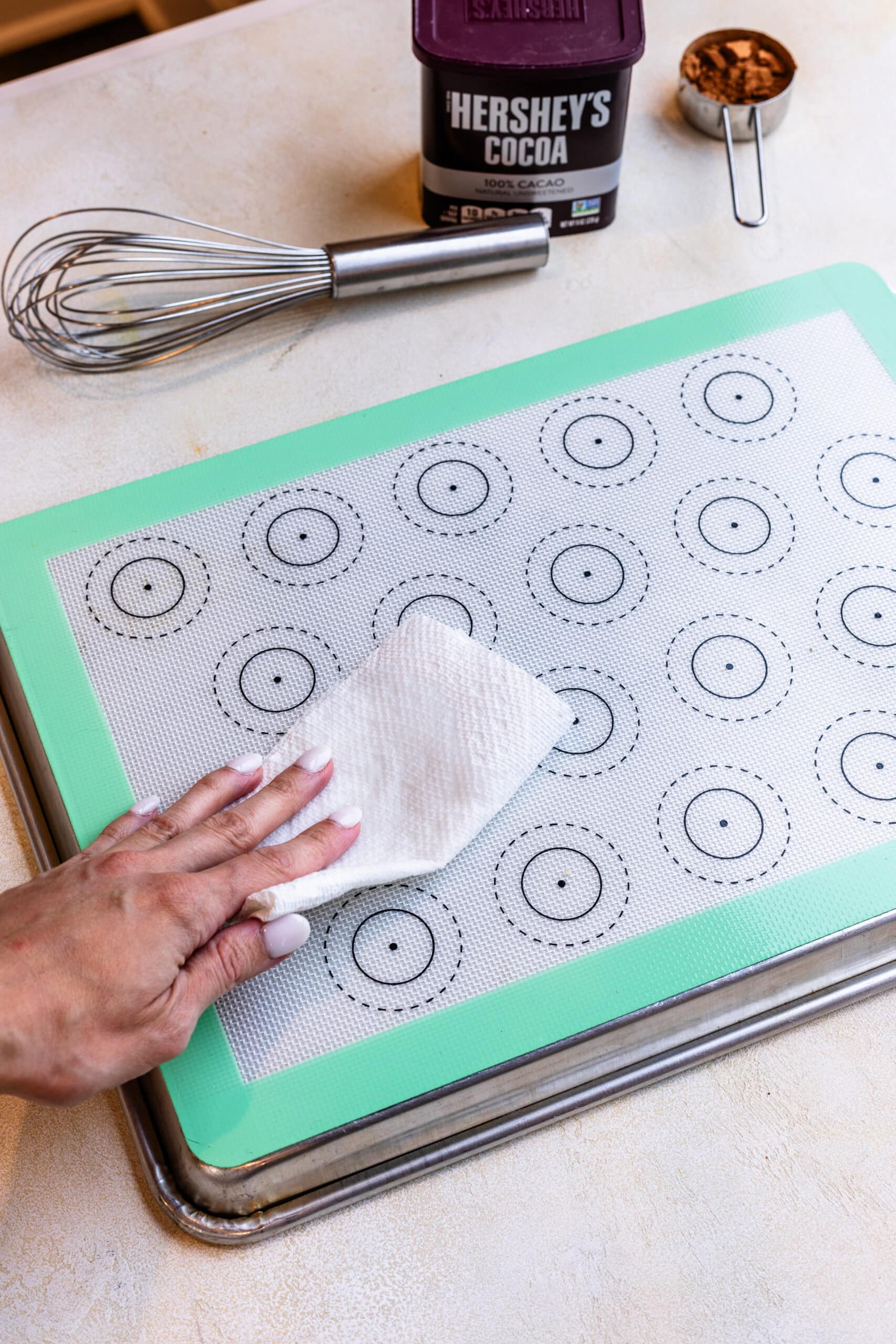
Wipe bowls, spatulas, and mats with vinegar to remove any grease.
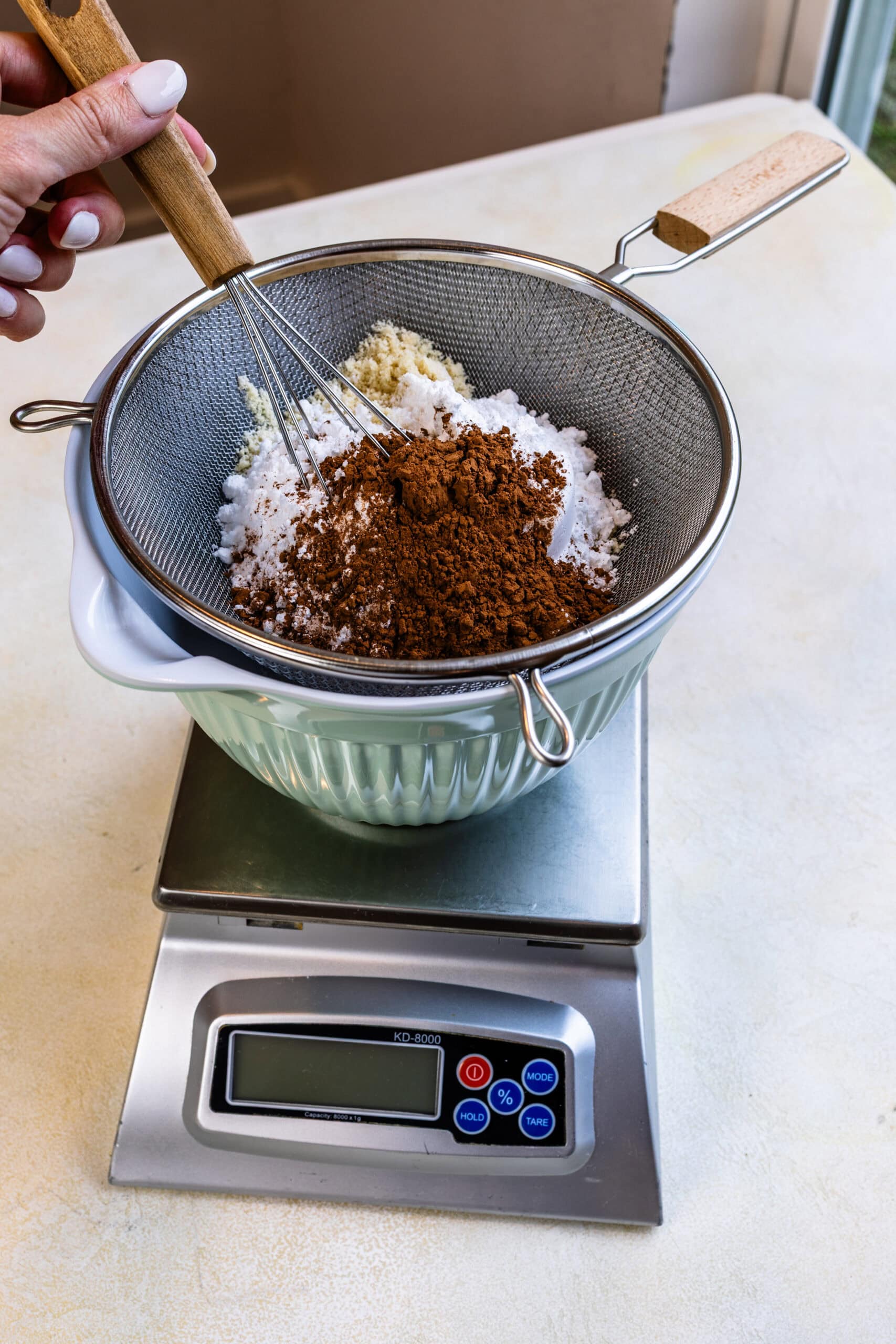
Sift the almond flour, powdered sugar, and cocoa powder together. Set aside.
2. Make the Meringue
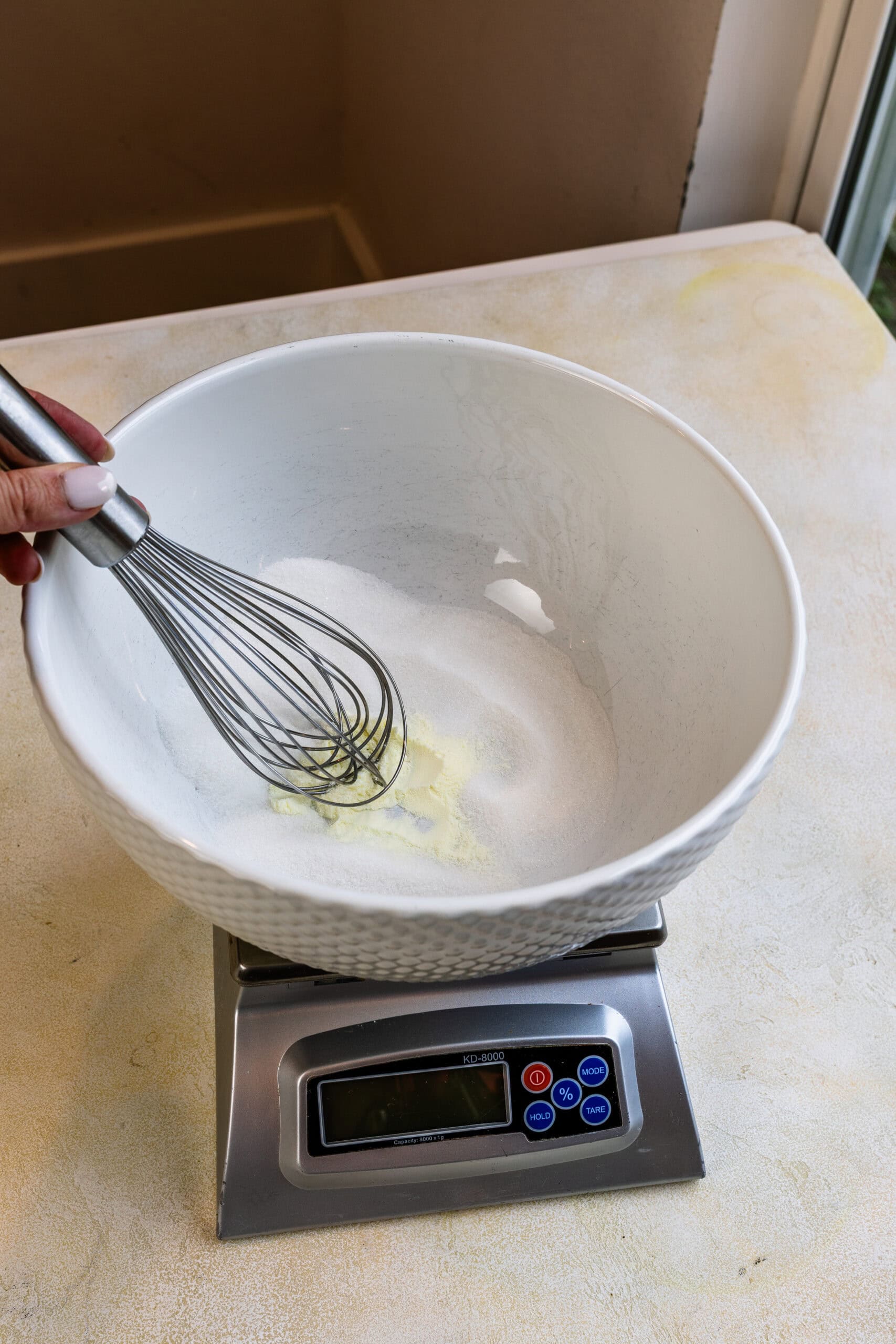
Whisk the sugar and egg white powder (if using) in a heatproof bowl.
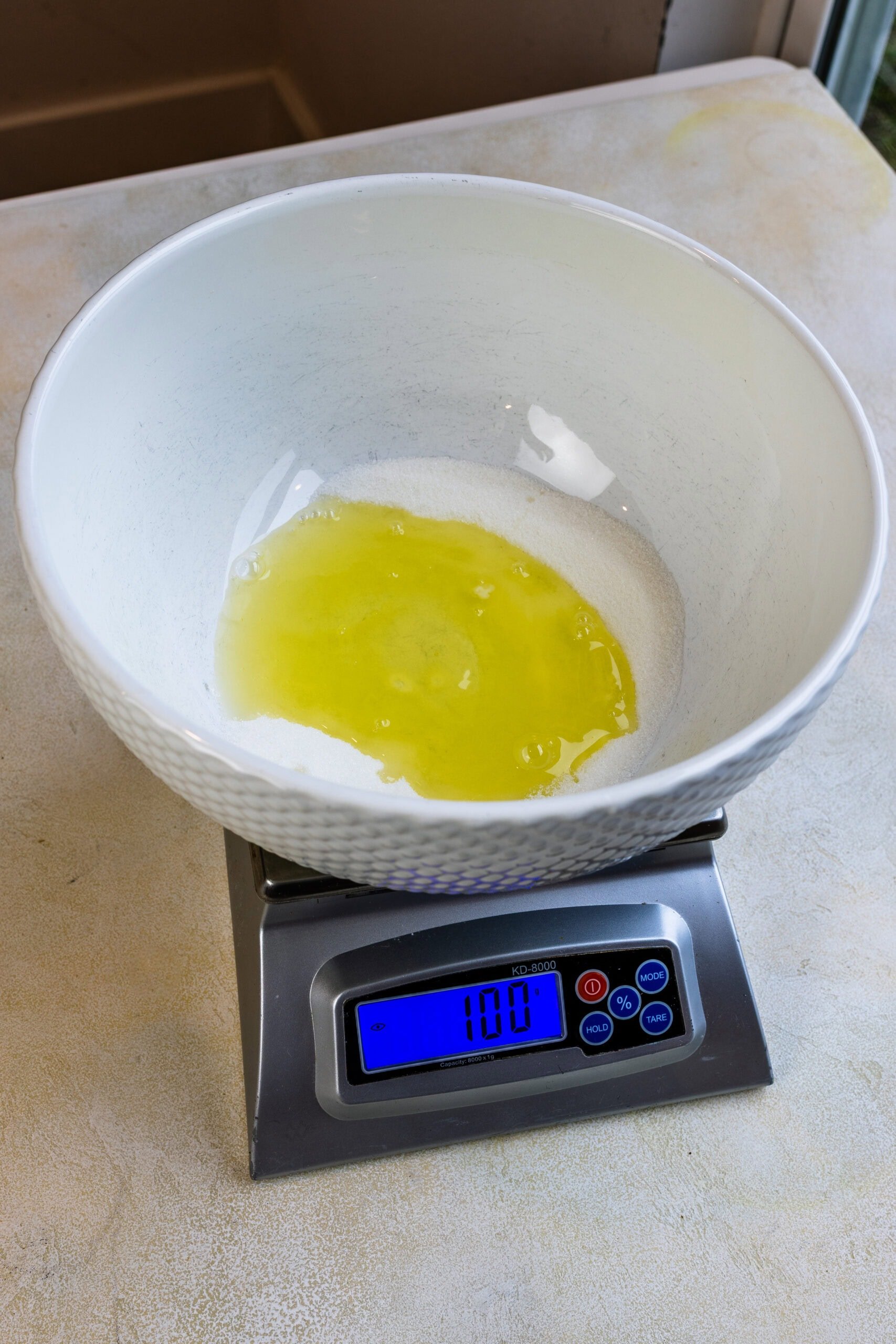
Add the egg whites to the bowl.
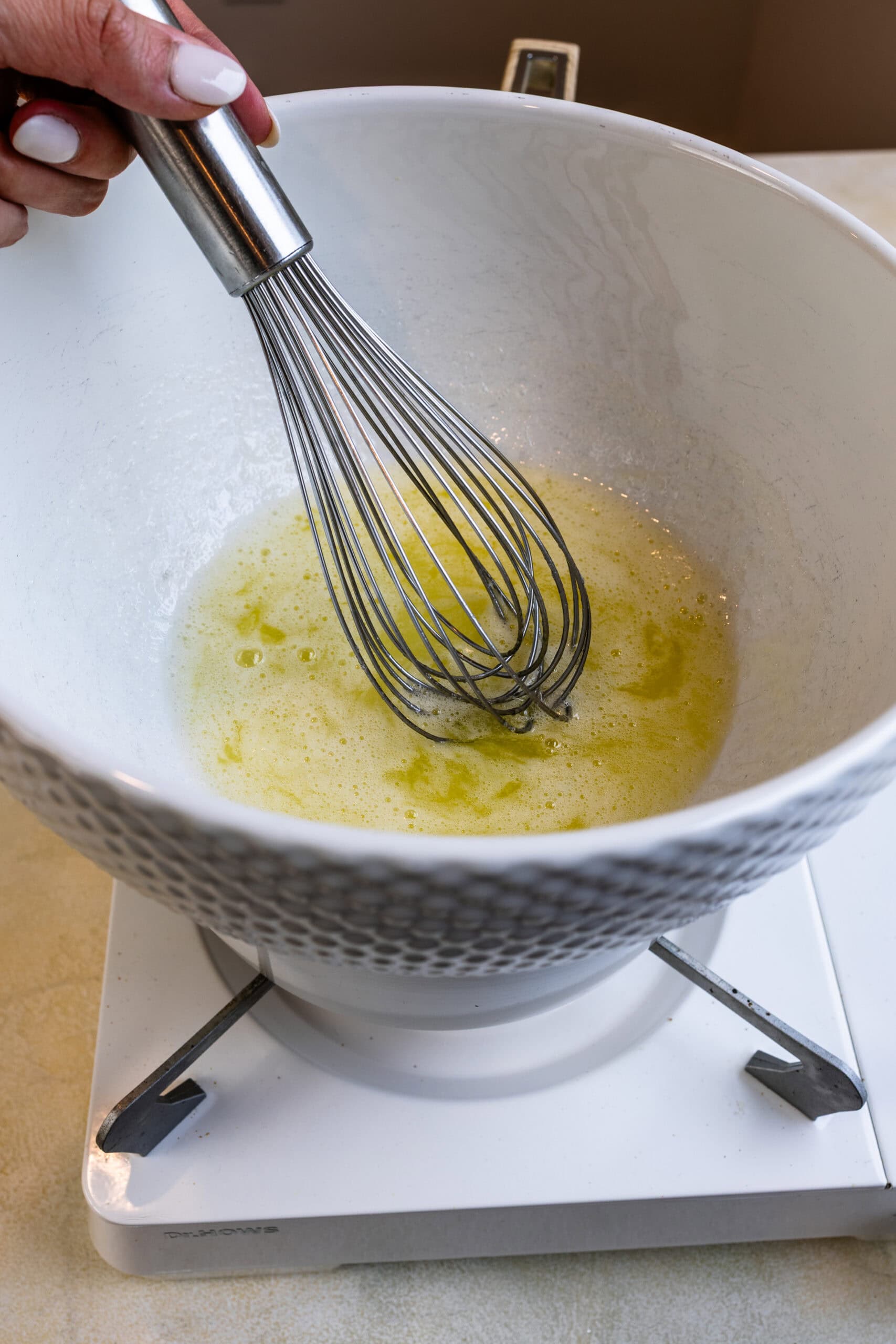
Whisk constantly over barely simmering water until the sugar is fully dissolved.
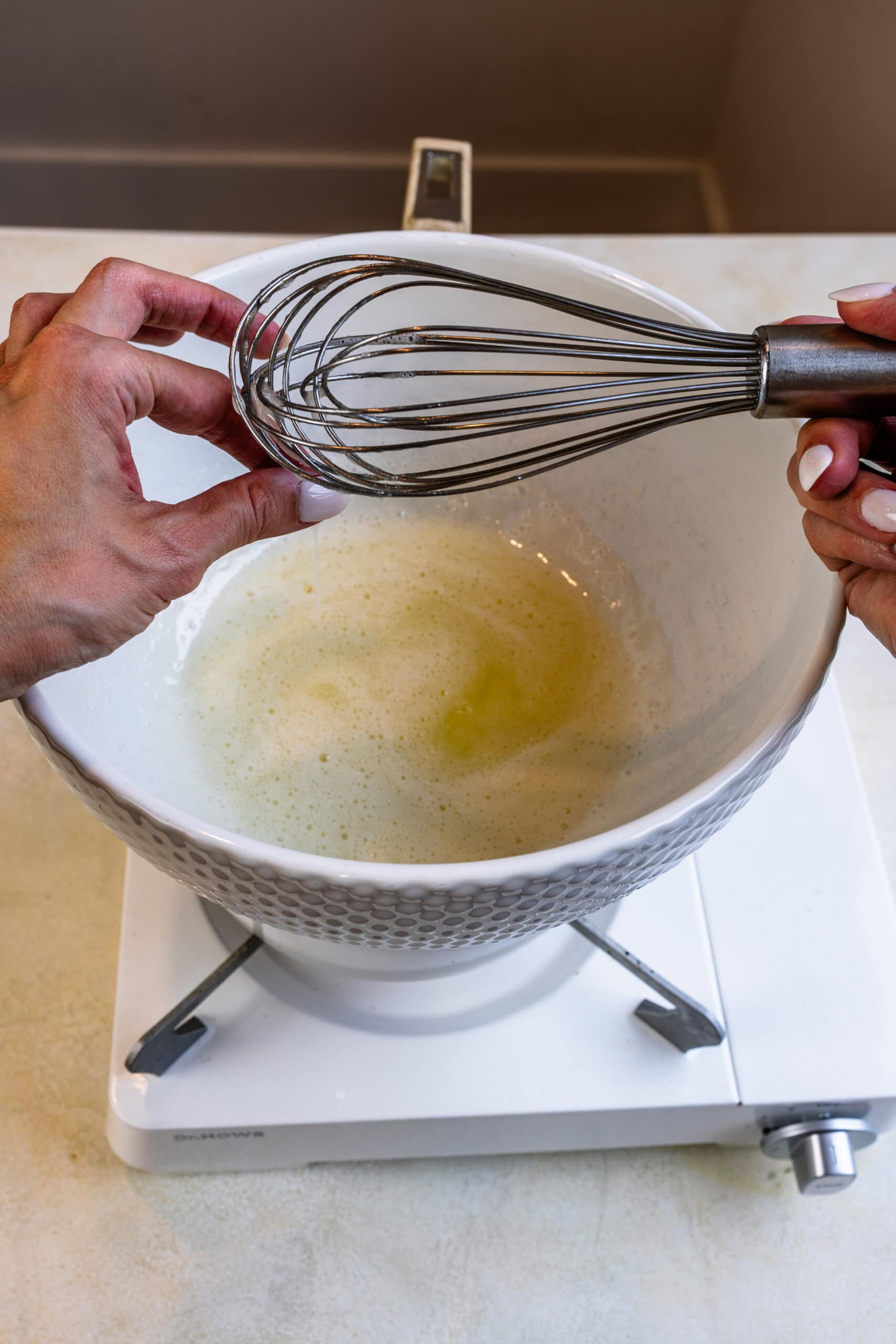
Rub a drop between your fingers—if you don’t feel granules, it’s ready.
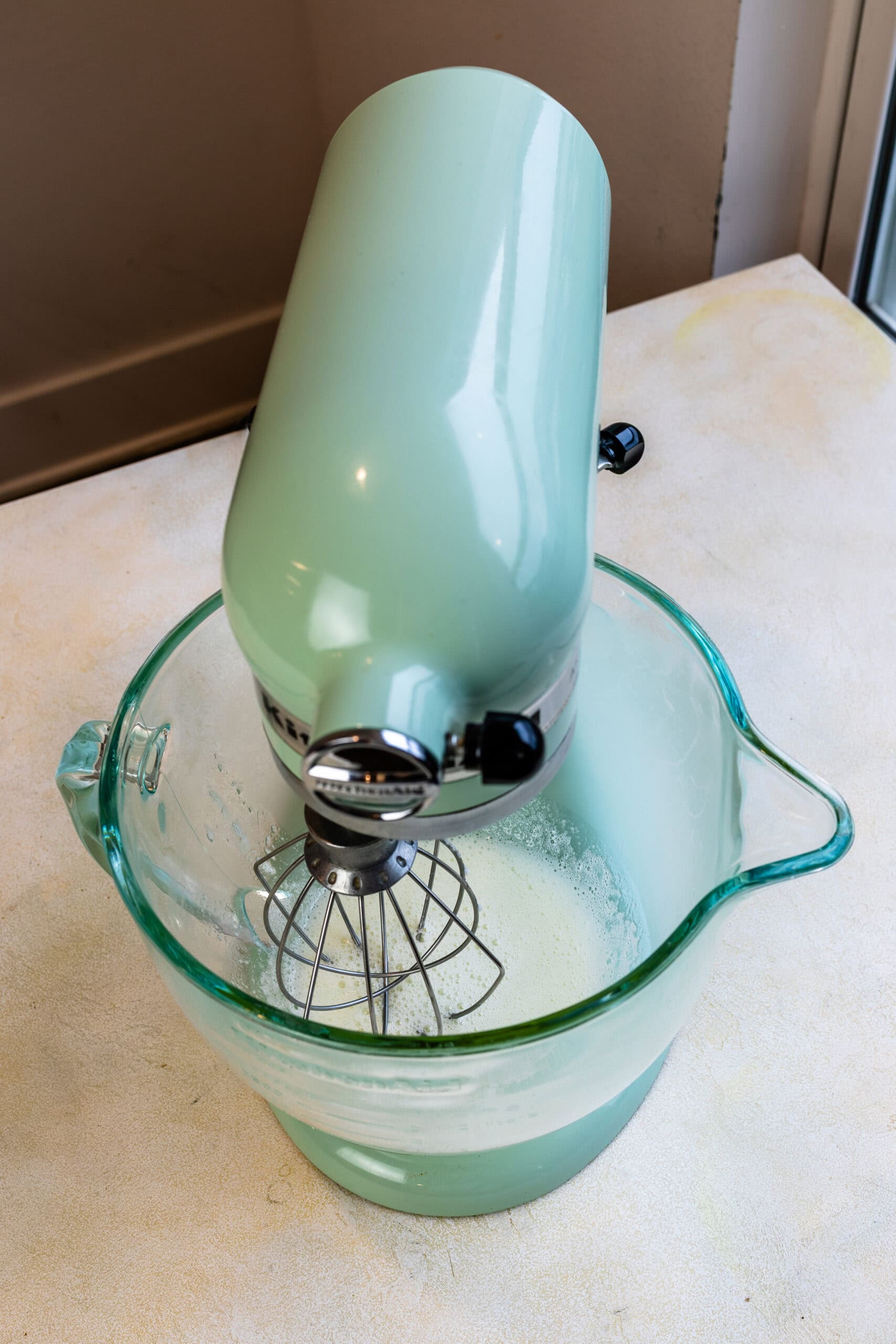
Transfer the mixture to a stand mixer fitted with the whisk attachment.
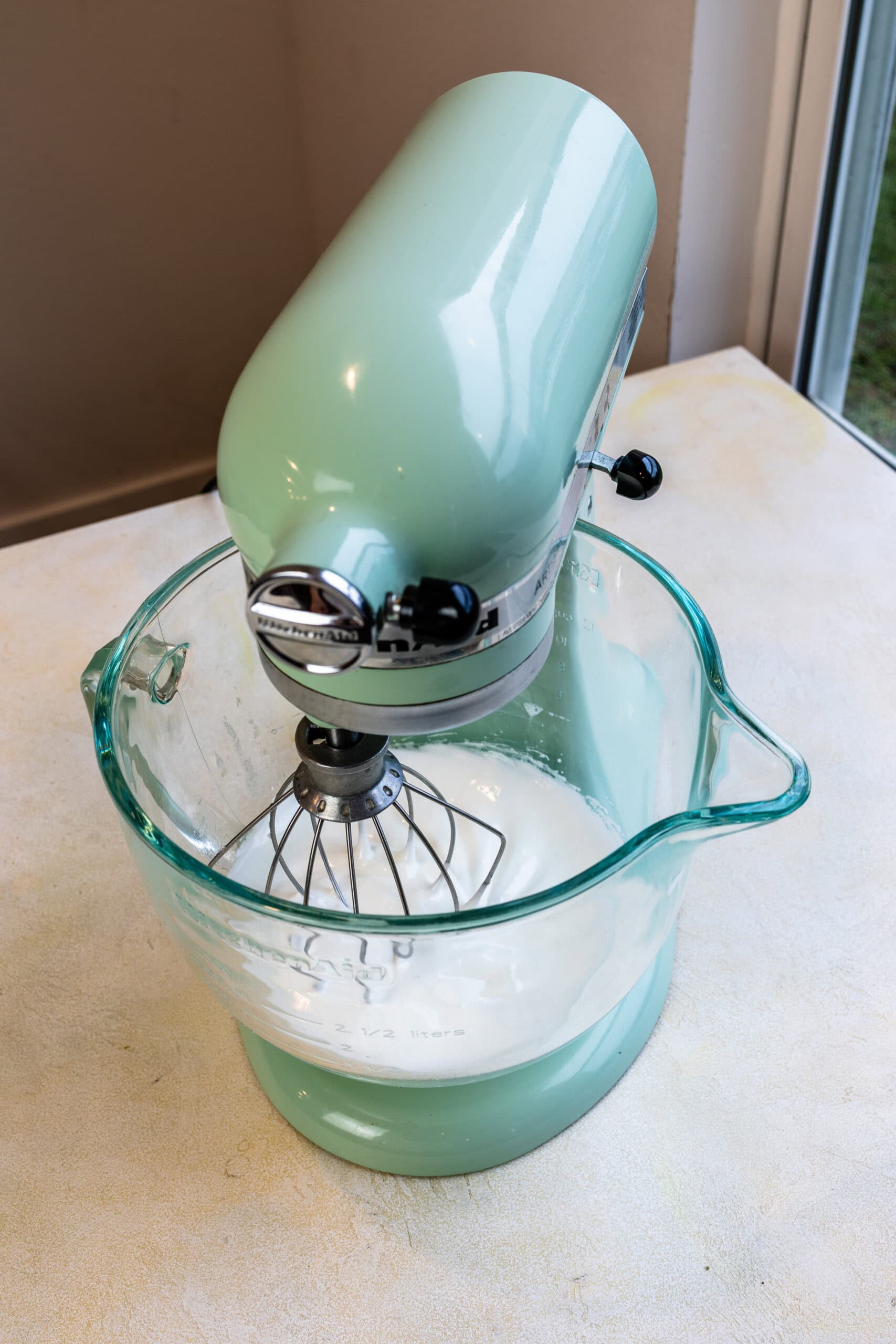
Whip on low speed for 30 seconds, then medium speed for a few minutes.
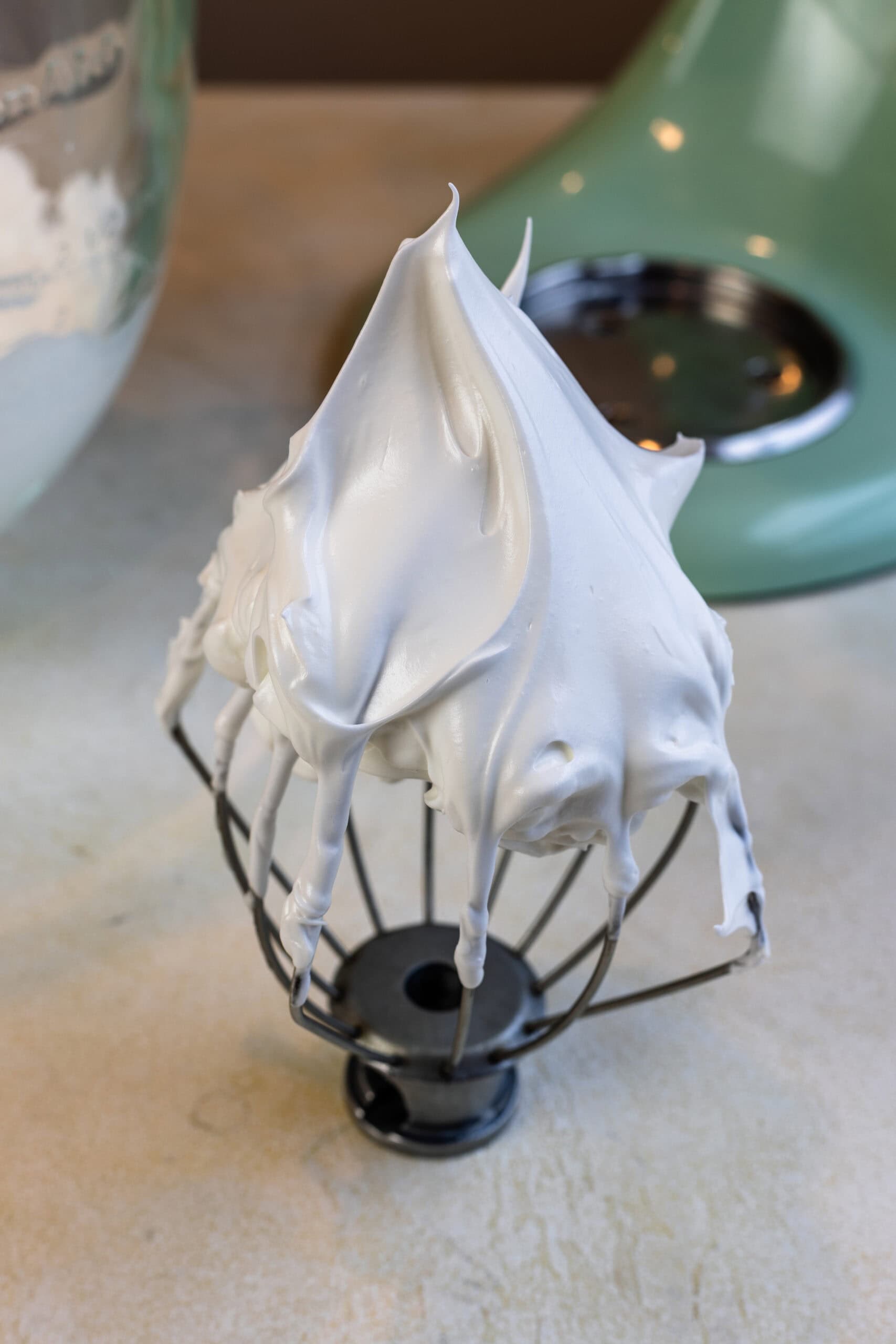
Increase to medium-high speed and whip until stiff peaks form.
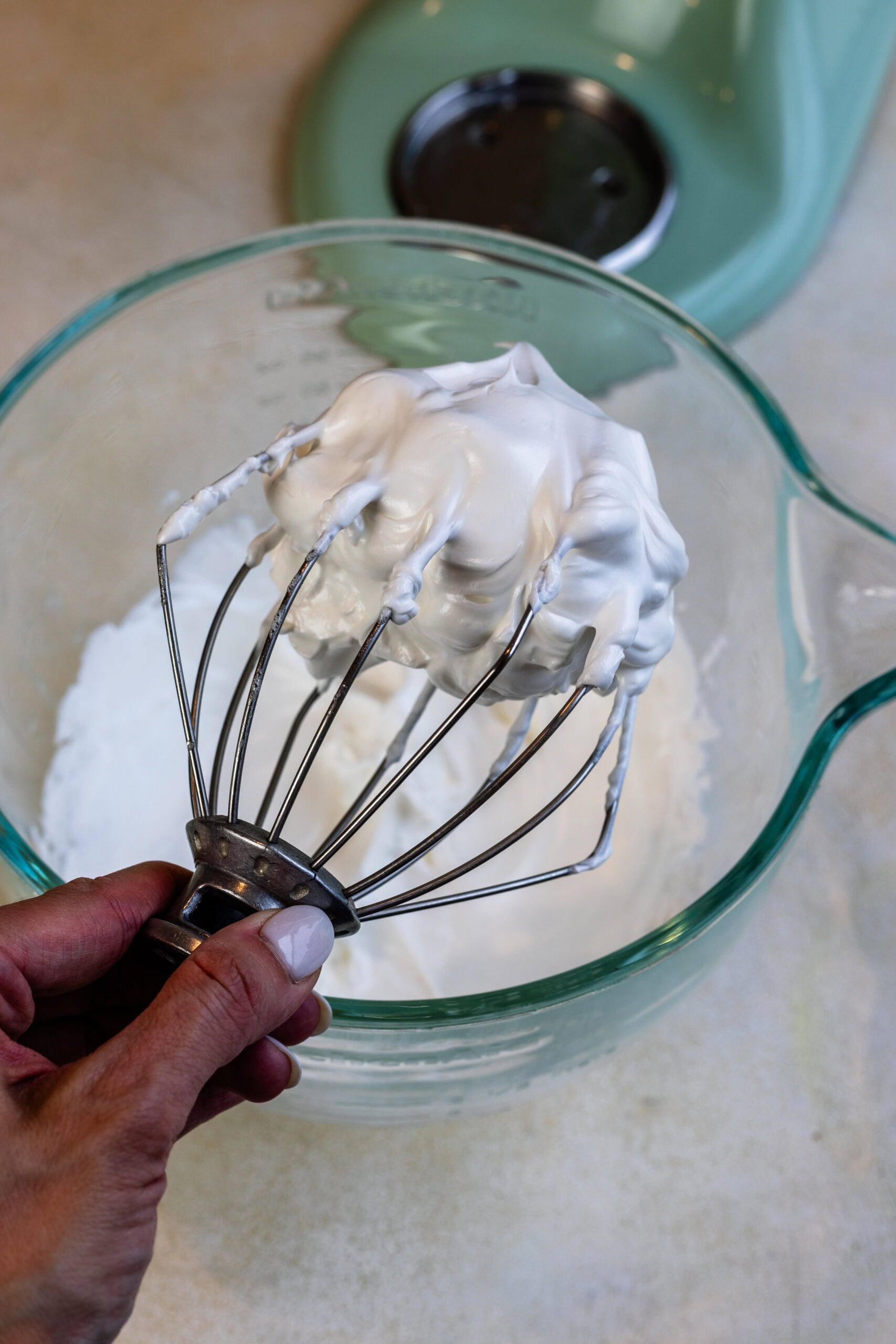
The meringue should be glossy, fluffy, and hold a peak that shoots straight up without drooping.
Read more about the meringue stage of making macarons in these two articles: How long to whip the meringue when making macarons, and The Meringue Stage.
3. Fold the Batter (Macaronage)
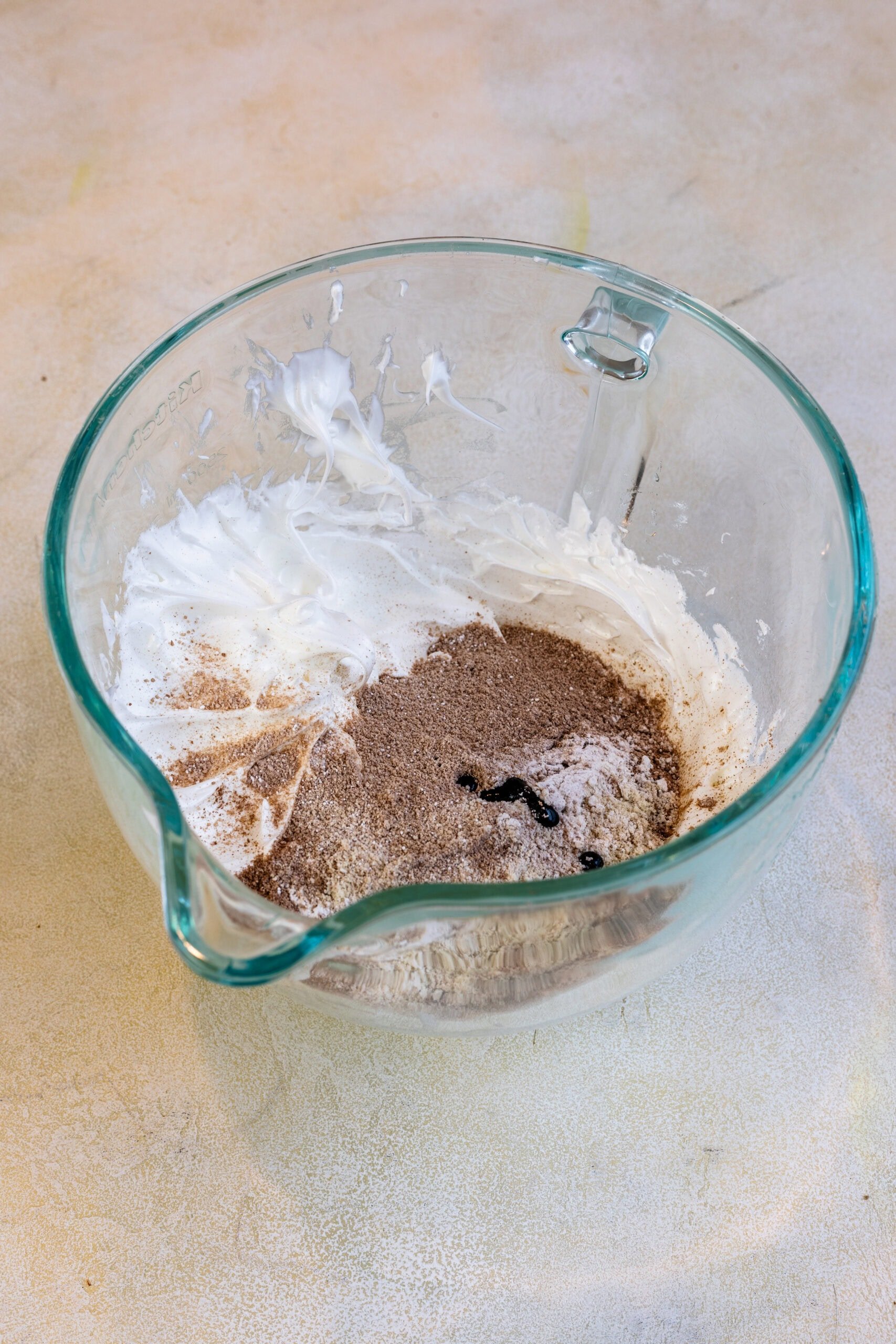
Add the sifted dry ingredients to the stiff meringue. Add brown food coloring if using.
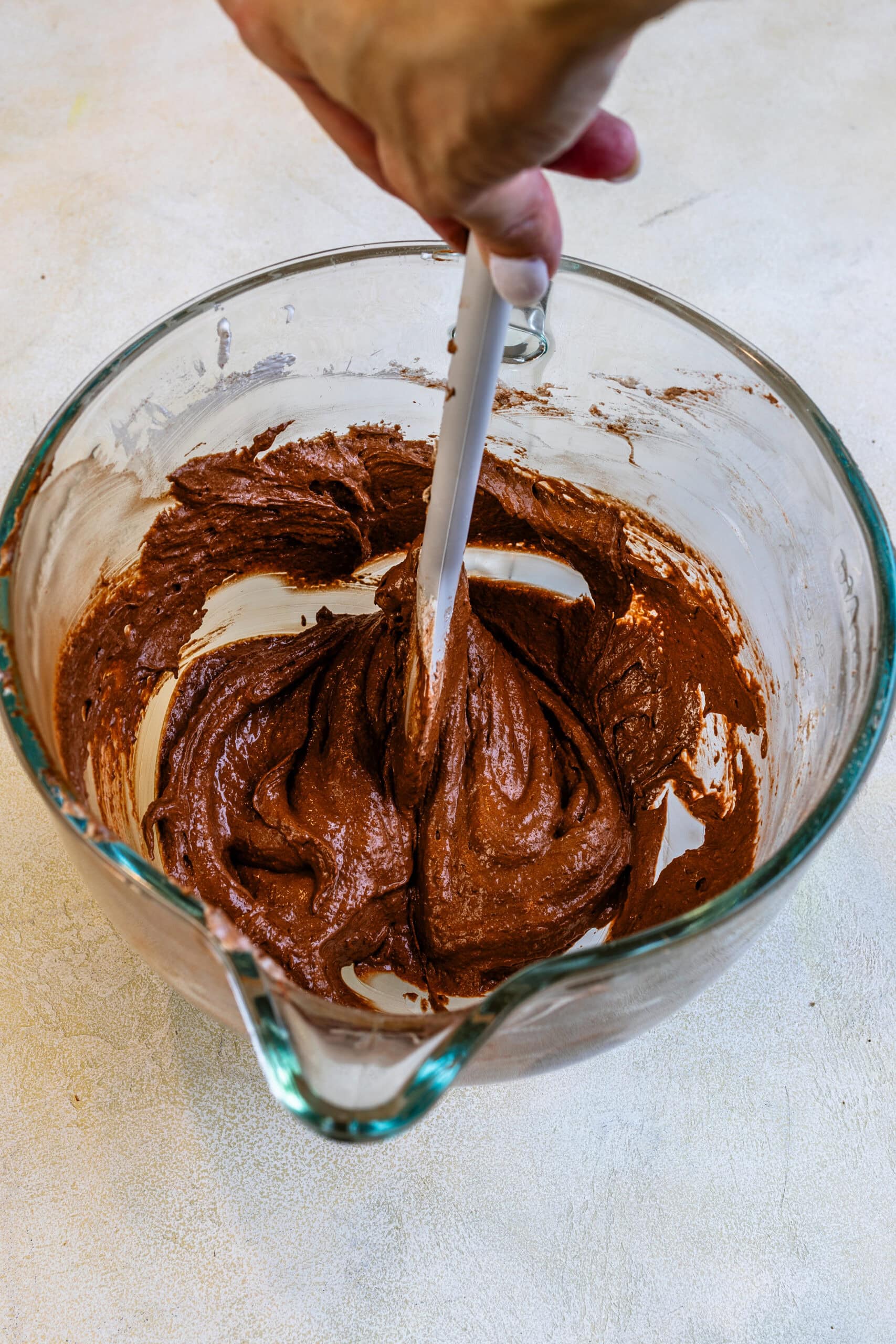
Fold gently with a spatula, forming a “J” motion, cutting through the middle with a spatula, then circling around the bowl.
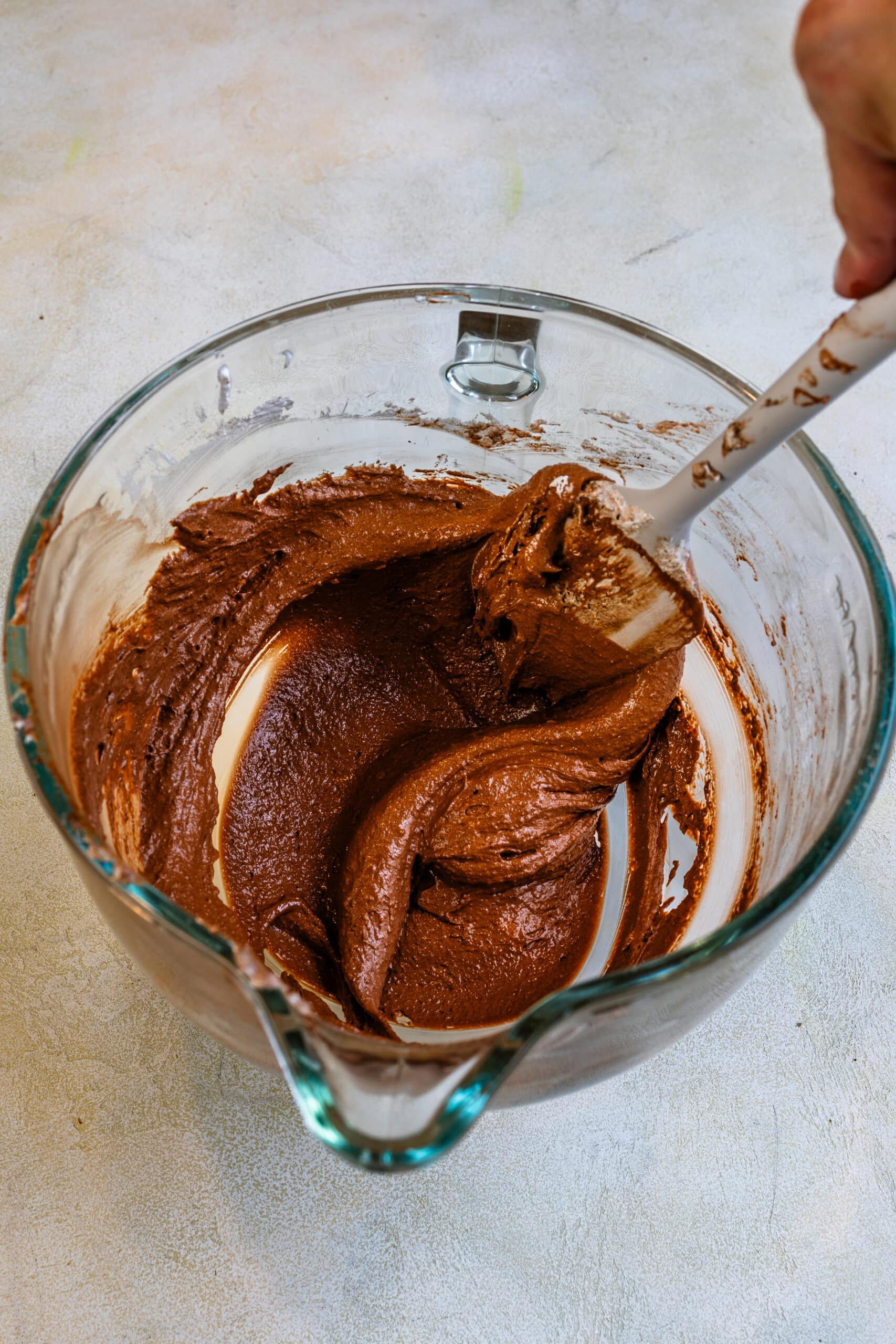
Press the batter against the sides of the bowl to deflate the batter.
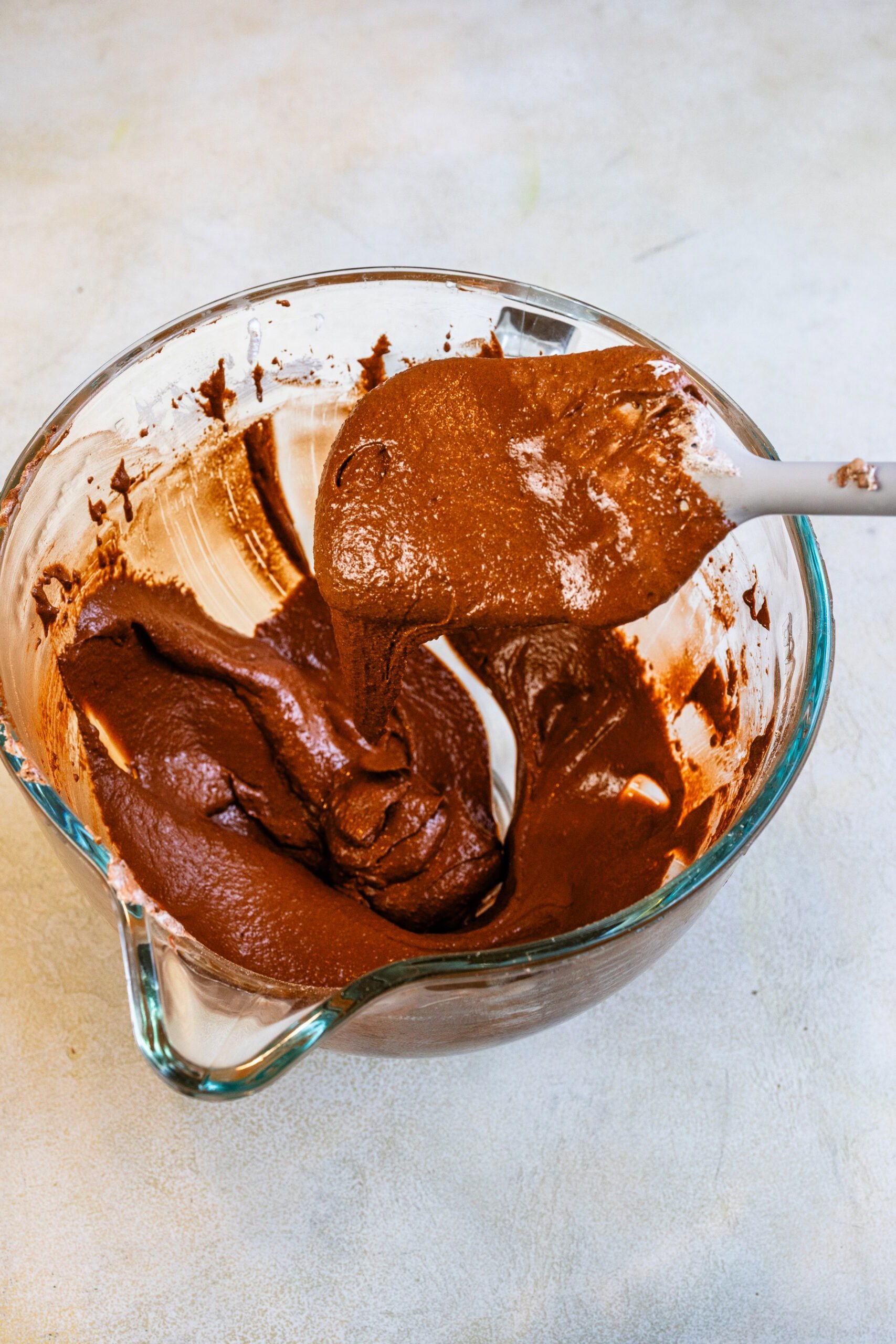
The batter is ready when it flows slowly off the spatula, forms figure-8s without breaking, and settles back into itself within 20–30 seconds.
The Teaspoon Test
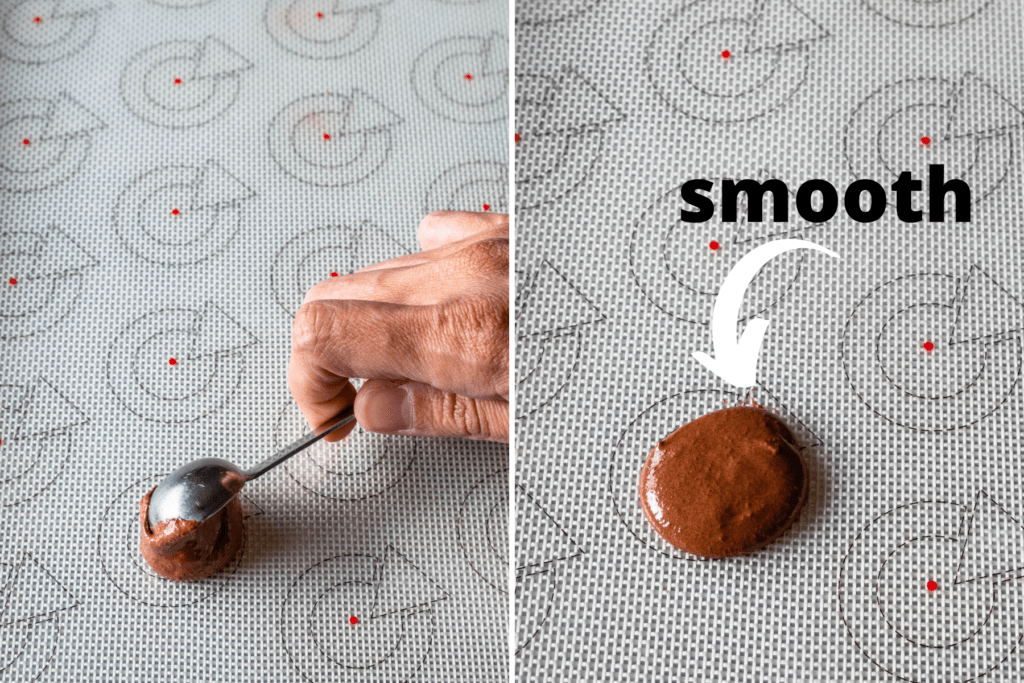
You can also perform the Teaspoon test, in which you spoon some batter on the tray, give it a few gentle taps, and watch how it behaves. The batter should spread out and lose the peak on top after a minute or so after being spooned onto the tray. This testing method works with all batters, not just chocolate. It’s the best way to tell if your batter is mixed enough if you are a beginner, or unsure of the proper consistency.
4. Pipe and Rest the Shells
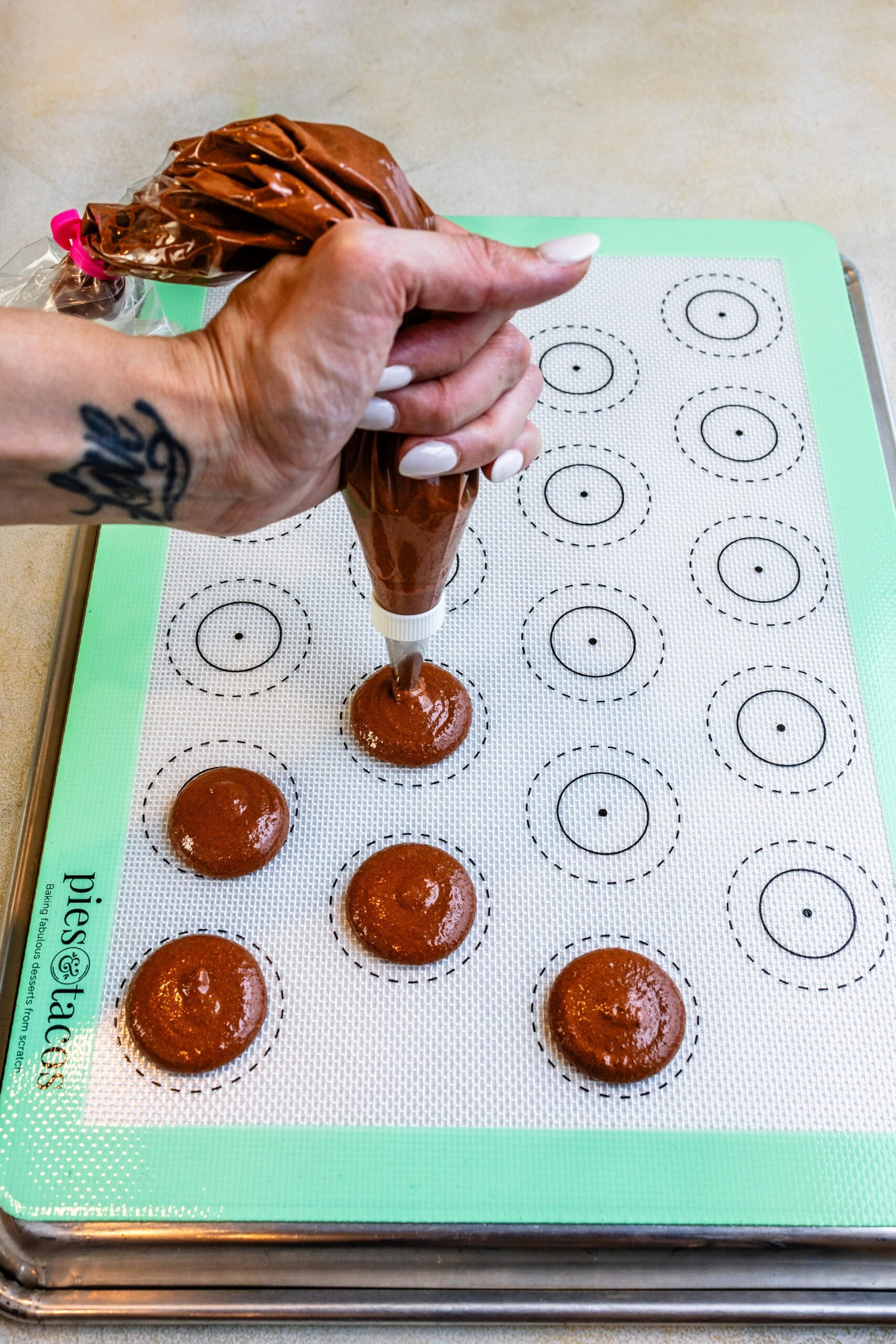
Transfer the batter to the piping bag and secure the top. Pipe straight down into the center of each template circle.
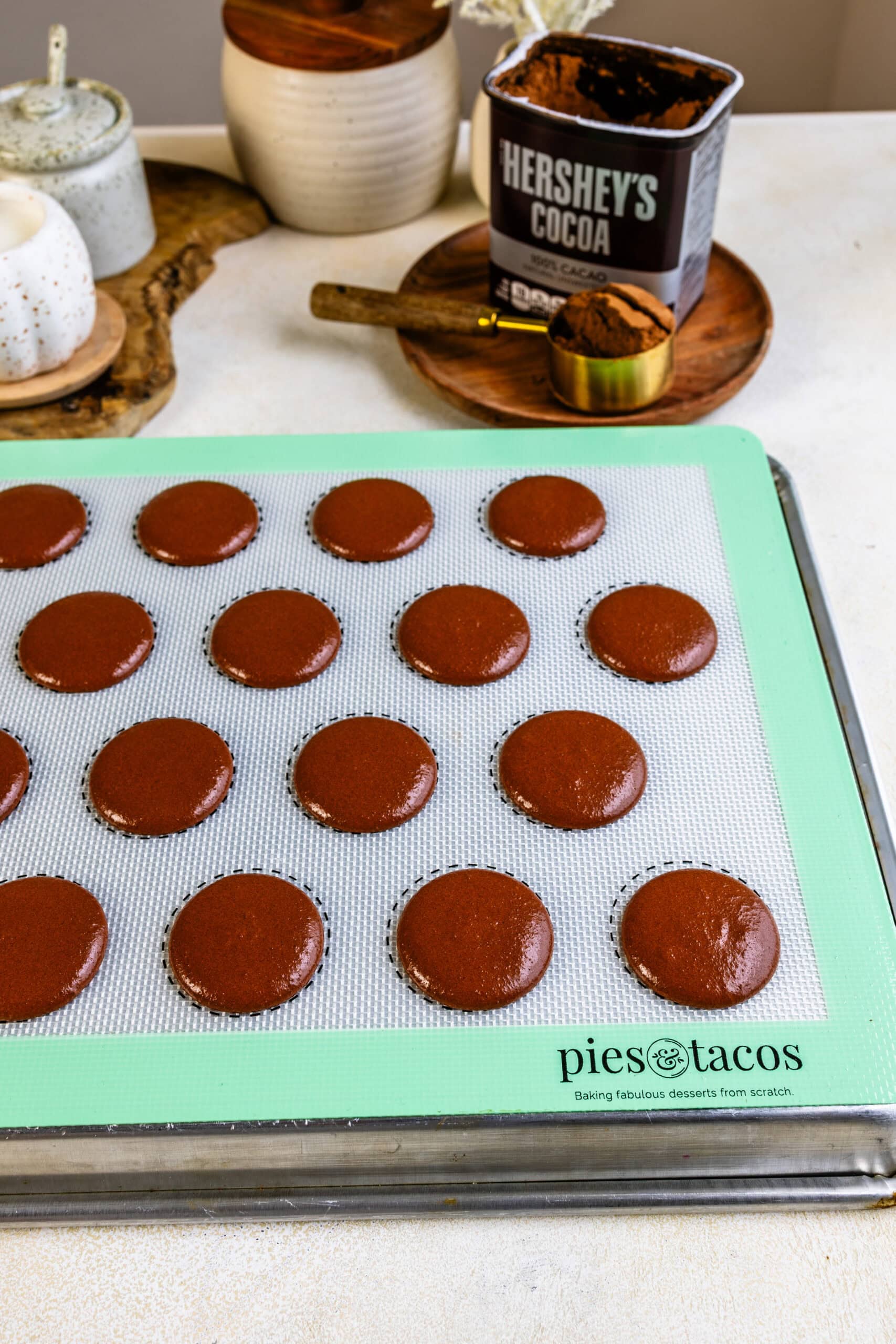
Tap the trays firmly against the counter to release air bubbles. Pop visible bubbles with a toothpick.
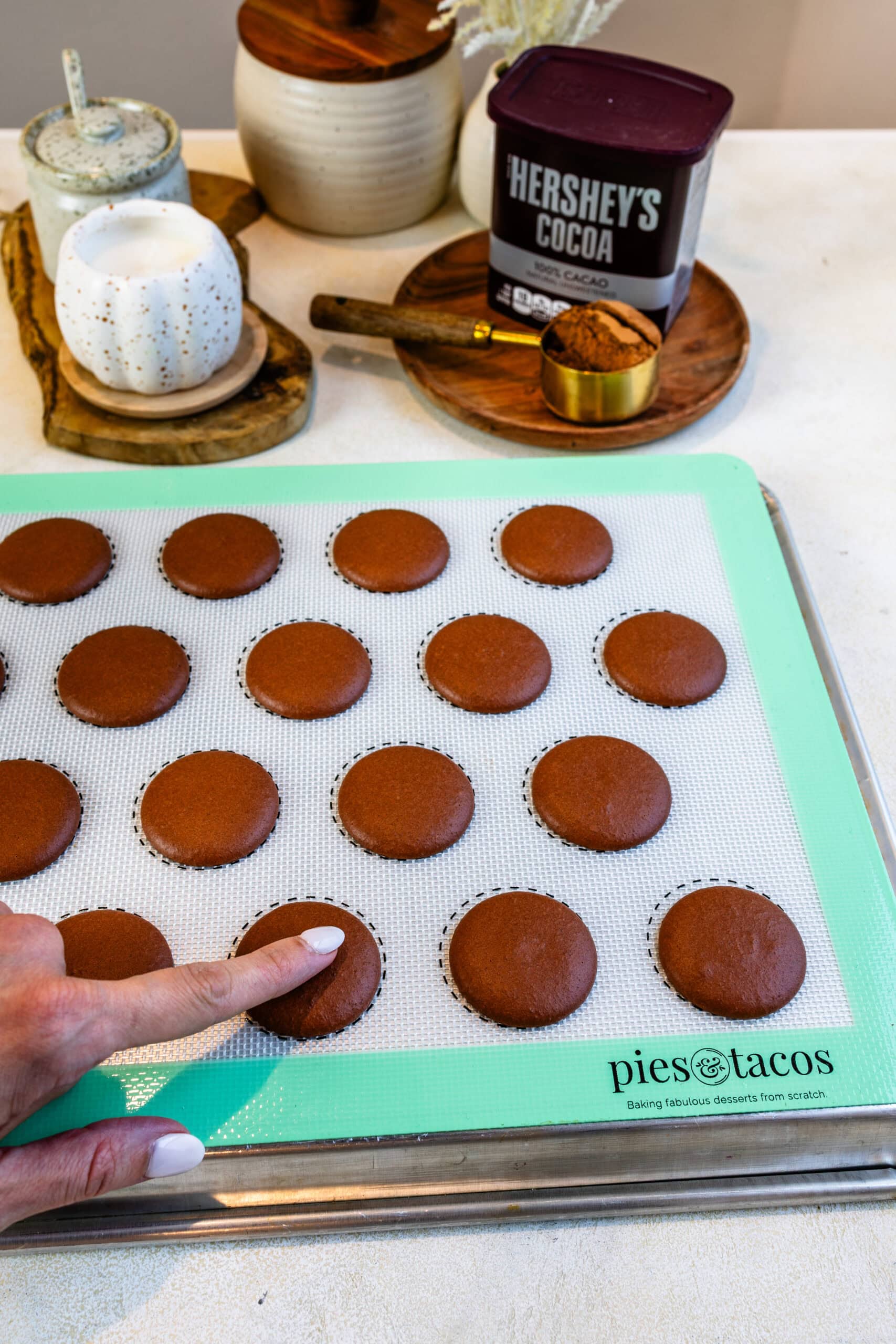
Let the shells rest at room temperature for 20–40 minutes, or until the tops feel dry and do not stick to your finger. Depending on the weather, or how much food coloring you’ve added, it can take much longer.
5. Bake
- Preheat the oven to 300°F. But have in mind oven temperatures vary depending on your oven. Read this article to understand more about your oven and how to determine the best temperature to bake your shells.
- Bake one tray at a time.
- Bake for 5 minutes, rotate the tray if needed, then continue baking for a total of 15–20 minutes.
- The shells are done when they no longer jiggle and release cleanly from the mat.
- Let cool completely before filling.
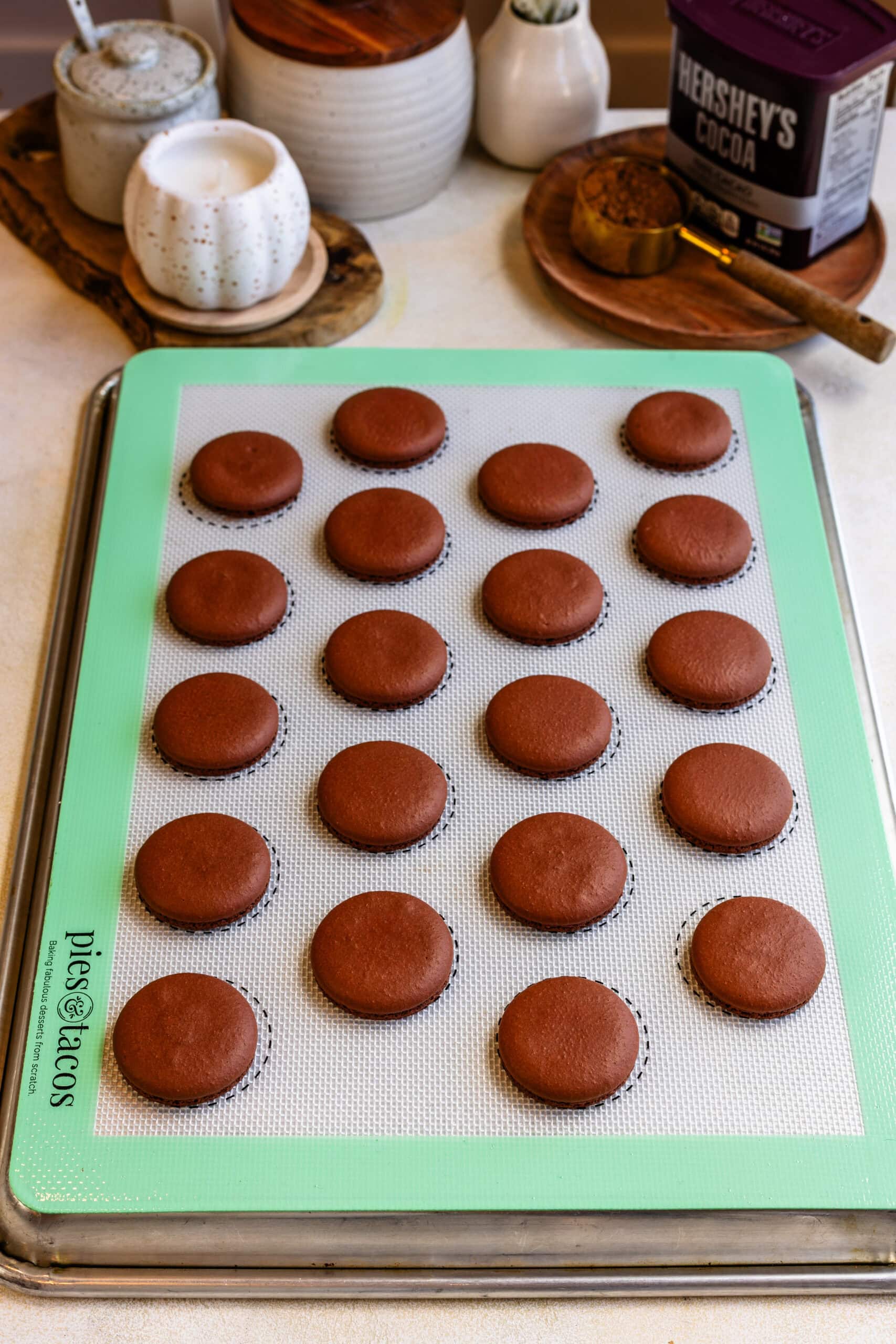
6. Fill the Macarons
I have an immense amount of fillings that would go amazing with chocolate macaron shells. Here are some of the suggested fillings from my blog. Such as these delicious Snickers Macarons, filled with Caramel Buttercream and nougat. These delightful Hot Chocolate Macarons, filled with hot chocolate buttercream. If you enjoy Nutella, then these Nutella Macarons, filled with Nutella buttercream will be perfect for you. And my all time favorite, Brownie Macarons, filled with a piece of brownie in the center.
Down below in the recipe I have posted two beautiful filling ideas: Rich Chocolate Buttercream, and Chocolate Ganache. Check both of them out, and let me know which one is your favorite!
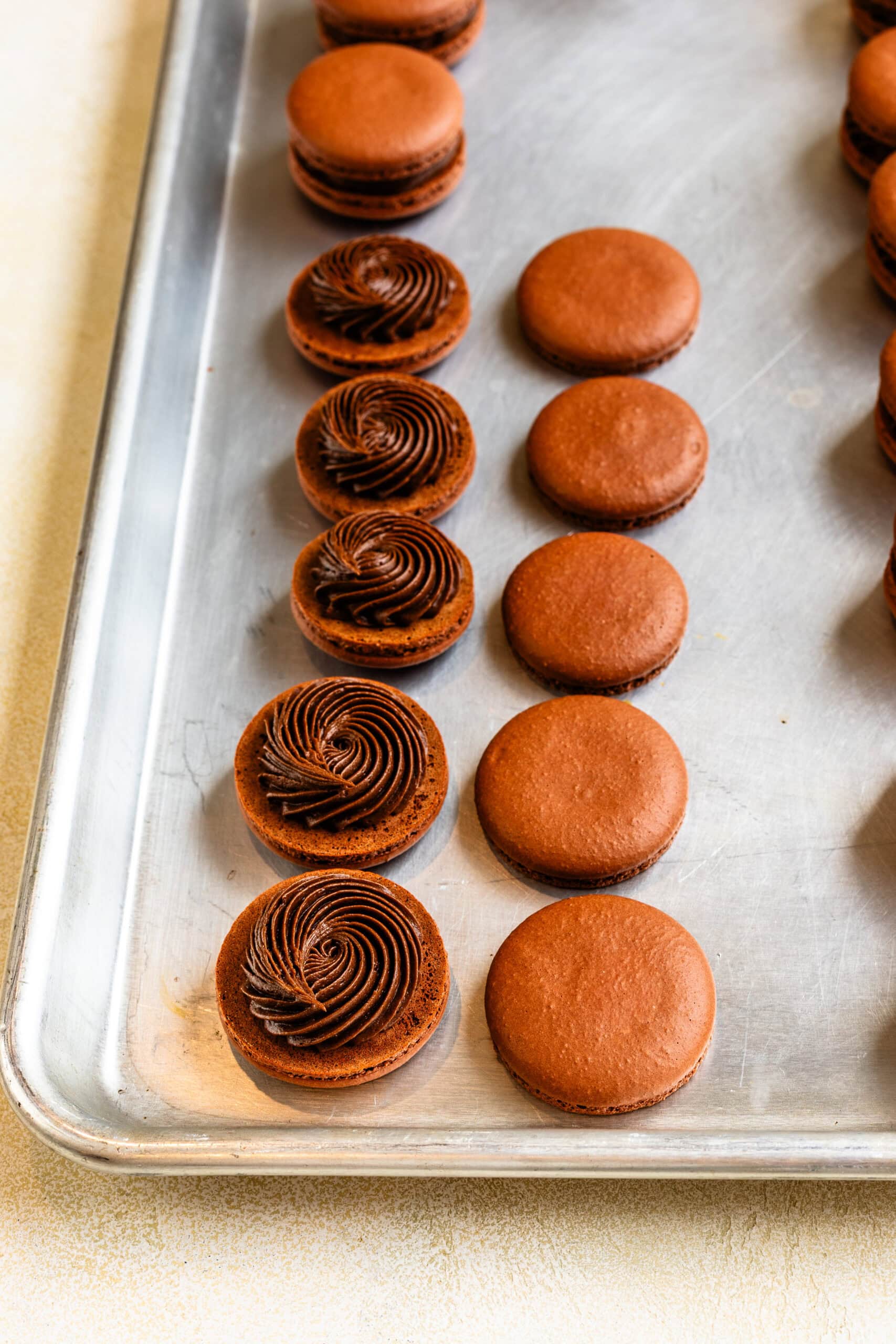
Fill the shells and place them in an airtight container in the fridge to mature overnight. Read more about Macaron Storage here.
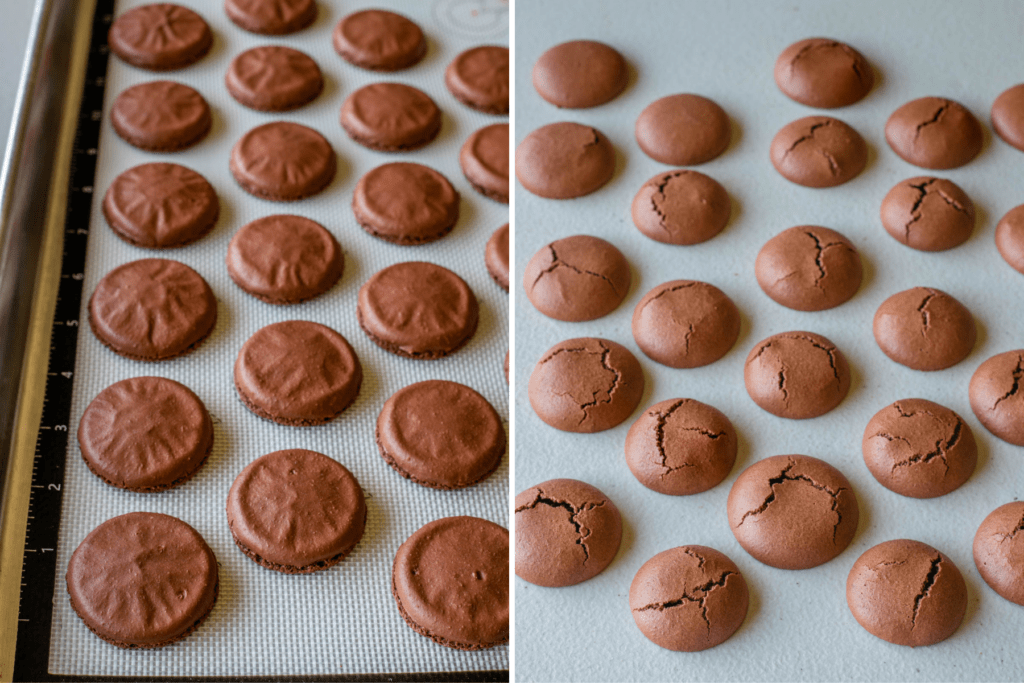
Why Do Chocolate Macaron Shells Fail?
Chocolate shells fail more often than classic shells because cocoa powder adds fat to the batter—and fat is the enemy of meringue. A stable meringue forms when proteins in the egg whites build a structured network that traps and protects air bubbles. When fat enters the mix—whether from oily almond flour or high-fat cocoa powder—it interferes with that structure, leading to weak or unstable shells. This is something I learned firsthand through a lot of trial and error.
This leads to:
- Cracked shells
- Wrinkled or porous tops
- Weak or tiny feet
- Hollow or collapsed shells
In short: too much fat prevents the meringue from supporting the macaron structure. This is why chocolate macarons require a more precise meringue and slightly different handling than classic shells.
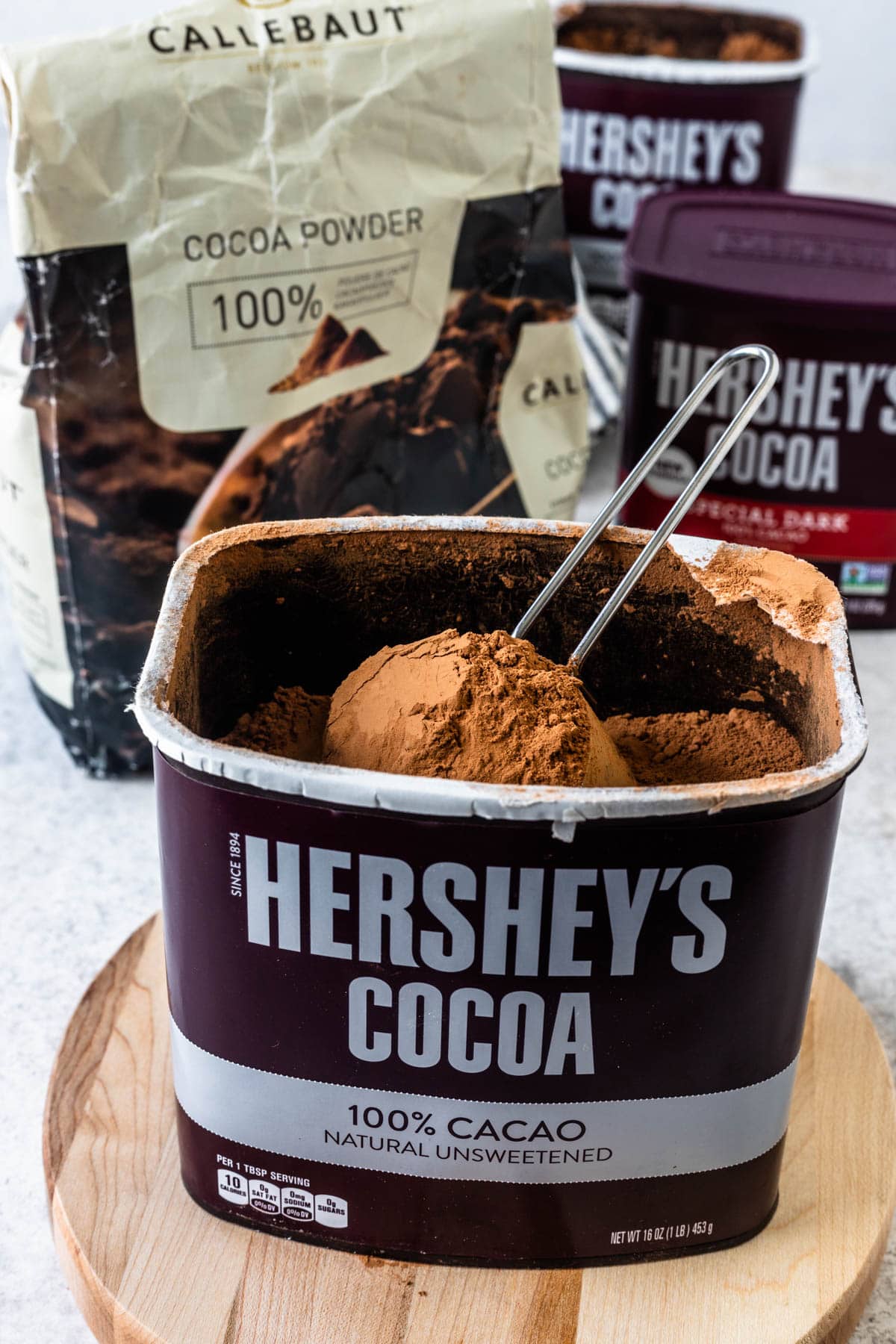
Best Cocoa Powder for Chocolate Macarons
Some cocoa powder brands have higher fat content than others. And depending on the fat content of the almond flour you use, the fat in the cocoa powder will also add into that, which will affect the shells greatly. The fat content matters.
Here’s why: Fresh, low-fat cocoa powder keeps the meringue stable. Older or high-fat cocoa powder releases fat into the batter and weakens the shells.
| Cocoa Powder | Fat per Tbsp | Notes |
| Hershey’s | ~0.5 g | Low fat, consistent results |
| Callebaut | ~1.5 g | Higher fat, can cause wrinkling |
| Valrhona | ~1.5 g | Amazing flavor, trickier shells |
A fat content around 0.5 g per tablespoon gives the best structure.
How much cocoa powder should you use?
My recipe uses 14 g cocoa powder. It works well for me, and I always use Hershey’s, but if you use a different brand, or have oily almond flour, or if your shells continue to come out wrinkled or cracked, you may want to reduce the cocoa powder to 5–10 grams.
If you do reduce it, replace the missing grams with powdered sugar to maintain the correct dry-to-wet ratio. Example: If using 7 g cocoa instead of 14 g, add 7 g extra powdered sugar.
Some bakers skip cocoa entirely and use brown food coloring, but you’ll miss the flavor. Even a small amount of cocoa adds richness, so I recommend adjusting — not removing it.
How to Know When to Stop Folding (Macaronage)
Macaronage is where most bakers go wrong — and chocolate batter behaves differently because cocoa powder absorbs moisture. Instead of focusing on mixing for a certain number of minutes, watch for the visual cues.
The perfect chocolate macaron batter should:
- Flow slowly and smoothly off the spatula on a V-shape
- Form two to three figure 8s without breaking
- Settle within 20–30 seconds when tapped
- Look glossy and thick, not runny
If the batter flows too quickly, it may be: overly affected by high-fat cocoa powder, overmixed, a sign the meringue was too soft.
Frequently Asked Questions
Usually because of too much fat (cocoa or almond flour), undermixed meringue, or oven heat hitting the shells too aggressively.
High-fat cocoa powder weakens the meringue and causes wrinkling as the shells collapse.
Egg white powder adds protein and strengthens the meringue. If you are used to adding it to your regular shells, you can still add it to the chocolate ones, but I recommend reducing the amount. I use 4g of egg white powder for my regular shells, for chocolate ones I reduce it to 2g. If living in a dry climate, consider skipping the egg white powder.
For the Swiss method (the one highlighted here), no. The whites warm up naturally when placed over the double boiler with the sugar. It might take longer to dissolve, but won’t affect the final structure. For the French method, it’s usually required that the eggs be at room temperature. Read more about egg white powder and how to use it here.
If you’ve followed me for a while, you know I’m team silicone mat for macarons. Silicone mat provides you with even bottoms, and if you use a mat with the circles in it, they will have uniform sizes. Also, silicone provides even heat distribution. Parchment paper can cause the shells to have uneven, wrinkly bottoms.
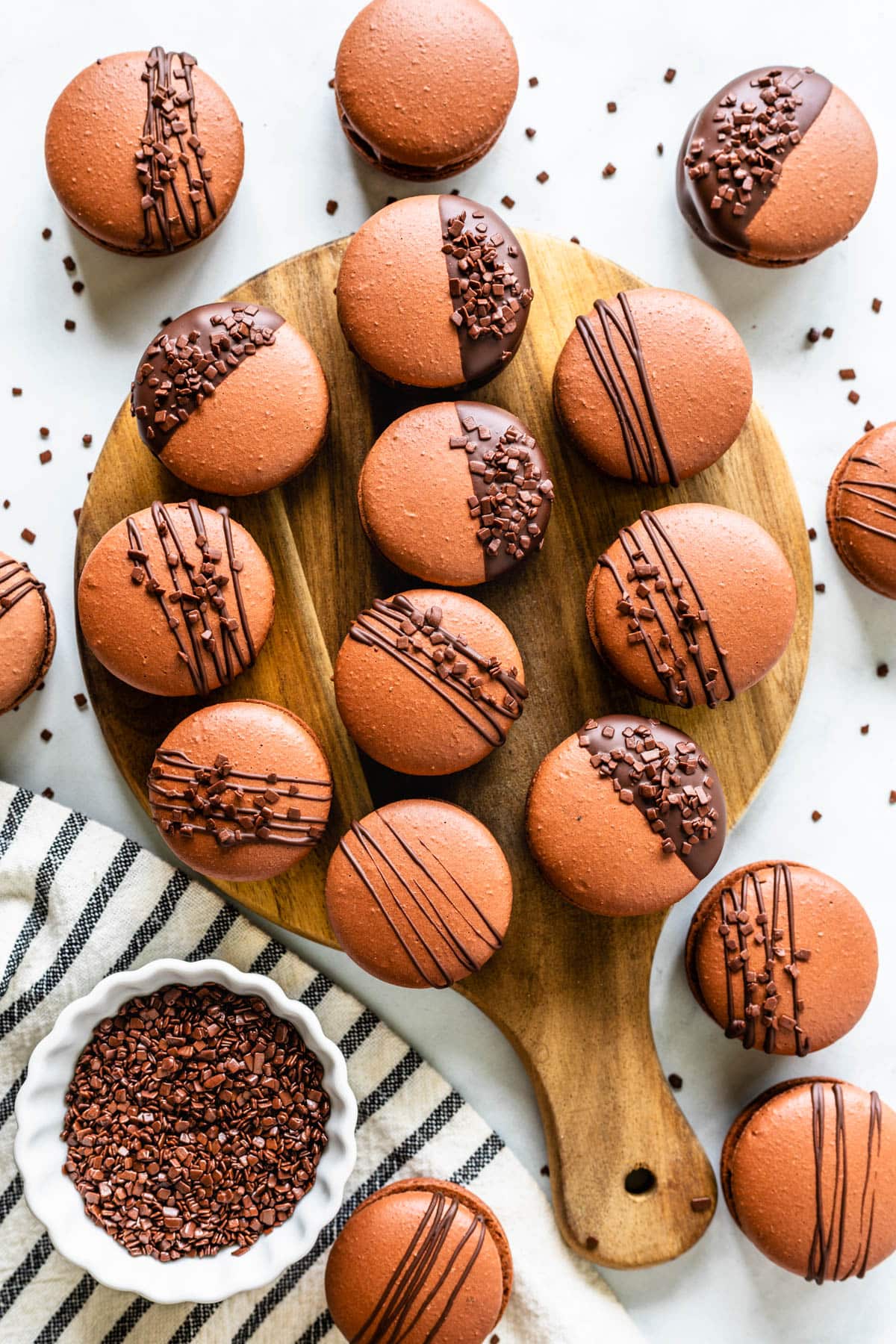
Thank you for being here and baking with me! I hope this guide helps you perfect your chocolate macarons and gives you the confidence to troubleshoot whenever something goes wrong. Once you understand the way cocoa powder affects the batter, chocolate shells become much easier — and so much fun to make.
Watch Video
Chocolate Macarons

Ingredients
Chocolate Macaron Shells
- 100 grams egg whites
- 100 grams white sugar
- 2 grams egg white powder optional (read notes)
- 96 grams almond flour
- 75 grams powdered sugar
- 14 grams cocoa powder
- brown food coloring (optional to deepen the color)
Rich Chocolate Frosting
- 5 tbsp unsalted butter (70 grams)
- 2½ tbsp cocoa powder (16 g)
- 1 cup powdered sugar (125 grams)
- 2-4 tsp milk (10–14 ml)
- ½ tsp vanilla extract
Ganache Filling option
- 200 grams chopped chocolate (or chocolate chips)
- ⅔ cup heavy cream (156 ml)
Instructions
Chocolate Macaron Shells
- Before you start, get all of the ingredients ready. Prepare a large piping bag, fitted with a round tip, I like to use a Wilton 12 or a tip measuring 1/4" in diameter.
- Line two baking sheets with parchment paper or silicone mat.
- I use a baking mat with the macaron template already in it. You can make your own or print it from the internet, and just place it under silicone mat, or parchment paper.
- Wipe the mats and bowls you will use down with vinegar, this gets rid of any grease particles that might be in the tools.
- Measure out the ingredients before starting out.
- Sift the powdered sugar, almond flour, and cocoa powder together. Set aside.
- Whisk the sugar and the egg white powder (if using) in a bowl, and place it over a pan with barely simmering water.
- Add the egg whites to the sugar and whisk the mixture until frothy and the sugar is completely melted. It will take a couple of minutes. You can test by touching the mixture between your fingers, and if you don't feel any sugar granules you can remove it from the heat.
- Make sure the bottom of the bowl isn’t touching the simmering water.
- Transfer the mixture to the bowl of a stand mixer.
- With the whisk attachment, start whisking the syrup on low (speed 2 KitchenAid) for about 30 seconds.
- After 30 seconds I’ll increase the speed to 4 and let the meringue whip for another couple of minutes here. Now I will finish whipping my meringue on speed 6 for about 10 minutes or so. Some people like to whip their meringue at a higher speed, and some people like it to be at a slower speed. I know of people who whip their meringue for a long time on speed 4, which can take a little while. And others like a faster speed. It all depends. Experiment with different speeds to find out how it affects your meringue. Generally, a faster speed will add lots of air bubbles to the meringue way too fast, which can create an unstable meringue, or hollow shells. Which is why I like to stay at a medium speed for the most part.
- Continue to watch the meringue whip to avoid over whipping.
- Once the whites get glossy and you start seeing streaks formed by the whisk, it might be time to start checking.
- Whip until stiff peaks have formed. When you pull your whisk up, the peak should be stiff and shooting straight up, with possibly a slight bend at the top, but not bending down to the side.
- Pour the sifted powdered sugar, almond flour, and cocoa powder into the stiff meringue. Add food coloring if using. Adding a little bit of brown food coloring can help deepen the color of the shells, specially if you've reduced the amount of cocoa powder.
- Start folding gently forming a letter J with a spatula. Fold the dry ingredients with the meringue until the perfect consistency has been achieved.
- The batter should be flowing slowly and effortlessly off the spatula, you should be able to pick up some batter with the spatula and draw several figure 8s with the batter that’s flowing, without having the batter break up. And even after the batter breaks up, it should still continue to flow off the spatula slowly.
- There’s another test you can do. I call it the Teaspoon test.
- Grab a teaspoon of batter and spoon onto the parchment paper or silicon mat. Wait a minute to see how it behaves.
- If the batter stays stiff, forming a point and doesn’t spread out, fold a little bit more, about 3 folds.
- Test again.
- Once the batter spreads out a bit and starts to look glossy and smooth on top, on the parchment paper, it’s ready.
- You don’t want your batter to be too runny either. So be careful not to over mix. It’s always best to under mix and test several times until the proper consistency has been achieved.
- Once the batter achieves the perfect consistency, transfer it to the piping bag. Secure the top with a tie, so the batter doesn’t scape while piping, and to keep the batter from drying out.
- Now position the piping bag over the center of the circle template, and start applying gentle pressure to release the batter. Then pull the bag up twisting slightly at the top.
- Once you’ve piped as many circles as you could, bang the trays against the counter. This will release air bubbles that are in the batter and prevent your macaron shells from cracking.
- Use a toothpick to pop any air bubbles on the surface of the shells.
- Let your trays sit for a while so the shells will dry out a little bit. I usually leave about 20-40 minutes, depending on how humid the day is. You’ll know they’re ready when you gently touch the surface of a macaron and it seems dry and doesn't stick to your finger.
- Pre-heat the oven to 300°F.
- Bake one tray at a time.
- Bake for 5 minutes, rotate tray. Not everybody has to rotate their trays, depending on your oven you may not have to do this. If I don't rotate my trays, the macarons come out lopsided.
- Bake the macarons for a total of 15 to 20 minutes, until you try to move a macaron and it doesn't feel jiggly. You can also gently touch the top of the shell and it shouldn't feel soft.
- When baked, the macarons will have a deeper color and formed feet. And they will peel off the tray easily.
- Remove from the oven and bake the other tray.
- Let the macarons cool down before proceeding with the filling.
Rich Chocolate Frosting
- Start by sifting the powdered sugar, and cocoa powder in a small bowl. Set aside.
- Add softened butter to the mixer bowl, and cream on medium-high speed for 1 minute.
- With the mixer off, add powdered sugar, cocoa powder, and milk.
- Mix on low until dry ingredients are incorporated with the butter.
- Raise the speed to medium-high, and cream from 30 -60 seconds, until smooth.
- Add the vanilla and mix.
- The frosting should be smooth, thick, not too stiff. Add more milk if the frosting is too stiff, and add more powdered sugar if the frosting is too runny and you went overboard with the milk.
- Always remember the a little bit of liquid here goes a long way, so you don’t want to be adding too much milk to the frosting.
For the Ganache filling option
- Chop dark chocolate very finely. Place it in a bowl.
- Heat the heavy cream in a small pan over medium heat, or in the microwave. No matter what method you choose, be very careful not to boil the heavy cream.
- Pour hot cream over chopped chocolate. Let it stand for a minute.
- Start stirring with a spatula until completely melted.
- Let it come to room temperature. Refrigerate for a bit before using, until it has piping consistency.
- To achieve the piping consistency for the ganache, you will have to rely a lot on the temperature of the ganache.
- If it has been in the fridge for a while, and it’s too thick and hard to pipe, insert it in the microwave for a few quick seconds, and stir it again. Test for consistency and keep going until you achieve the desired consistency.
- To be pipeable, the ganache should be thick, but easy to spread.
- If it happens that the ganache is too thin, you might want to put it in the fridge for a few minutes so it will harden up.
To assemble
- Place the frosting or ganache in a piping bag and pipe on top of half of the macarons. Top with another macaron.
Storage
- Keep it in the fridge for up to 4 days, and in the freezer for up to 1-2 months. Make sure to package macarons really well in an air tight container to place it in the fridge.

Hi.Camila,
Are the measurements for the powdered sugar on the chocolate buttercream right? I tried making it and actually used only 2 cups and felt very pasty… also noticed that in other of your recipes for buttercream call for less amount.. is it suppose to be like that?
I will check it again! Thanks for bringing to my attention.
Hi Camila… Recently I came across your blog and watched you live on YouTube.I love your pretty macarons and I tried your chocolate macaron but failed.This is my 3rd attempt .My macaron batter spread too quickly while piping onto parchment paper and was flowing too quickly from the piping bag.what will be the reason.I am so fond of macaron and wanted to make a good batch next time.
if the batter is too runny it means you either under whipped the meringue, or you over mixed the batter during the macaronage.
I tried your recipe today. I’ve watched a lot of your videos and some over and over. My chocolate macs came out perfectly and perfectly full. I did not use egg white powder. I felt like I was ready to try and I’m so glad I did! Thank you so much for your attention to detail. Just a thought, how about a cannoli Mac?!
Cannoli mac sounds amazing beautiful idea!! I will definitely keep it in mind!
Can I make half of the batter ?
I’m doing a letter cake and I only wanted like 2-3 macarons.
you could halve the batter but be careful to make sure that the whip is going to touch the bottom of the bowl or it won’t whip the meringue properly.
I made the chocolate macarons…
And froze them for later…
Now when i take it, it forms a sticky sugary coating on the outside. How can i avoid this or is there anything i can do to make this better.
I’ve followed and learned sooo much from you here as well as on IG. I made these tonight and they are wonderful. Thank you so much for all of the knowledge and information you so willingly share! I’m really looking forward to your book. Peace and blessings!
That’s so wonderful to hear thank you so much!!!
Greetings…am a very experienced macaron maker – have successfully made thousands – some of them variations on your themes…..my biggest failure & challenge is chocolate…i’m bi-coastal so I struggle in that regard..with that said.. Making mac’s and getting them to dry in summer in New England is almost a fool’s errand…..
do you recommend a particular cocoa powder?
WHAT IS YOUR go-to ratio for PS, EW, AF, CS (caster sugar), & Cocoa? I typically make 60 (4 trays of 30 shells)…..I really need help knowing your ratio – I typically scale my desired quantity based on a standard or given ratio of ingredients.
Why do my chocolate shells typically either explode or look dry and mottled like bad brownies on the top w/0 any feet whatsoever????
Ok…while the above is major important let me ask you this….do you ever weigh out your PS, AF (and cocoa powder if doing chocolate) the night before in a single container??? I find great success in mixing the PS and AF together, running it thru the cuisinart then sifting it, and storing in a single container….i do this the night before….have you tried this? it helps the next day with time mgmt…..having pre-mixed and pre-sifted dry ingredients really saves baking day times…..I’ve been concerned that any moisture (there shudn’t be ANY) in the PS and AF adversely affects the ingredients when stored overnight.
Pls respond.
maybe youre using a brand of cocoa powder that has too much fat in it. I prefer hersheys because it has a low fat content compared to other brands. You can also decrease the amount of cocoa powder if it’s causing you issues, play around with the amount of cocoa powder.
I dont weigh them the day before. I always just do it on the day I am going to bake.
Hello, I noticed that the powdered sugar amount in your chocolate macarons are significantly less by about 30 grams than your other not-chocolate macaron recipes, may I ask why? Is it because of the cocoa powder? If I were to make macarons using this chocolate recipe but omitting the cocoa powder for a basic macaron, would it work? Thank you!
They probably won’t develop feet, and you may run into several other issues.
The cocoa powder absorbs liquid from the meringue, which is essential to form feet.
The regular swiss recipe I make (100 g whites/100 g sugar/105 g powdered sugar/105 g almond flour) already has one of the lowest sugar ratios compared to other recipes out there.
You can go ahead and experiment but you’ll probably be wasting the ingredients because it probably won’t work out.
I understand now, thank you!
Hey! I have tried this recipe nine times now and still am not successful. Is there something in particular I am doing wrong? I can send you my recipe records via email! Thanks so much 🙂
yes for sure send it to my email camila@piesandtacos.com
Hi Camila…. This is my second batch of making chocolate macarons. The first batch I believe I mixed too much as they came out flat and cracky. In the second batch, I mixed less and some came out smooth and beautiful and some came out cracky but they all rose this time. Do you have any help you can give me. Thank you….
If some cracked and others didn’t it could be your oven having hot spots. Do you have oven thermometer?
We made the chocolate macarons with the ganache in football shapes and piped white chocolate to finish them off for our Superbowl Festivities. They look great and even taste better. The ganache is incredible. Thanks for such great recipes and guidance in making this work for everyone
That sounds awesome!!! it will be great for Superbowl!!!! 🏈
Always a hit when I make them. Unfortunately, I don’t have a scale and don’t remember the old measurements before it was switched to weight. Could you please send me the old measurements? Thanks! I love this recipe so much!
3 egg whites
1 cup of sugar
3/4 cups powdered sugar
1 cup almond flour
2 tbsp cocoa powder
these are approximations
thank you 🙂
Thanks, Camila! I appreciate it!
Everything seemed to go well. The tops were smooth. But there’s a large hollow space between the top of the shell and the chewy part. If you don’t put the entire macaron in your mouth there will be shards flying. We’re at a loss as to where we went wrong.
As for taste…perfect!
So many reasons why they could be hollow. I have a comprehensive article here https://www.piesandtacos.comhollow-macarons/ maybe reading the article you can try to pin point what you could do to improve, based on your experience. It can be tricky to identify the cause for hollow shells, because it can be so many different reasons. Let me know if you have any further questions after reading the article 🙂
I cooked my Macarons for 12 minutes and tapped them and they were hard, I saw the feet. I didn’t remember that I had to left them off to check, so I took them out. Well, they are not coming off in one piece, so the bottoms are gooey. It’s been an hour, I didn’t take them off the silpat mat. Can I put them back in now?
sorry I missed this comment. So, yes they were under baked, and I have never put them back in the oven after a whole hour of removing them from the oven, so I don’t know if that would have worked.
Hi, these macaroons are amazing! I have made macaroons three times before and this is the first recipe that worked for me. We’re did you get those chocolate flacks that you used to decorate from?
I got those on amazon they are chocolate flakes from Cacao Barry.
And so happy to hear you like the recipe 🙂