

Sourdough Cinnamon Raisin Bagels
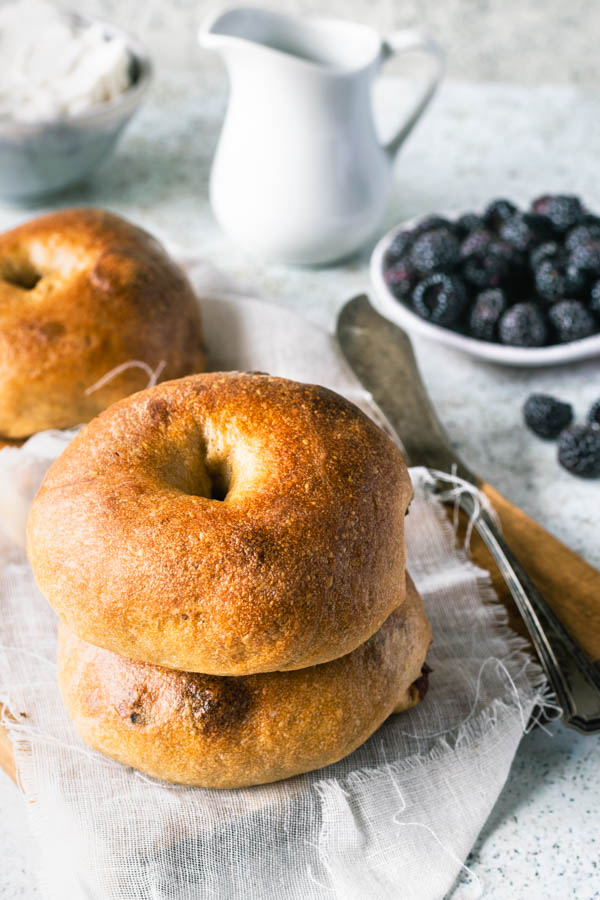
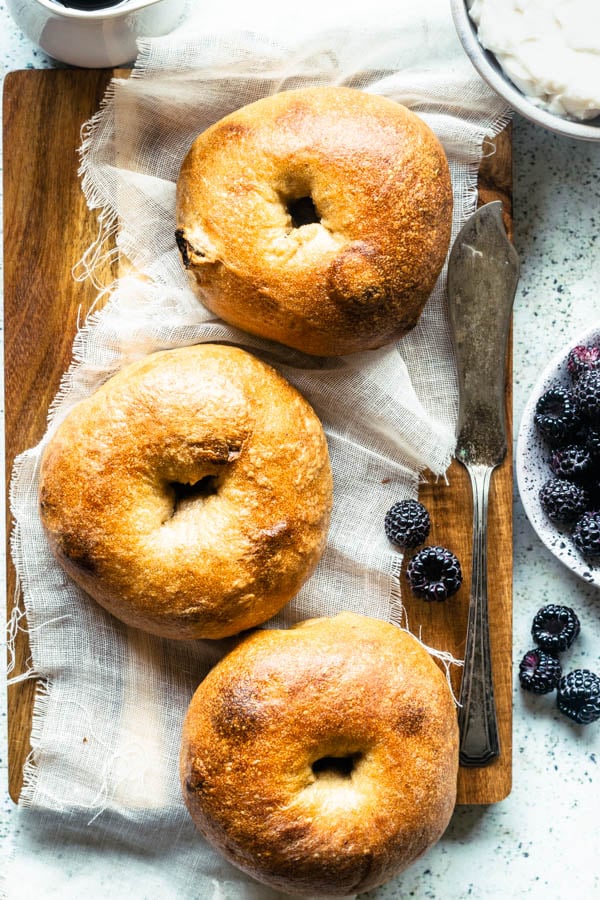
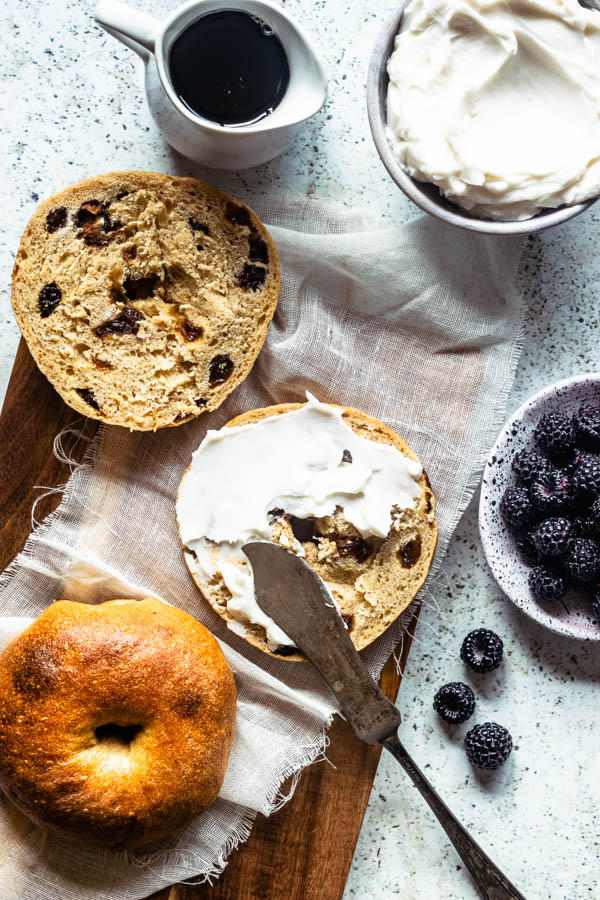
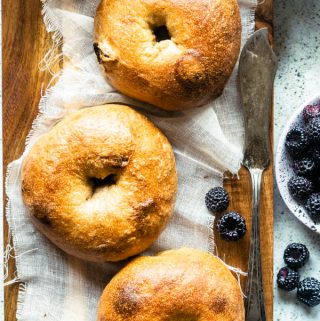
Sourdough Cinnamon Raisin Bagels are finally here. I’ve been wanting to share this recipe for a long time. It’s one of those bakes that’s absolutely worth the wait. These bagels are chewy, perfectly spiced, lightly sweet, and loaded with juicy raisins—everything you want in a classic cinnamon raisin bagel, but made naturally with sourdough.
If you love homemade bread or you’ve been looking to level up your bagel game, this is the perfect place to start.
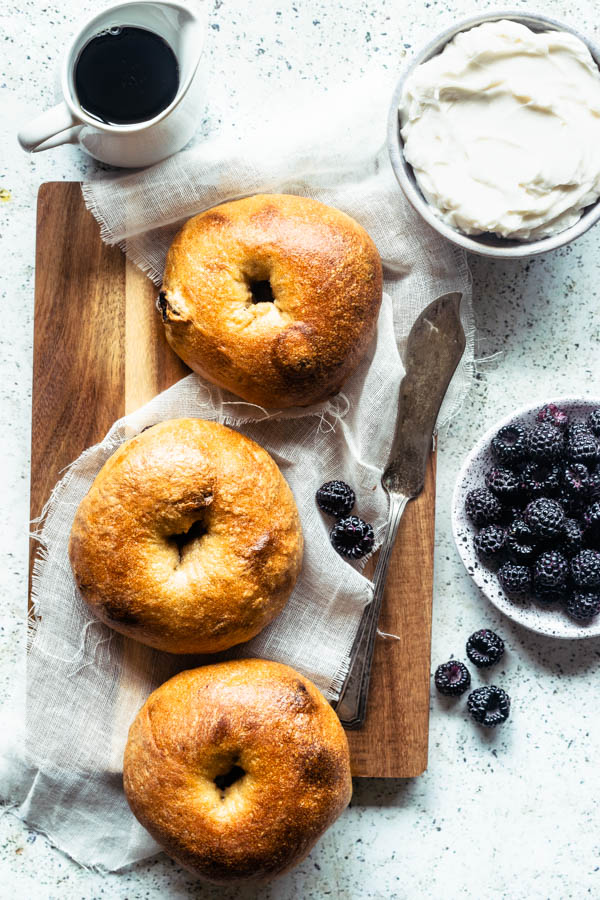
I’ve been working on perfecting my sourdough bagels for a long time, and this is the best version I’ve created so far. Along the way, I tested just about every method and trick out there—some worked beautifully, and others didn’t do much for me at all.
This post may contain affiliate links. I earn a commission from qualified purchases. Please read our Privacy policy here.
But sourdough can behave differently from kitchen to kitchen, so something that didn’t work for me might end up being the key for you. If you’re also on the hunt for your perfect bagel, here are the tips and techniques that made the biggest difference in my recipe. Try them out and let me know what works in your own “perfect bagel” journey.
The Sourdough Starter
Let’s start with the sourdough component of these bagels. My starter, Phoebe, is at 100% hydration, meaning it’s fed with equal parts starter, water, and flour. For this recipe, I use a generous amount—300 grams (about 1 1/2 cups) of active starter. I’ve tested lower amounts, but increasing the starter gave me better rise, structure, and flavor. Whatever amount you use, make sure your starter is fully active before mixing the dough.
If you keep your starter at room temperature, feed it a few hours before you begin, depending on how long your own starter takes to reach peak activity. Mine—Phoebe—usually needs a few hours after feeding. When I’m making dough in the morning, I feed her the night before; if I’m mixing dough at night, I feed her in the morning.
If your starter lives in the fridge, you’ll likely need to pull it out a day or two ahead and give it a couple of feedings until it’s bubbly and ready to use. The result is a bagel with a slightly tangy, rustic flavor that only sourdough can create—and honestly, sourdough bagels are my absolute favorite.
The Flour
Most bagel recipes call for bread flour, and it makes sense. Bagels are known for their chewy texture and crisp exterior, and bread flour’s higher gluten content is supposed to deliver exactly that.
But in my own testing, I’ve found that using all bread flour can sometimes make homemade bagels a little too chewy and even slightly tough.
So I started experimenting with a blend of flours: half whole wheat and half all-purpose. The result was the best batch I’ve ever made. The whole wheat adds a subtle nuttiness that pairs beautifully with the tanginess of the sourdough, while the all-purpose flour keeps the texture tender without losing the classic bagel bite. I really encourage you to try this combination—just once. Let it be your weekend baking challenge and see what you think.
Kneading
Bagel dough needs an extended kneading time—you want maximum gluten development to get that classic chewy interior and crusty exterior. A stand mixer fitted with a dough hook is definitely the easiest way to get there, and it’s what I recommend. You can knead by hand, but it takes real effort and a good amount of stamina. In a mixer, plan for about 7 minutes of kneading; if you’re doing it by hand, expect roughly double that time.
Proofing Time
I’ve tested a lot of different proofing methods for bagel dough over the years. There are several ways to do it. Let’s go over them.
- Same-Day Method: Let the dough rise at room temperature for about 4 hours, shape the bagels, let them proof for 1–2 hours, then boil and bake.
- Overnight Room-Temperature Fermentation: Let the dough ferment on the counter overnight, shape the bagels in the morning, give them a second proof, then bake.
- Bulk Overnight Fridge Fermentation (Full Dough): Knead the dough and refrigerate the entire bowl of dough overnight. The next morning, bring it to room temp, shape the bagels, proof 1–2 hours, then bake.
- Shaped Overnight Fridge Fermentation: Knead the dough, shape the bagels, place them on trays, cover well, and refrigerate overnight. Boil and bake the bagels straight from cold the next morning.
- Classic Method (Peter Reinhart Style): Shape the bagels right after kneading, let them rest for 20 minutes, form the holes, then refrigerate the shaped bagels overnight to bake the next day.
Boiling
I recommend keeping the boil to about 20 seconds per side. Peter Reinhart suggests boiling bagels for 1 minute per side (or even 2 minutes for extra chew), but in my testing, longer boils made the crust overly tough.
In one of my recent batches, I boiled half the bagels for 1 minute per side and the other half for 20–30 seconds per side. The difference was clear: the longer-boiled bagels were chewy to the point of being tough, while the shorter-boiled ones kept that perfect balance of bite and tenderness.
That said, bagel texture is a matter of preference, so feel free to experiment with timing to find the chew you like best.
Baking
I prefer baking my bagels at 425°F. Many recipes call for 450°F or even 500°F, but with my current oven, 425°F gives me the most even bake—deep golden color on the outside and perfectly cooked centers without over-browning. Every oven behaves differently, so use this as a starting point and adjust the temperature as needed to find the sweet spot for your setup.
I hope these sourdough cinnamon raisin bagels become a staple in your kitchen—they’re one of my favorite ways to put an active starter to good use. If you’re in a bagel-baking mood, you can also try my classic Sourdough Bagels, my traditional Bagel Recipe, or my Protein Bagels for a higher-protein option. And if you want another simple sourdough project, don’t miss my soft and flexible Sourdough Tortillas. Let me know which one you bake next.
Sourdough Cinnamon Raisin Bagels
Ingredients
- 300 grams active sourdough starter 1 1/2 cups, 10.6 oz.
- 295-350 grams warm water 90-100F (1 1/4 cup- 1 1/2 cup, 10-12 oz.)
- 1 tablespoon vegetable oil
- 1 tablespoon barley malt syrup or honey
- 2 1/2 teaspoons fine sea salt
- 382 grams all-purpose flour 3 cups, 13.5 oz.
- 382 grams whole wheat flour 3 cups, 13.5 oz.
- 2 teaspoons ground cinnamon
- 1 cup raisins
To boil bagels
- 1 tablespoon baking soda for boiling bagels
Topping
- 1/4 cup milk
Instructions
- Start by mixing the active sourdough starter, 1 1/4 cup of water, vegetable oil, malt syrup, sea salt, flours, and cinnamon together in a bowl.
- Mixture will seem extremely stiff. That’s ok. Just make sure all the flour is getting hydrated. If necessary, pour that remaining 1/4 cup of water in, if you see too much dry flour that won’t incorporate into the dough.
- Cover bowl with a damp towel and let dough sit for 10 minutes.
- Kneading: I would recommend a stand mixer to knead this dough. Or a lot of elbow grease.
- Bagel dough should be kneaded at least 7 minutes by machine, probably double by hand. And it’s a very stiff dough, so it’s not the easiest to knead.
- At the final 2 minutes of kneading, add raisins so they get incorporated into the dough.
- It’s very important that you knead this dough properly, so the bagels will have their proper texture and gluten development.
- At the end of kneading, dough should be smooth, but still pretty stiff and dense.
- Transfer dough to a lightly oiled bowl.
- Cover with a damp towel.
- Let it rise in a warm place for about 4 hours.
- If your place is cold, let it rise 5 hours.
- Transfer dough to the counter.
- I split mine into 100 g (3.5 oz.) pieces, and ended up with 14 pieces.
- Turn pieces into balls by rolling them against the counter, with your hand in a cup shape.
- Use the counter to push the dough against itself and turn into a perfect round.
- There are plenty of videos on youtube that show this technique properly. Very easy, and you’ll always end up with perfectly shaped rolls, bagels.
- Now that you’ve rolled all the pieces into balls, start by making a hole in the center of each ball with your finger. Expand the center out with your hands, by rotating the bagel as you shape the hole in the middle.
- Then, place bagels in 2 baking mat or parchment paper lined baking sheets.
- I put 7 bagels in each baking sheet.
- Cover both trays with a damp towel. Let them sit at room temperature for 1-2 hours.
- Once the dough is springing back as you touch it, means your bagels are ready to go.
- Pre-heat oven to 425F.
- Bring a large pot of water to a boil.
- Once water comes to a boil, add baking soda to the pot.
- Boil bagels in batches, being careful not to overcrowd the pan.
- You should boil bagels about 20 seconds on each side. I don’t like to boil them over 1 min total, or their crust might turn out too hard.
- Remove bagels with a slotted spoon after they have boiled about 20 seconds on each side.
- Place boiled bagels in a baking sheet, lined with parchment paper or a silicon mat.
- Brush bagels with milk.
- Bake for about 10 minutes. Rotate pans. Bake for another 5-15 minutes. It will really depend on your oven and what size bagels you decided to make.
- Once bagels have a deep golden color, remove them from the oven. Let them cool and enjoy them fresh.
- STORAGE: I like to enjoy the bagels when they are very fresh. That’s when they are the best. However, nothing wrong with leftover bagel toast in the morning. Keep bagels in an air-tight container for up to a couple of days, I wouldn’t go longer than that. You can also freeze them wrapped in foil and inside of a ziplock bag or freezer container for up to 2 months.
Notes
- Same-Day Method: Allow the dough to rise at room temperature for about 4 hours. Shape the bagels, let them proof for 1–2 hours, then boil and bake.
- Overnight Room-Temperature Fermentation: Let the dough ferment on the counter overnight. Shape in the morning, allow a second proof, then bake.
-
Bulk Overnight Fridge Fermentation (Full Dough): Knead the dough and refrigerate the entire bowl overnight.
In the morning, bring to room temperature, shape, proof for 1–2 hours, then bake. -
Shaped Overnight Fridge Fermentation: Knead and shape the bagels, place on trays, cover well, and refrigerate overnight.
Boil and bake straight from the fridge the next morning.
Nutrition
I have made these a couple
Of times and they were a hit!!!! Wondering have you ever tried mixing them a day in advance and cold fermenting after the rise and shaping so you can boil and bake the next day?? Trying to fit them into an evening workday schedule lol. 😂
Hi Laura, I’m so glad you liked the recipe! Yes, the shaped bagels can go in the fridge overnight, and it’s actually the method most bagel shops use. After mixing the dough, kneading it well, and adding the raisins, let it rest for 20–30 minutes so the gluten relaxes, then divide the dough, shape the balls, and form the bagels. Place them on lined baking sheets, cover them very well with plastic wrap so they don’t dry out, and refrigerate for 8–16 hours. In the morning, take the trays out while the oven preheats, let the bagels sit at room temperature for 20–40 minutes, then boil them straight from cold—this helps them keep their shape—before baking as usual.
OH MAN! Just started my sourdough journey last month and these were amazing! My two year old even loved them! Freezing half the bagels to be able to enjoy next week. Thank you!
Made one batch of these and froze most of it after the rise.
Now I have freshly baked bagels whenever I want. This recipe is delicious.
Boiled bagels for 20 seconds on each side and baked them in the oven for 20 minutes flipping halfway. The result was very soft chewy inside and a crisp chewy crust.
I also tried boiling the bagels for 30 seconds each side and baking for the same amount of time which led to chewy crust and firmer inside.
Planning my next batch as we speak
That’s wonderful to hear!!! Thank you!!
thanks so much!!!!
Best of luck to you! I hope you have a lot of fun doing the farmers market!!!
hi i’m 17 and do a farmers market with my mom and would like to try and sell bagels could i use this recipe?
of course
I’m in shock! This was delish!
I thought this one would be an epic fail. My kitchen aide couldn’t knead this.and I took it out and did it manually the best I could. My issue was that I had no whole wheat- only AP and bread flour.
Didn’t rise after the first four hours. Didn’t rise on 2nd fermentation. I figured I should have added more water. They blossomed in the oven.
They reminded me of the bagels I got in New York City many years ago.
Thanks for the great recipe!!!!
Be sure to eat them warm! So good
Made this yesterday. I used unbleached all purpose flour for entire recipe and honey and it turned out great! 20 sec boil on each side was perfect texture. Will keep in my recipe box!