

Swiss Roll Cake
At my grandma’s bakery, one of the most popular desserts was the Swiss roll cake. She filled it with cream, dulce de leche, guava paste, or chopped strawberries, then finished it with a simple dusting of powdered sugar. It was always perfectly rolled, light, and delicate—and it was my favorite thing in her bakery case.
That’s probably why I’m so particular about Swiss roll cakes. When they’re done right, they’re light, flexible, and roll cleanly without cracking. When they’re not, they’re frustrating from start to finish. What I love most about Swiss rolls is their elegant shape, their airy texture, and how versatile they are—you can fill them with almost anything.
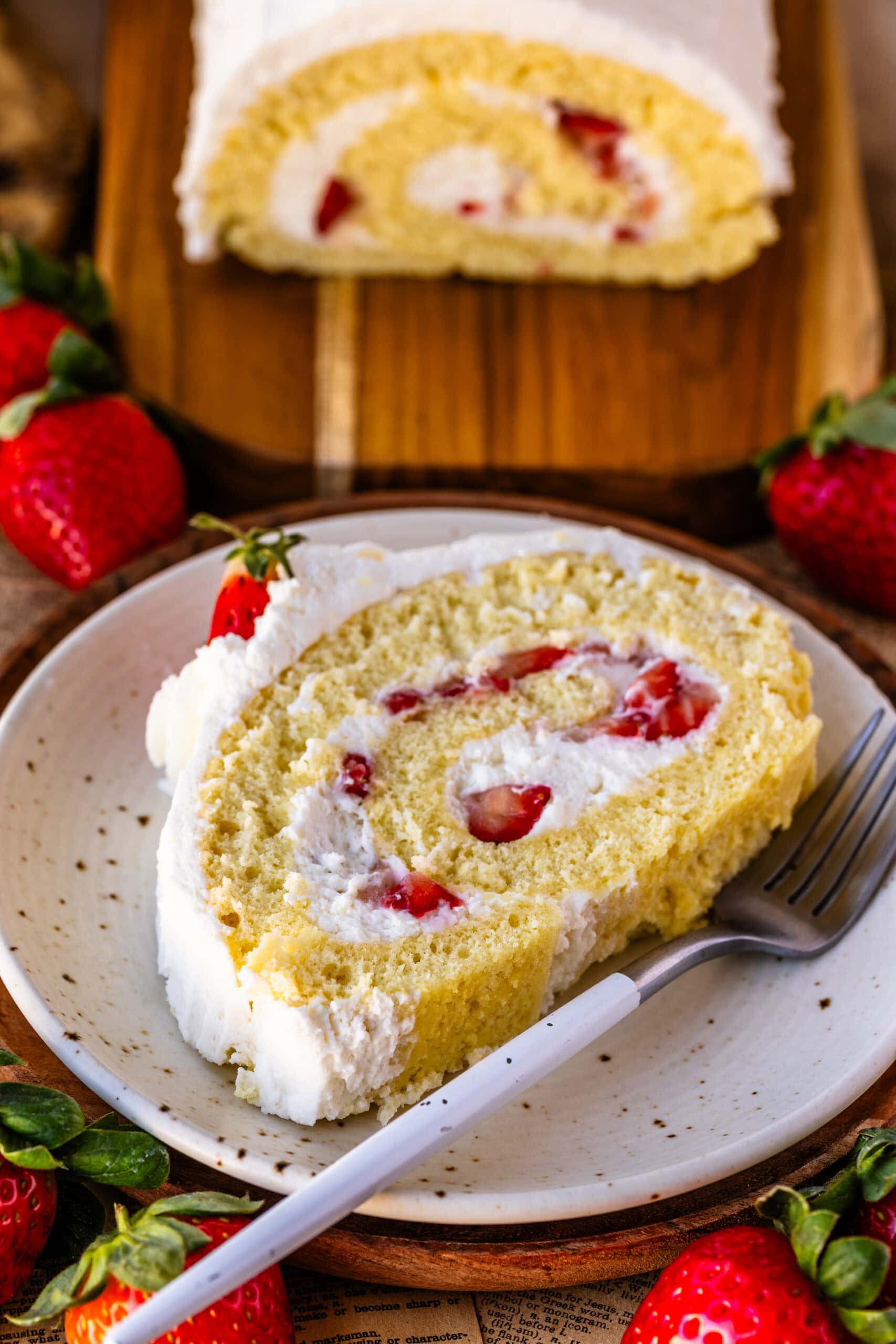
This recipe came from wanting a sponge cake that stays soft and elastic without relying on shortcuts or heavy batters. The structure here comes from a properly made meringue and careful baking, not from overloading the cake with fat or sugar.
This post may contain affiliate links. I earn a commission from qualified purchases. Please read our Privacy policy here.
This is the method I use now because it’s consistently reliable. If you follow the timing closely and handle the sponge while it’s still hot, the cake rolls smoothly, holds its shape, and stays tender even after chilling.
Why you’ll love this recipe…
- The sponge stays flexible and crack-free when rolled correctly
- The texture is light but structured, not dry or rubbery
- The filling is stable but soft, so it slices cleanly
- The cake holds up well for make-ahead and chilling
- Doesn’t taste eggy if you follow the instructions below
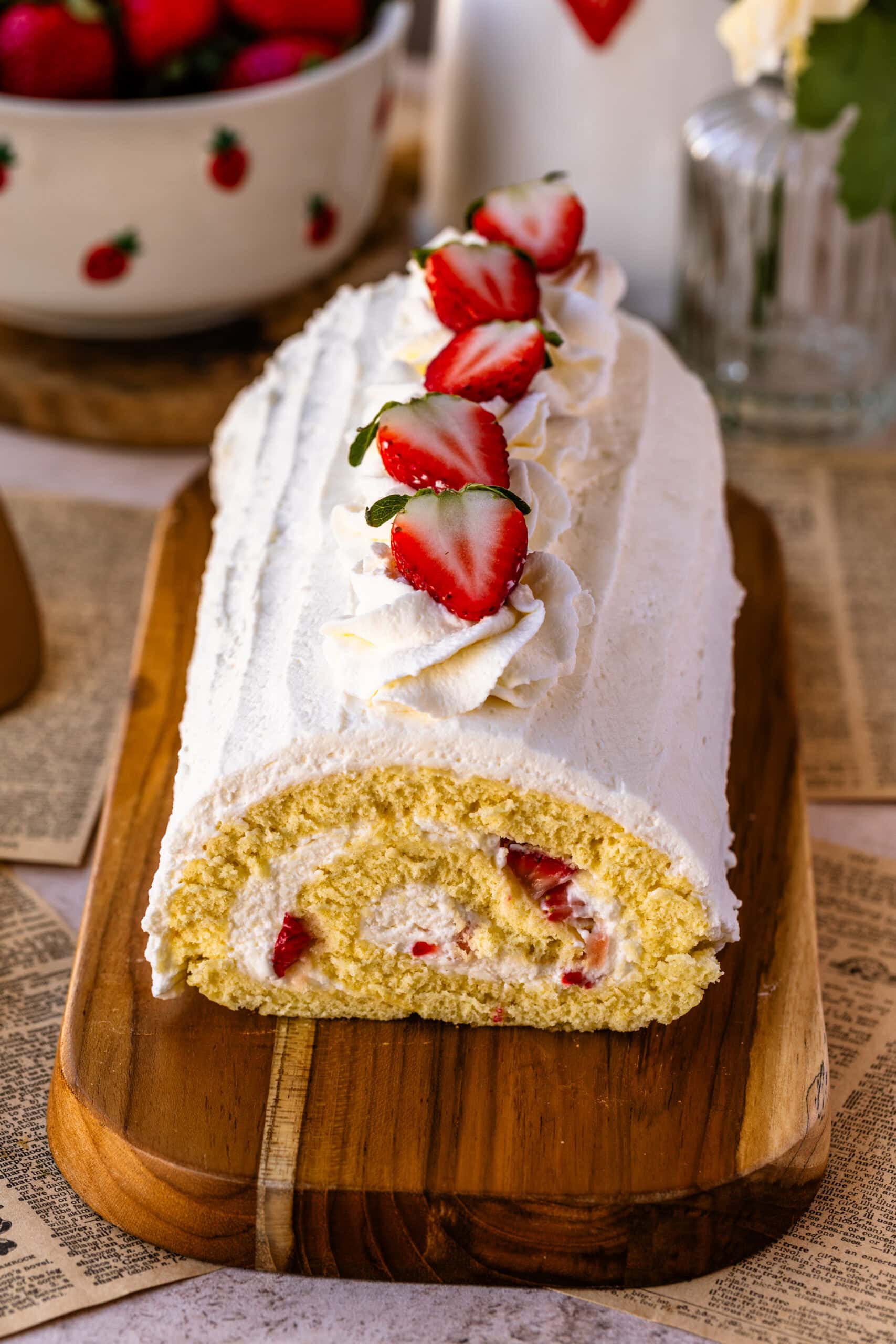
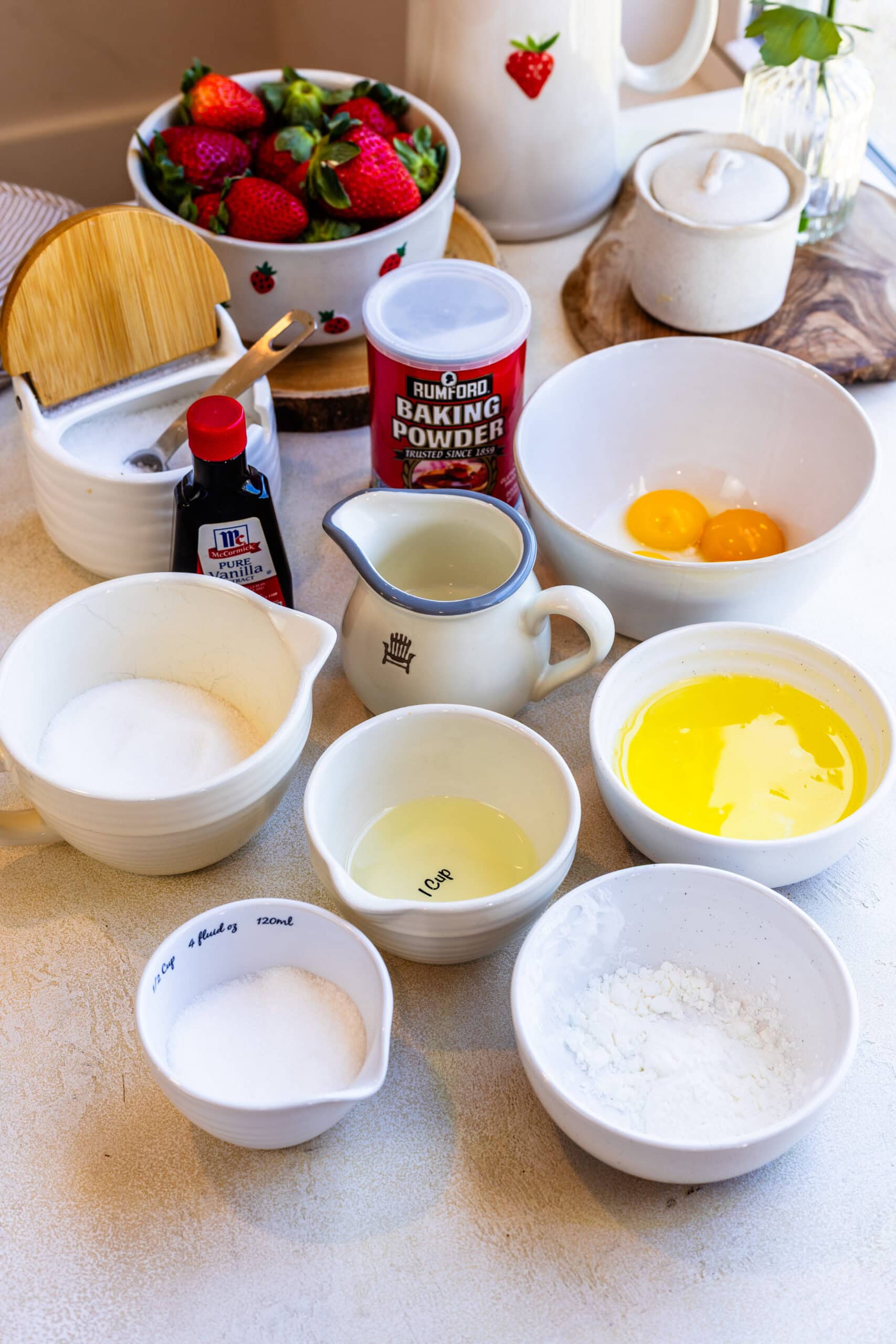
Key Ingredients & Why I Use Them
Before getting into the steps, it helps to understand where the structure and flexibility of this cake come from. Swiss roll cakes are simple, but the balance matters.
- Egg yolks: They add richness and color to the sponge while helping emulsify the batter, which keeps the crumb smooth and cohesive without making it dense.
- Granulated sugar: Used in both the yolks and the whites, it stabilizes the meringue and keeps the cake flexible once baked.
- Egg whites: These are the backbone of the sponge. I rely on a properly whipped meringue for lift, moisture, and elasticity. Over-whipping here is one of the fastest ways to end up with a cracked cake.
- Cornstarch: Combined with all-purpose flour, it softens the crumb and keeps the sponge tender instead of chewy.
- Butter and milk: These add richness without weighing the sponge down. I keep the amounts modest so the cake stays light.
- Baking powder: Just a small amount gives the sponge extra insurance in the oven, supporting the meringue’s lift without turning the cake bready.
- Salt: A small but essential ingredient—it sharpens flavor and keeps the cake from tasting flat or overly egg-forward.
- Vanilla extract: This rounds out the egg flavor and adds warmth to both the sponge and the filling, making the cake taste balanced instead of plain.
- Powdered sugar: Used when rolling the cake and in the filling, it prevents sticking and dissolves easily, keeping everything smooth and light.
- Cream cheese: In the filling, it adds structure and a slight tang, which keeps the whipped cream from tasting flat or overly sweet.
- Heavy cream: Whipped into the filling, it brings softness and volume, creating a light contrast to the airy sponge.
- Strawberries (optional): Finely chopped fruit adds freshness and texture, but keeping the pieces small prevents excess moisture from weakening the roll.
How to Make a Swiss Roll Cake
The full recipe is below, but this is how I make it step by step and where I pay attention.
Step 1: Prep
Start by preheating the oven to 350ºF (175ºC), or 325ºF (162ºC) for convection. I lightly grease a 10×15-inch jelly roll pan and line it with parchment, leaving a bit of overhang so the cake lifts out easily later. I use spray oil here, but only a light coating — too much can affect how the cake bakes.
Step 2: Yolk Mixture
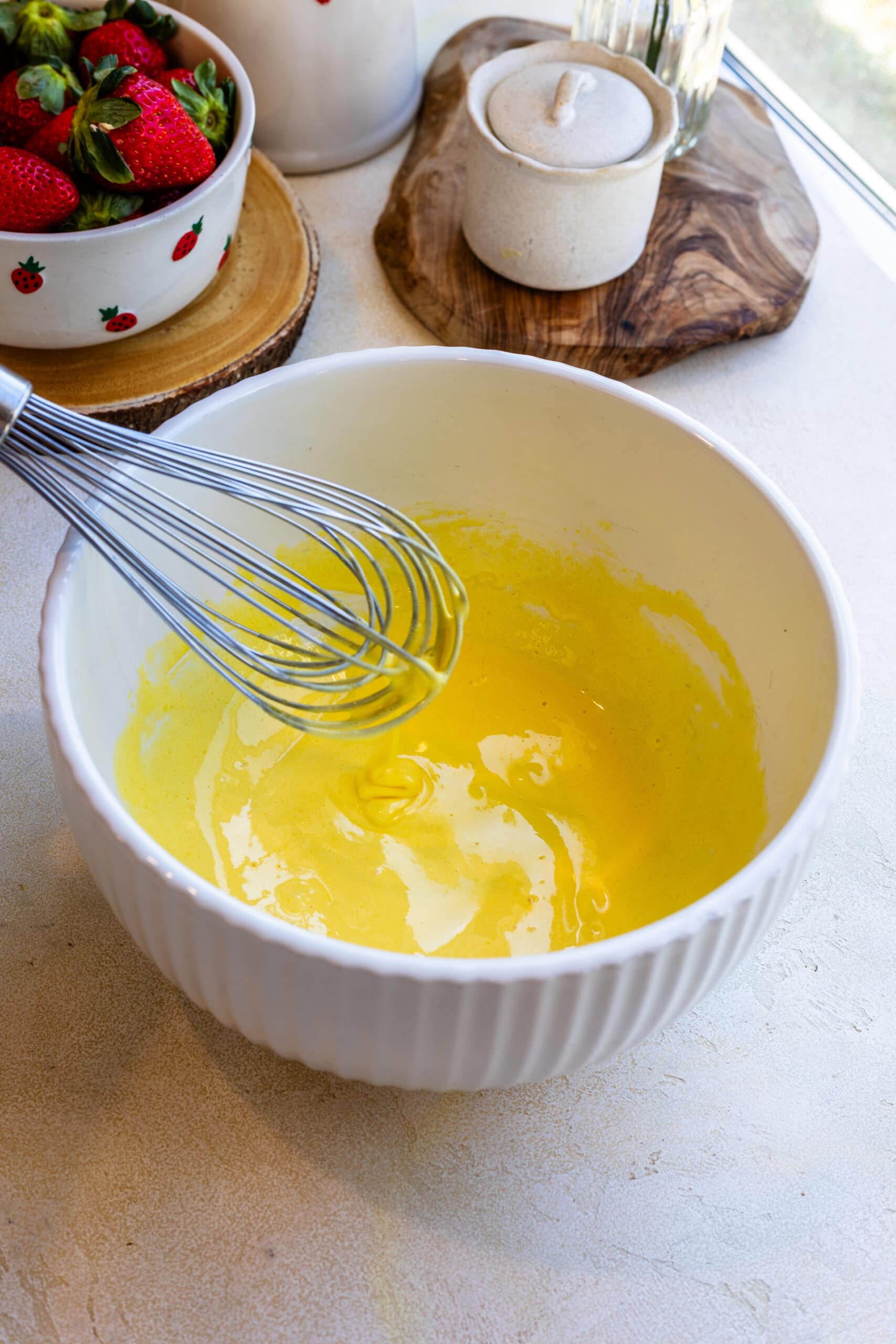
Whisk the egg yolks with the sugar until they look slightly paler and thicker, which takes about two minutes. This helps dissolve the sugar and creates a smoother base.
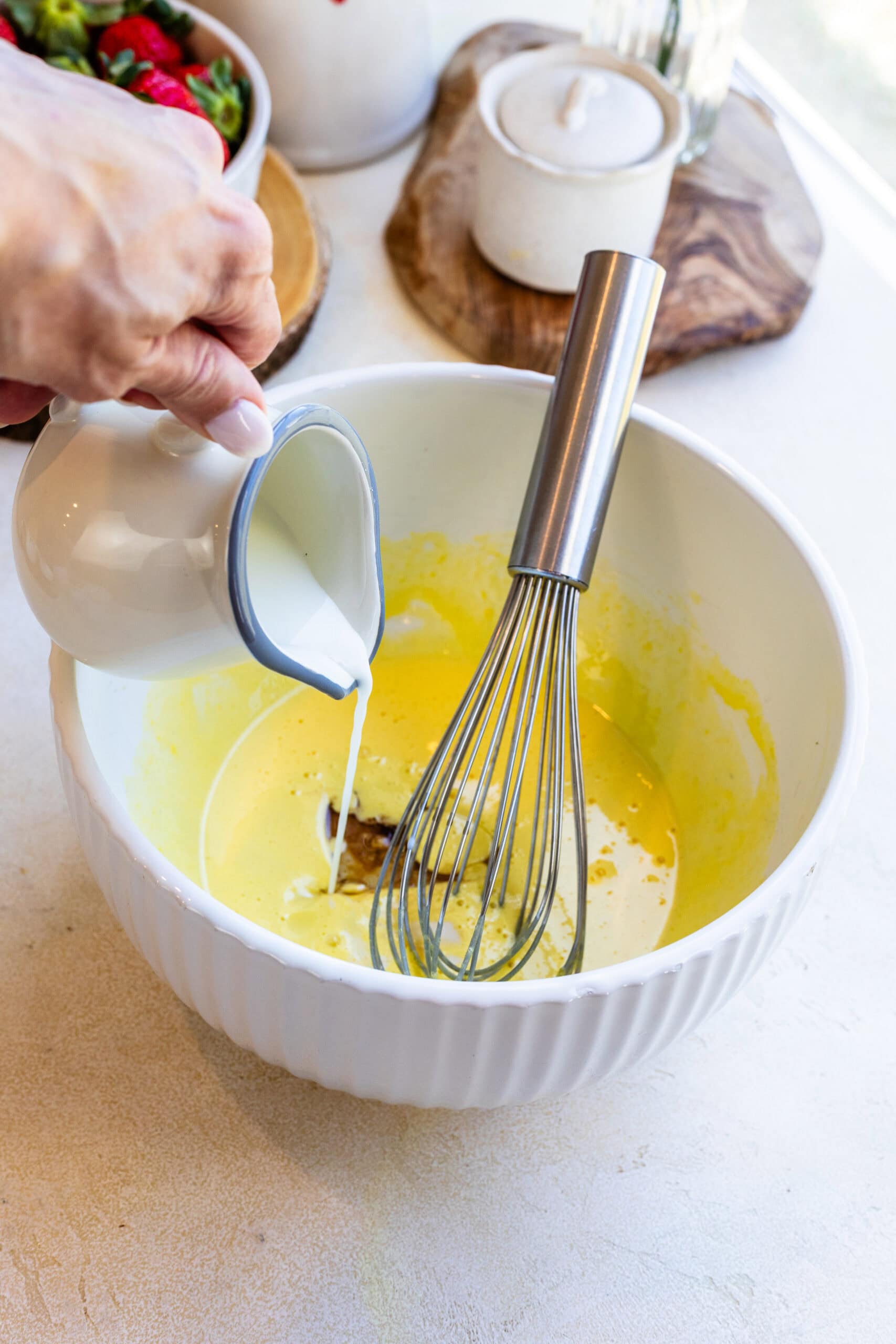
Add the melted butter, followed by the milk and vanilla, making sure everything is fully combined before moving on.
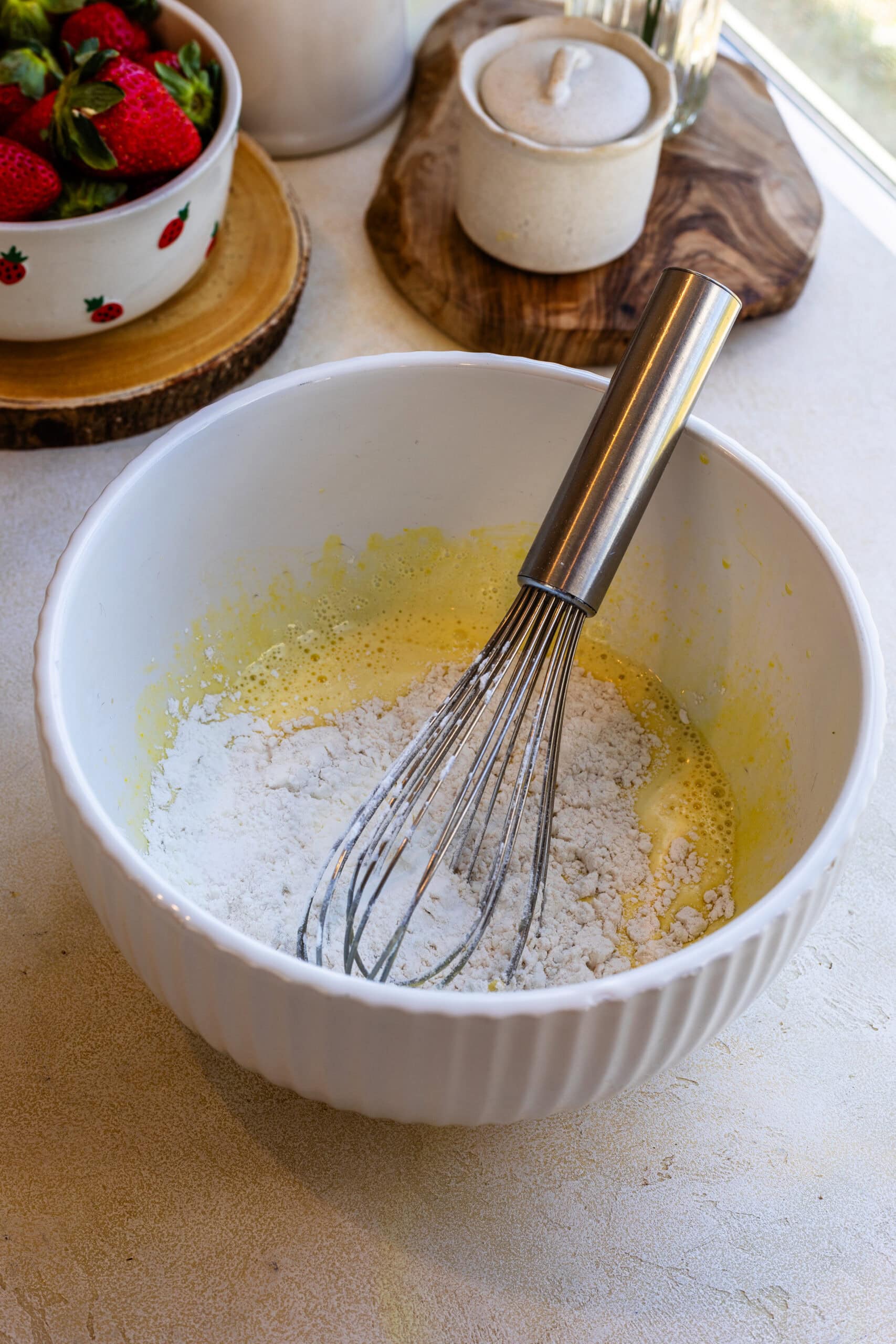
Add the flour, cornstarch, baking powder, and salt. Whisk just until smooth.
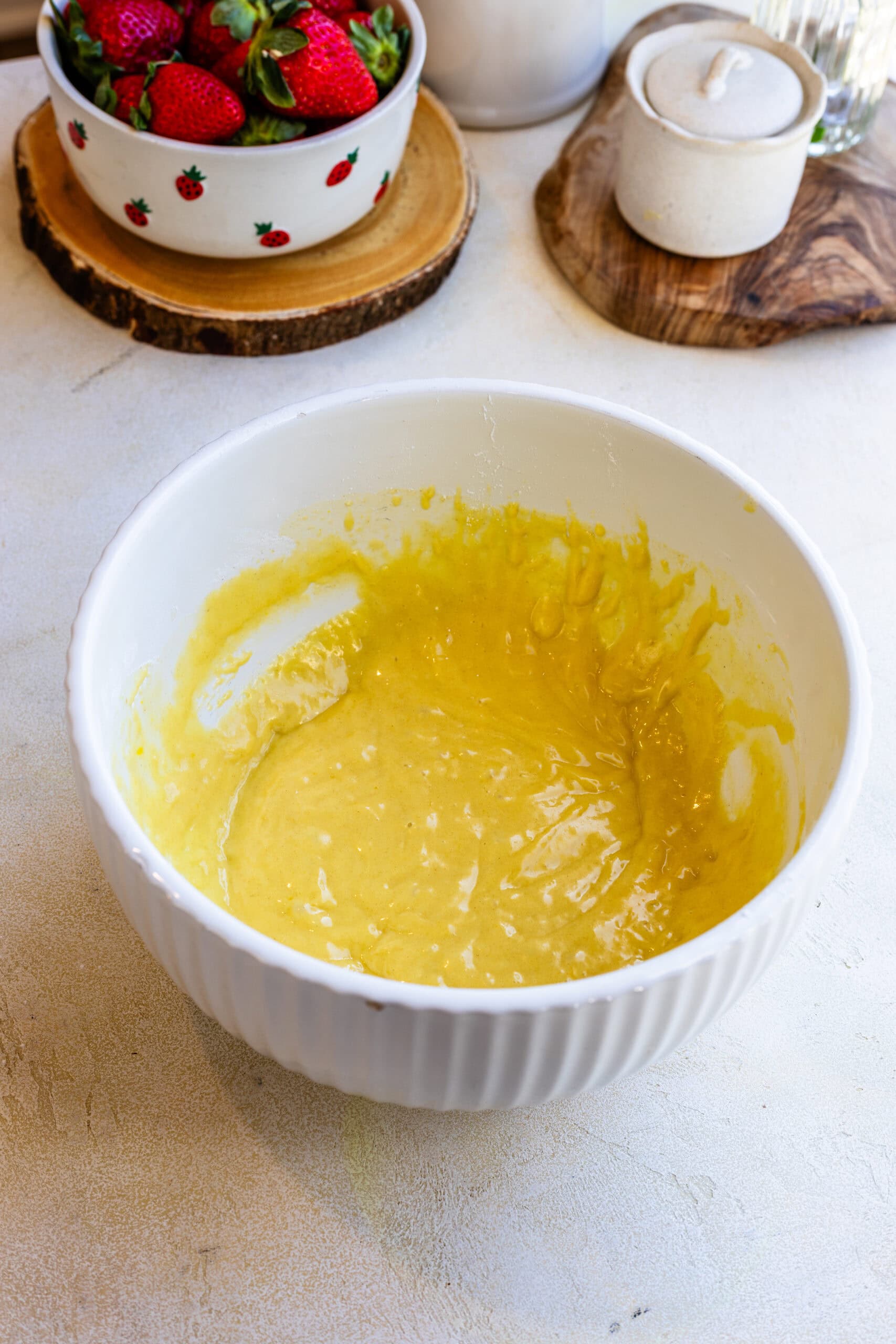
Set aside while I make the meringue.
Pro tip
I like to stop mixing as soon as the batter comes together—overmixing at this stage can tighten the crumb.
Step 3: Meringue (Egg White Mixture)
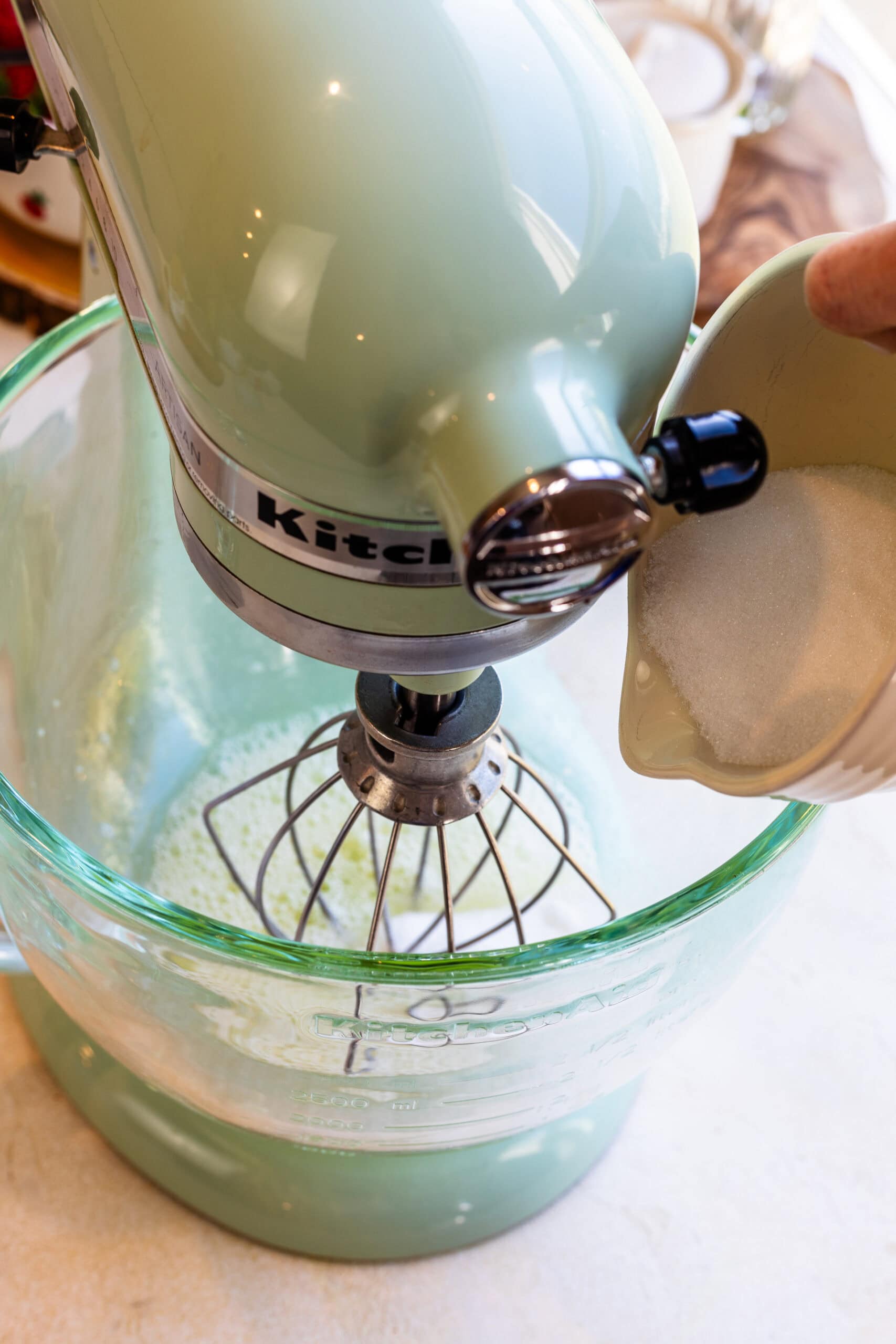
Whip the egg whites in a clean bowl on medium speed. After about 30 seconds, once they’re foamy, start adding the sugar gradually, one tablespoon at a time.
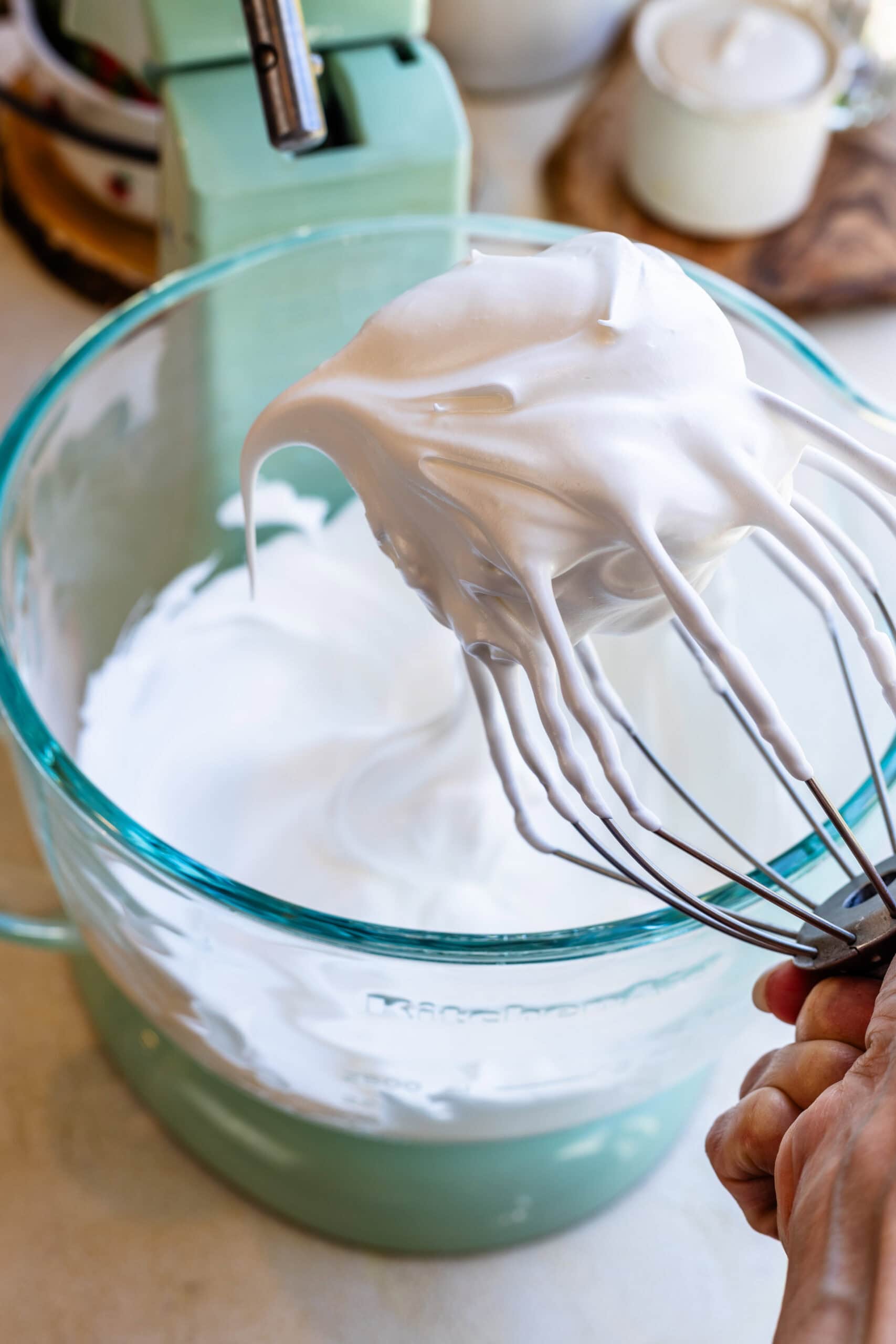
Continue to whip on medium-high speed until soft peaks begin to form.
Look for peaks that are glossy, thick, and still bend at the tip. If the peaks stand straight and look dry or clumpy, they’ve gone too far, and the sponge will lose flexibility.
Step 4: Folding
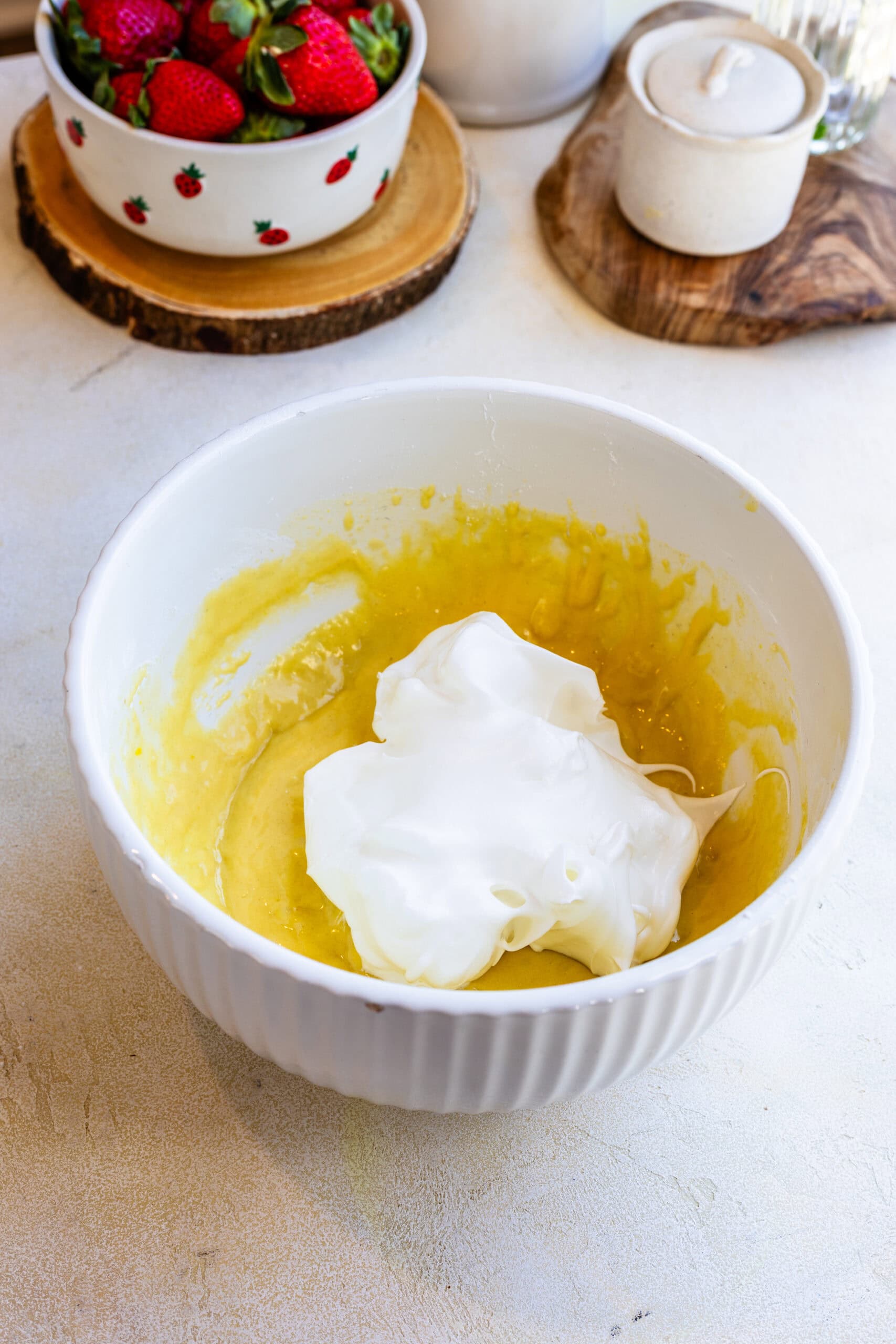
Fold one third of the meringue into the yolk batter.
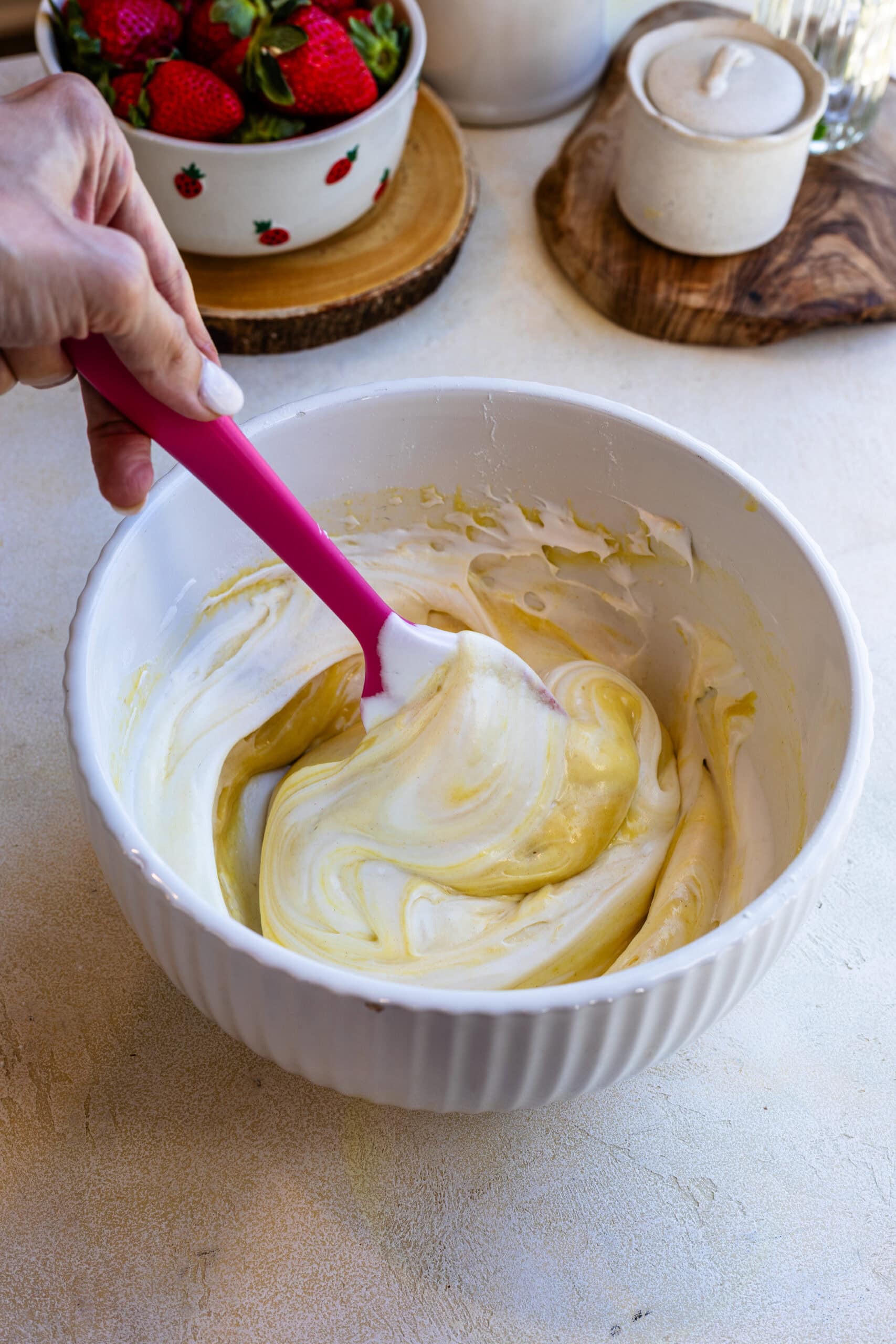
Add the remaining meringue in two additions, folding gently until no white streaks remain.
I like take my time with this step. If you fold aggressively, you will knock the air out of the meringue. You don’t want to do that because it’s what keeps the cake batter light.
Step 5: Bake
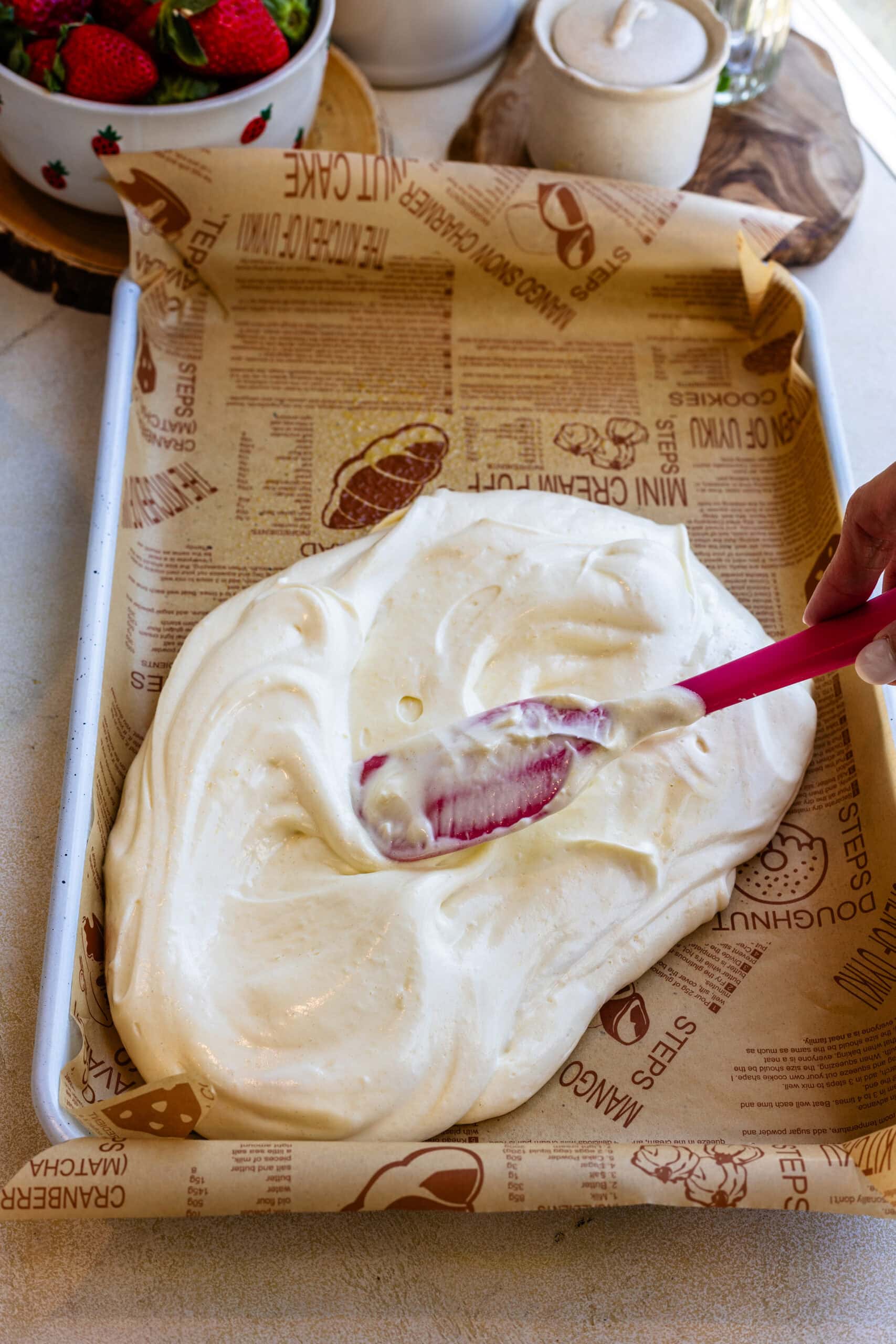
Spread the batter evenly in the prepared pan and smooth the top with a spatula.
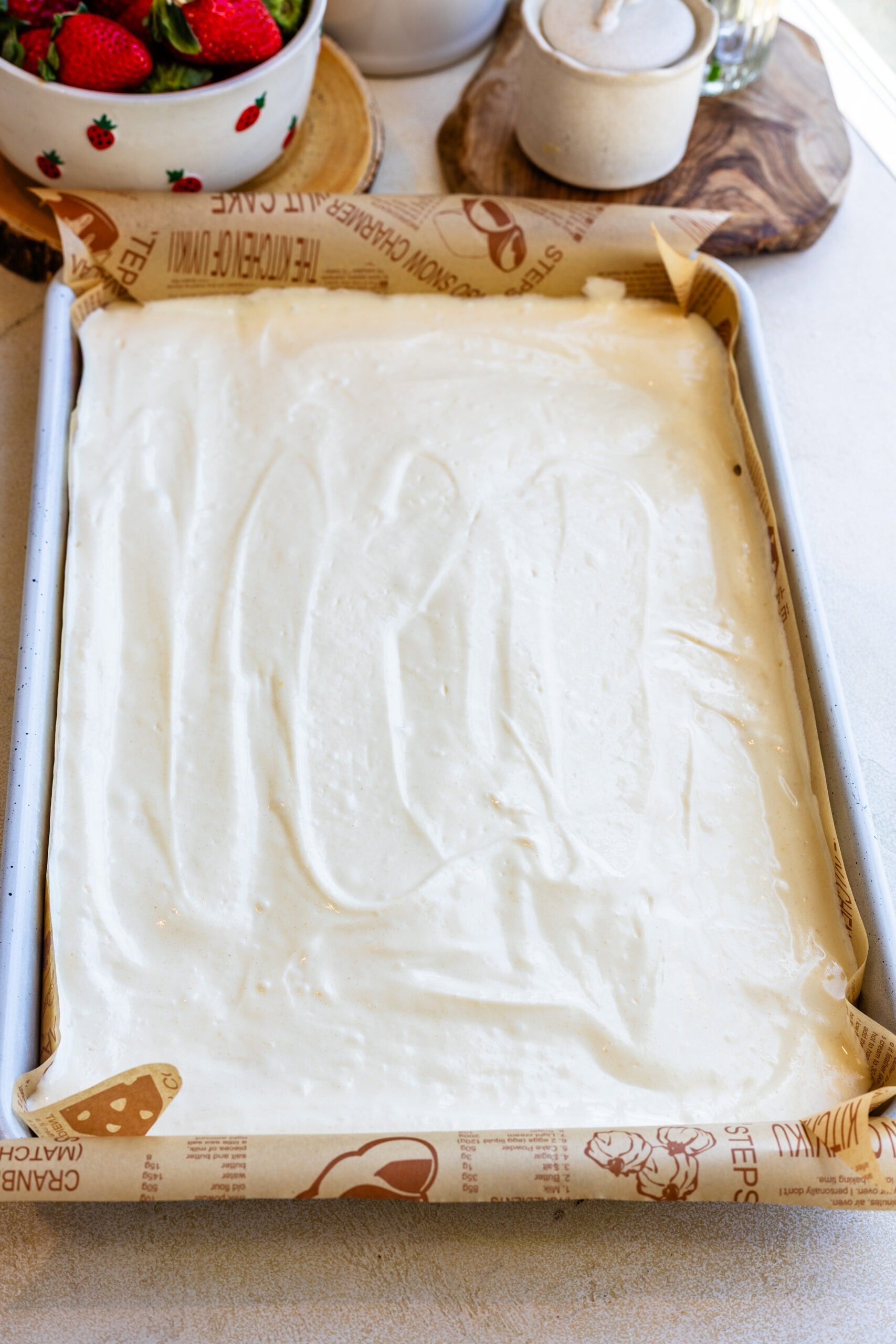
Tap the tray gently on the counter to release any large air bubbles.
Then, Bake the cake for about 12 minutes in a conventional oven. Check it earlier if you have a convection oven. I start checking mine at around 10 minutes. The cake should look set on top and around the edges but not golden. If it browns, it’s already too dry to roll cleanly.
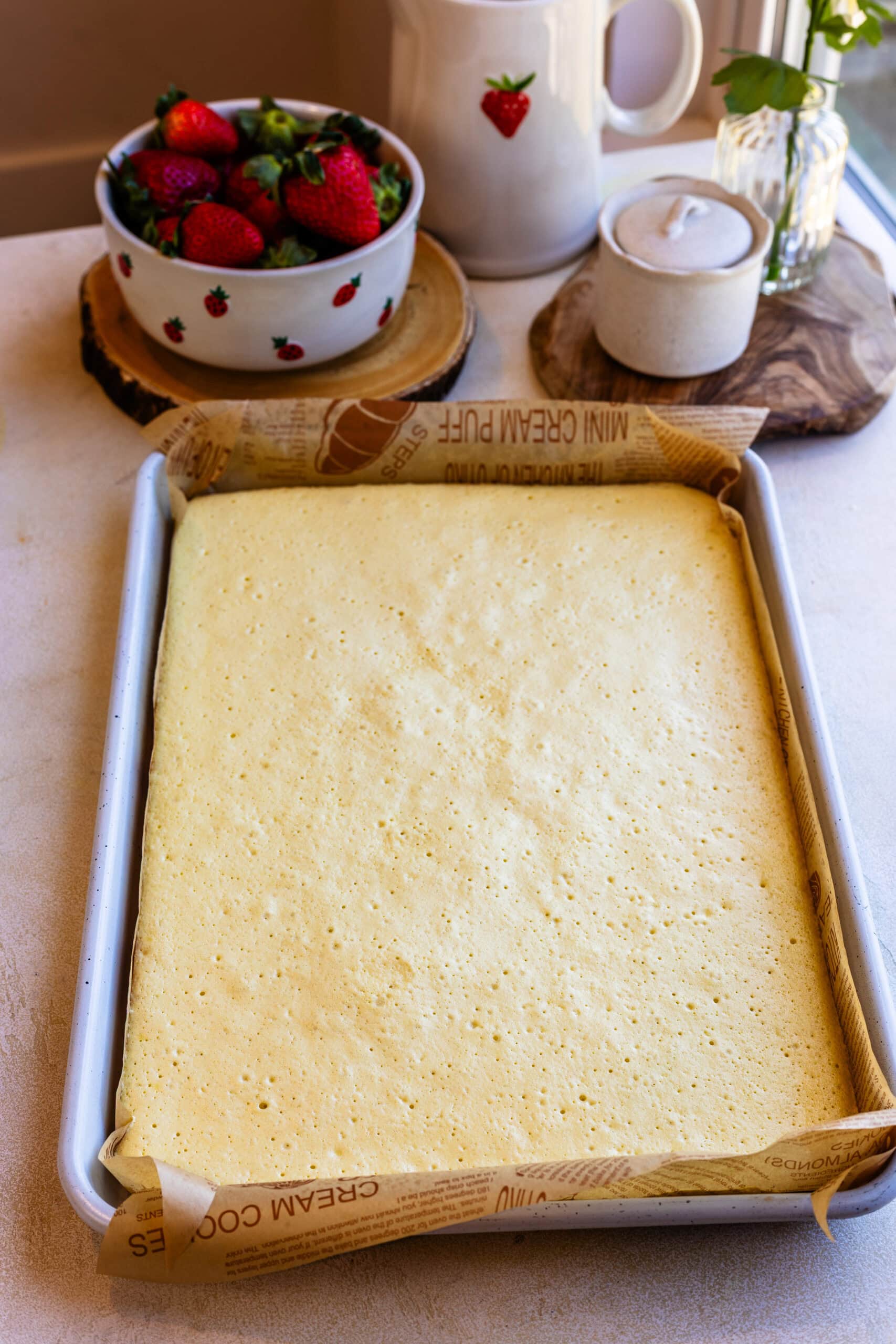
Step 6: Rolling the Cake (This Is Key)
Don’t be nervous, just make sure you’re prepared! While the cake bakes, I like to set up my rolling station with a clean kitchen towel and powdered sugar.

As soon as the cake comes out of the oven, dust the surface of the cake generously with powdered sugar.
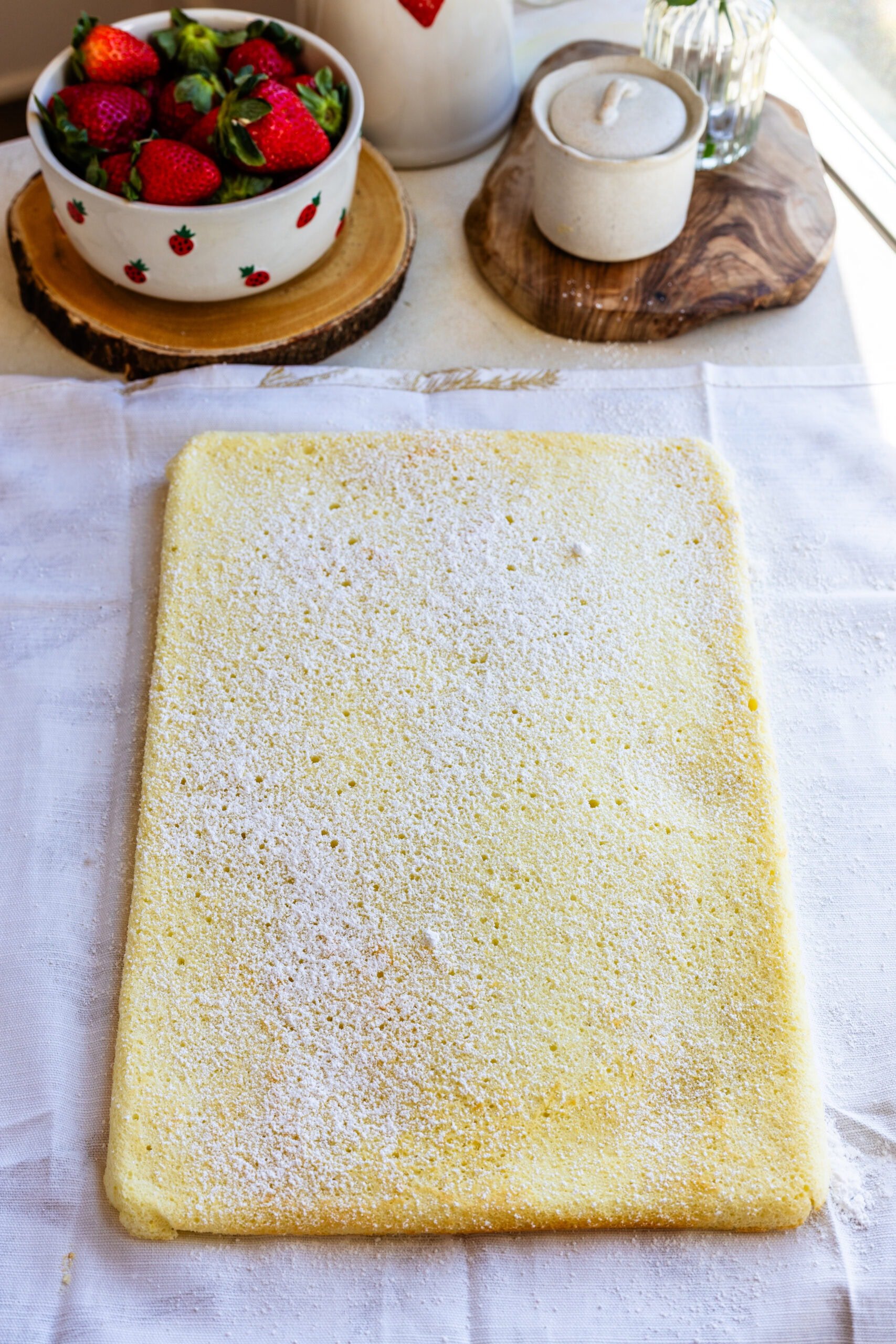
Place the towel on top, flip the cake onto it, remove the pan, and carefully peel away the parchment paper.

Starting from the short side, I roll the cake and towel up.
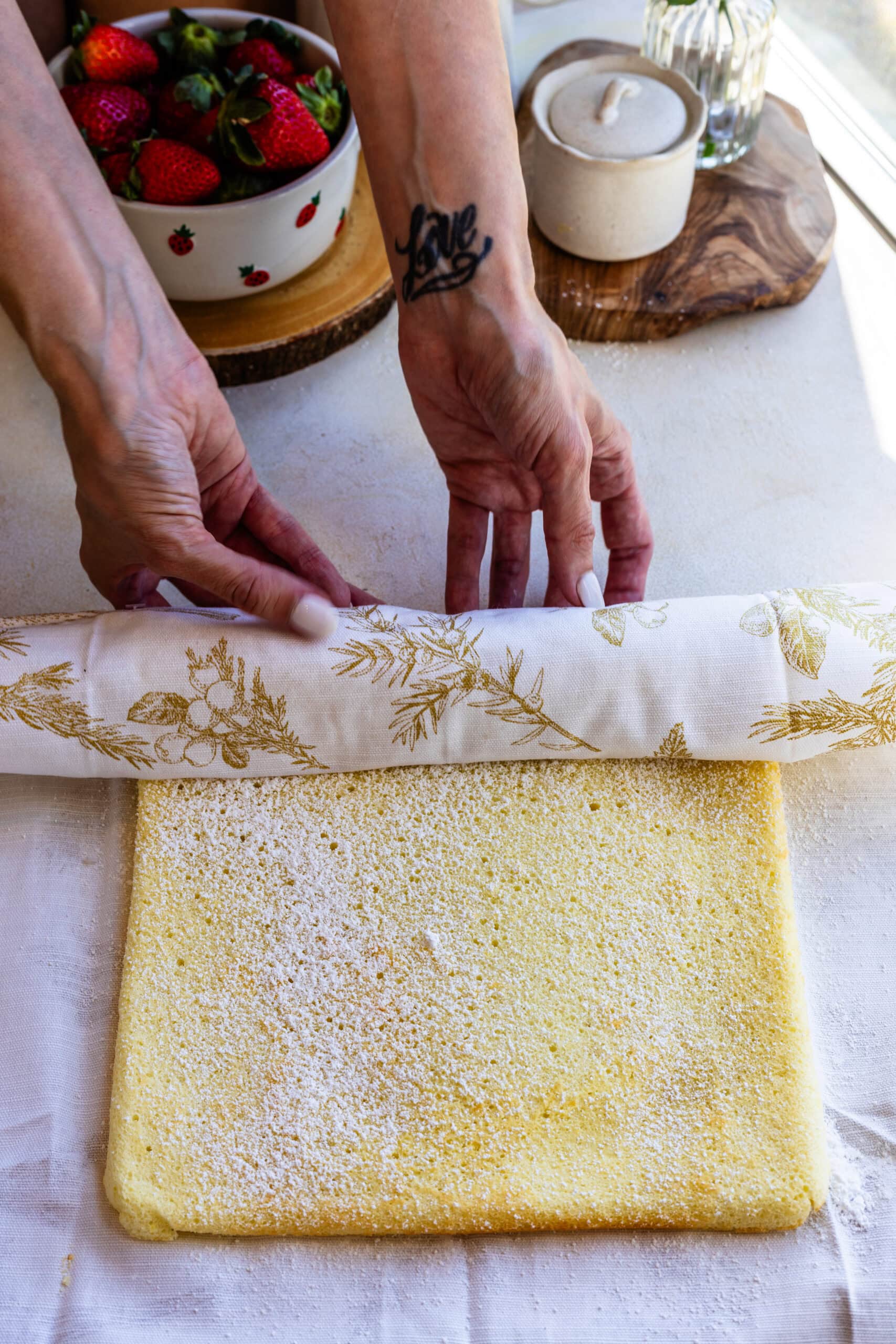
Let the cake cool completely in this rolled shape for about 45 minutes. This “trains” the sponge into a spiral and makes unrolling much easier.
Rolling the cake while it’s hot is non-negotiable, because this is when the structure sets. Letting it cool flat almost always leads to a cracked Swiss roll.
Step 7: Filling
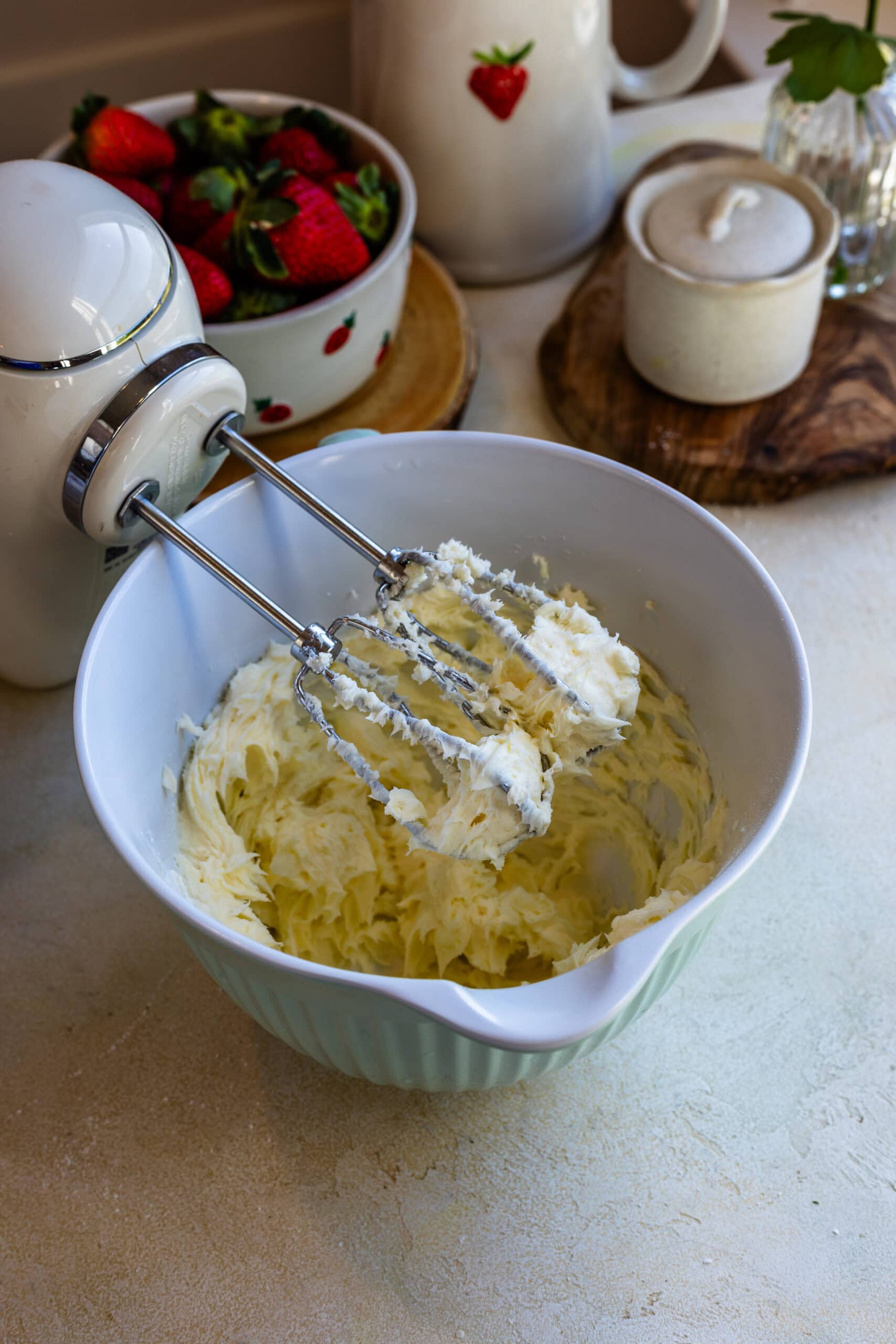
Beat the cream cheese with powdered sugar and vanilla until smooth, then set it aside.
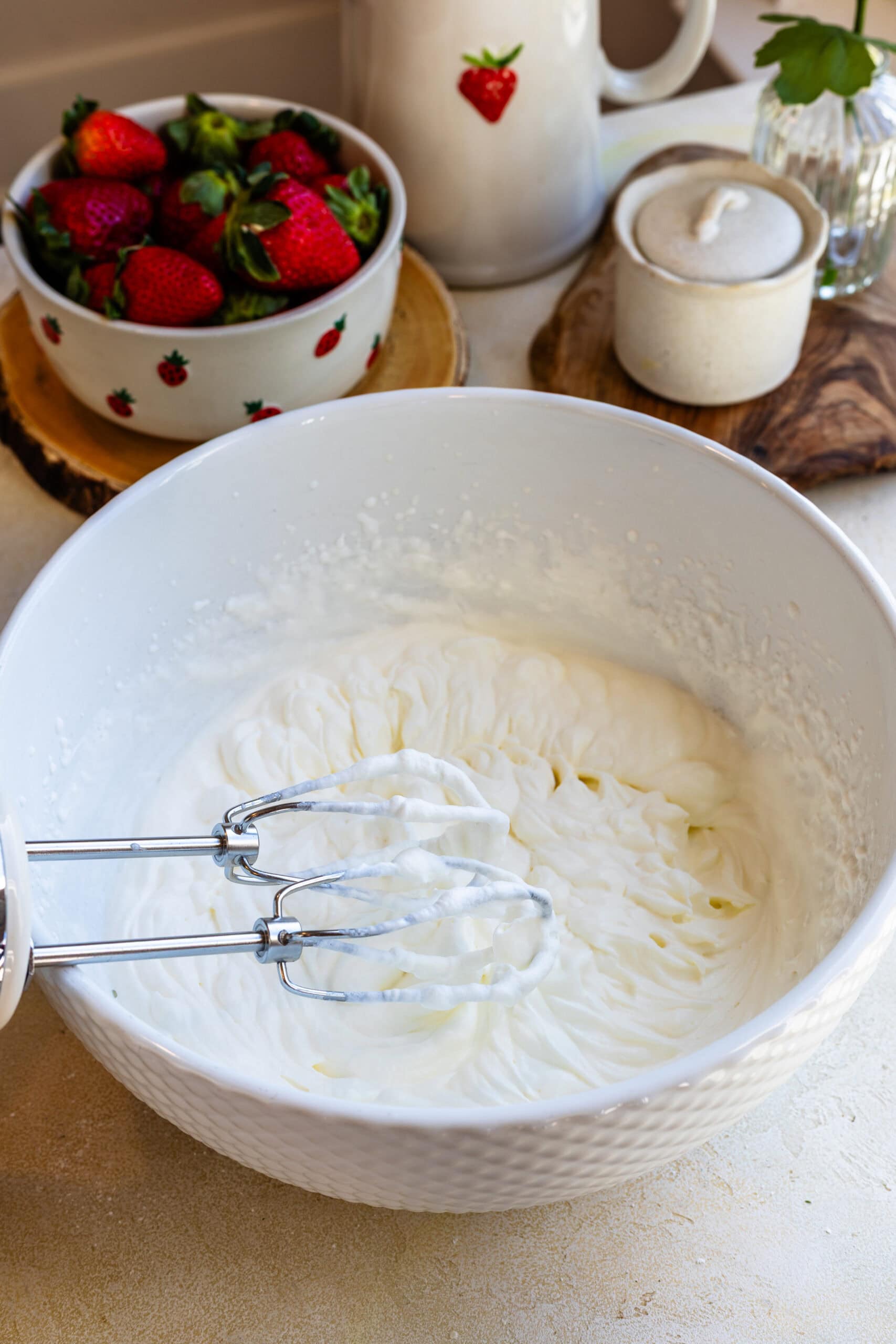
Whip the cold heavy cream until medium-stiff peaks form. Stop before it looks grainy—over-whipped cream makes the filling heavy.
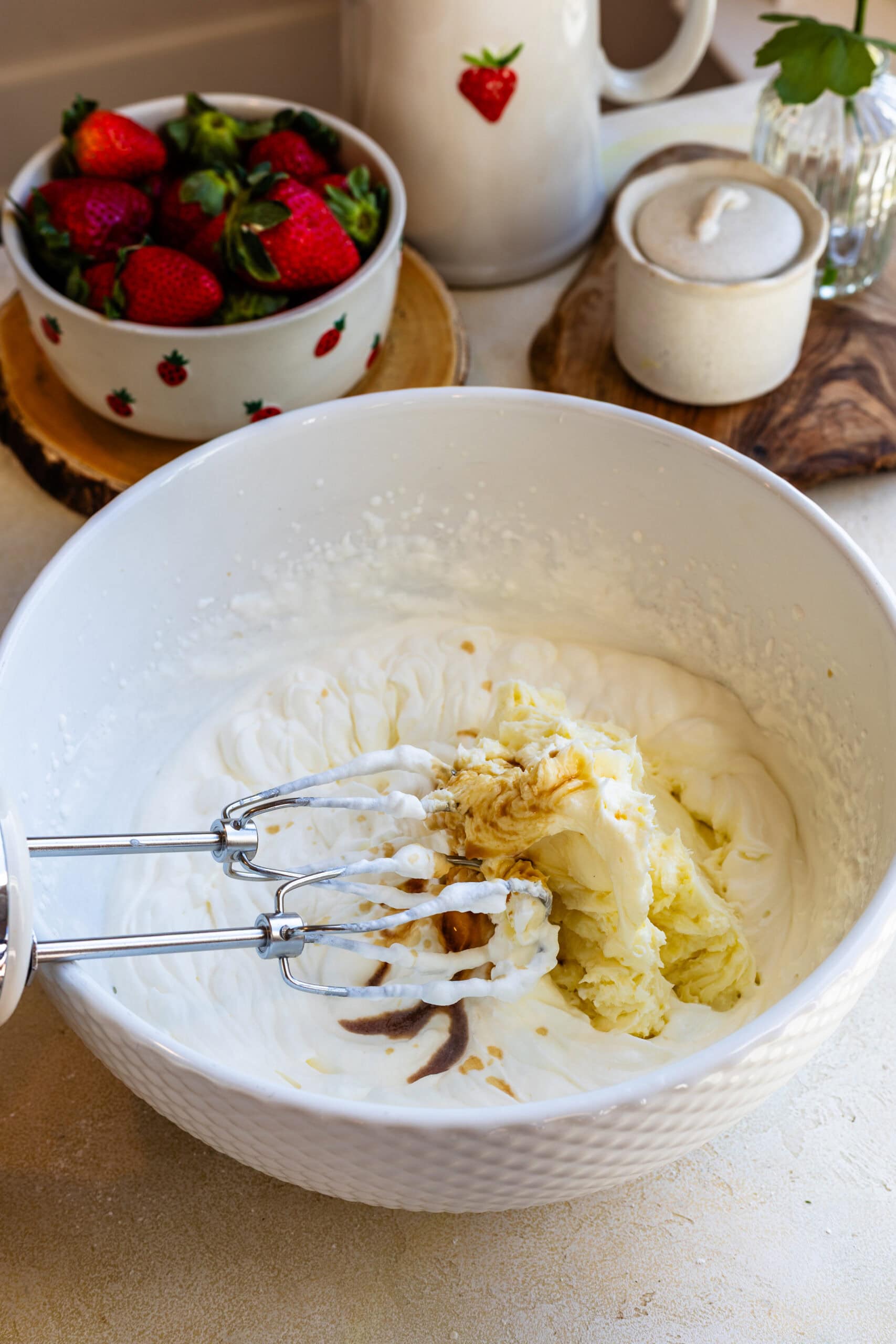
Add the cream cheese mixture and vanilla to the whipped cream and mix gently on low.
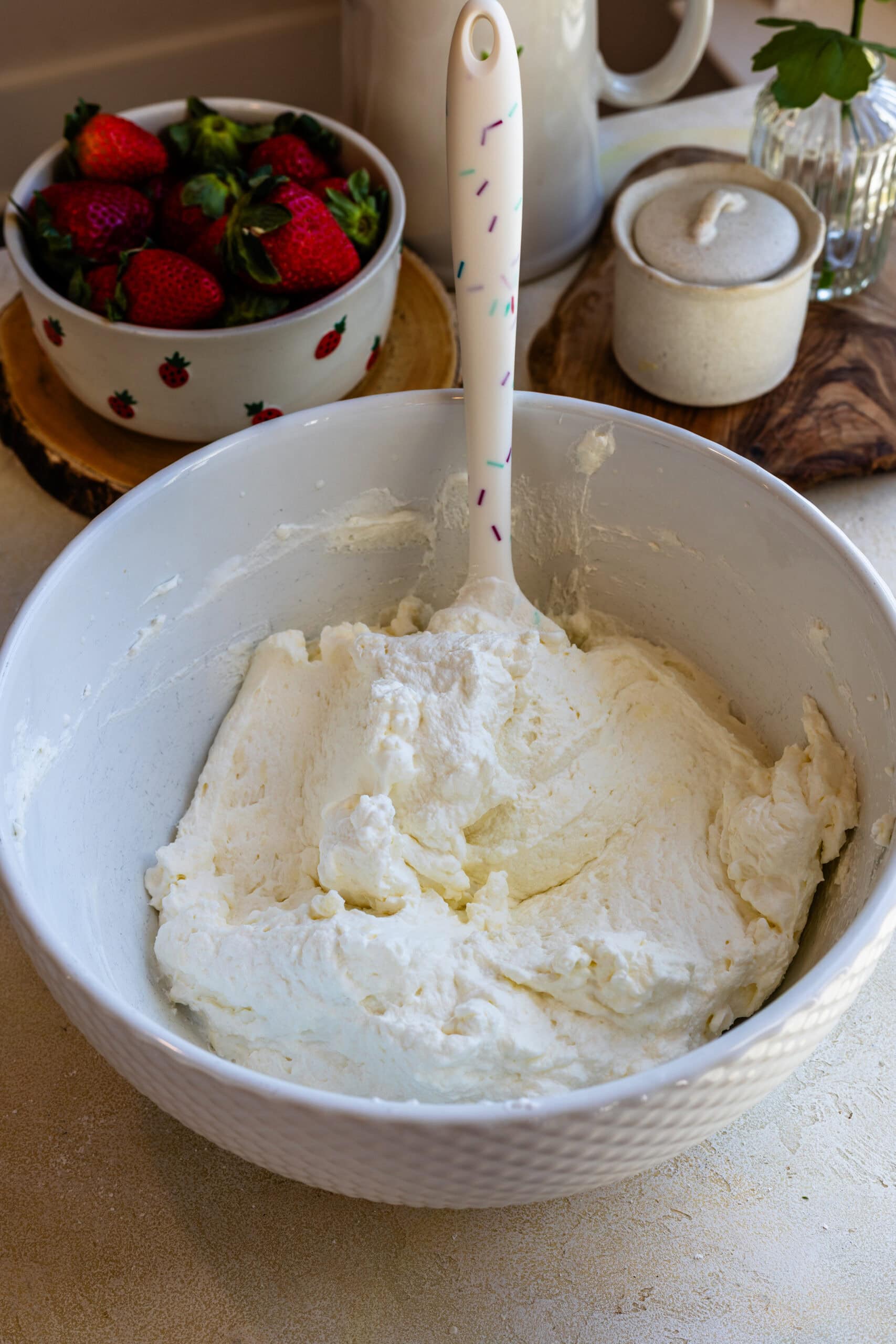
The filling should be light and fluffy, smooth and uniform.
Step 8: Assembling the Cake
Once the cake is fully cooled, unroll it very gently, and remove the towel. Spread a thin, even layer of filling over the surface — too much filling will force the cake to stretch and crack when rolled.
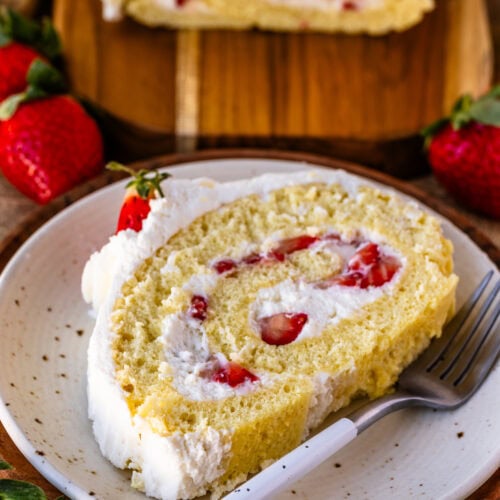
For this particular cake, I decided to add strawberries! I made sure they were finally chopped and patted dry before scattering them evenly over the cream filling.
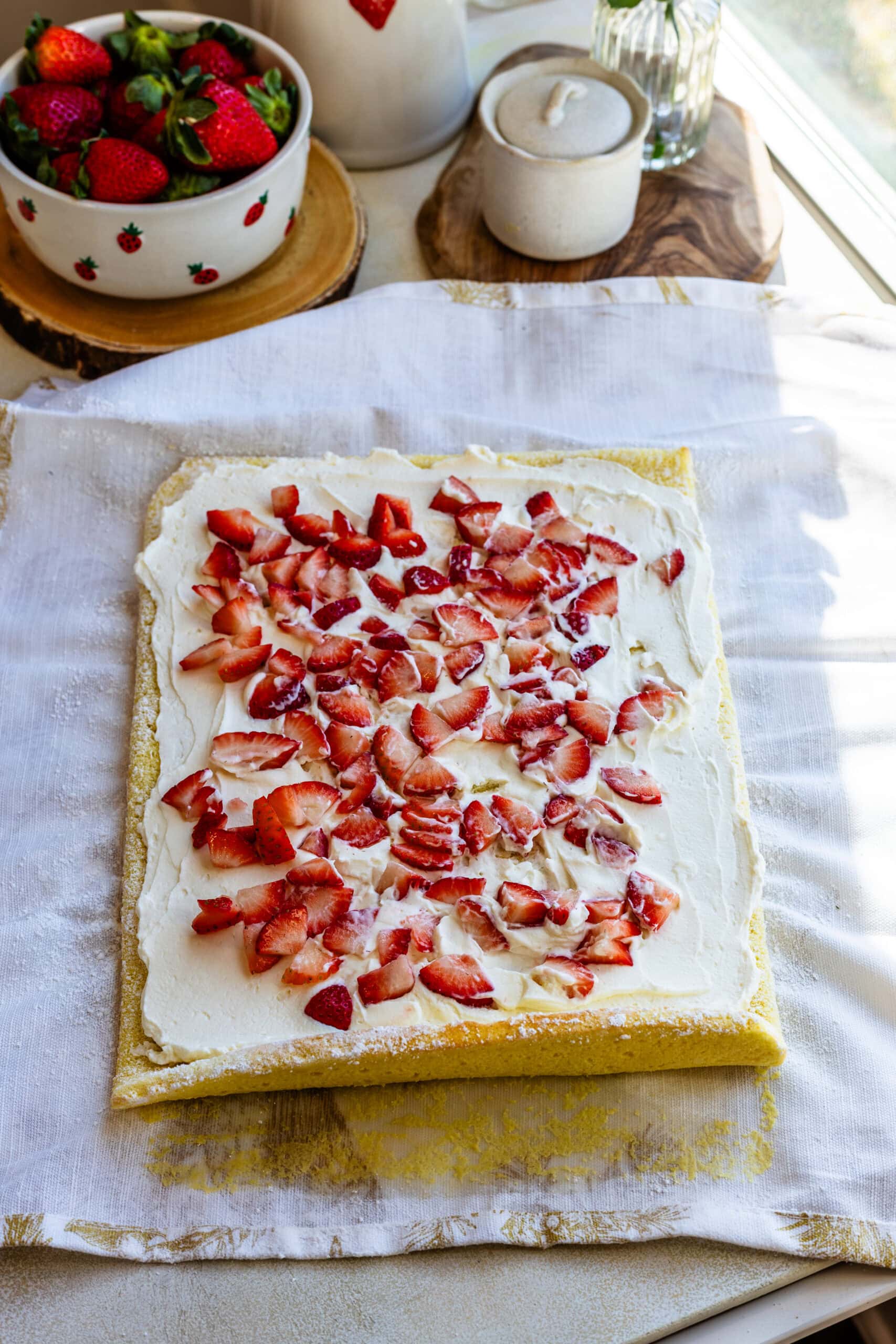
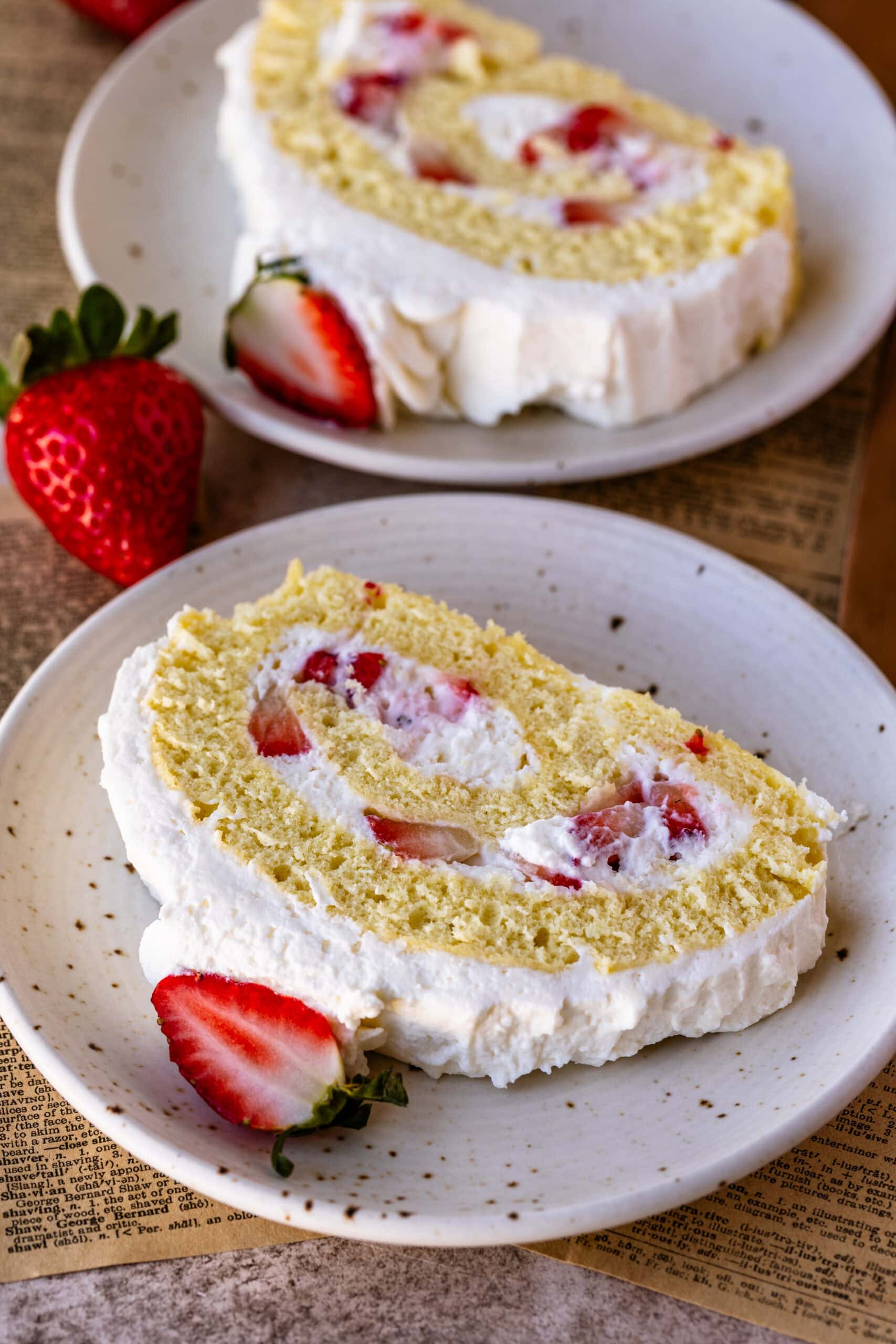
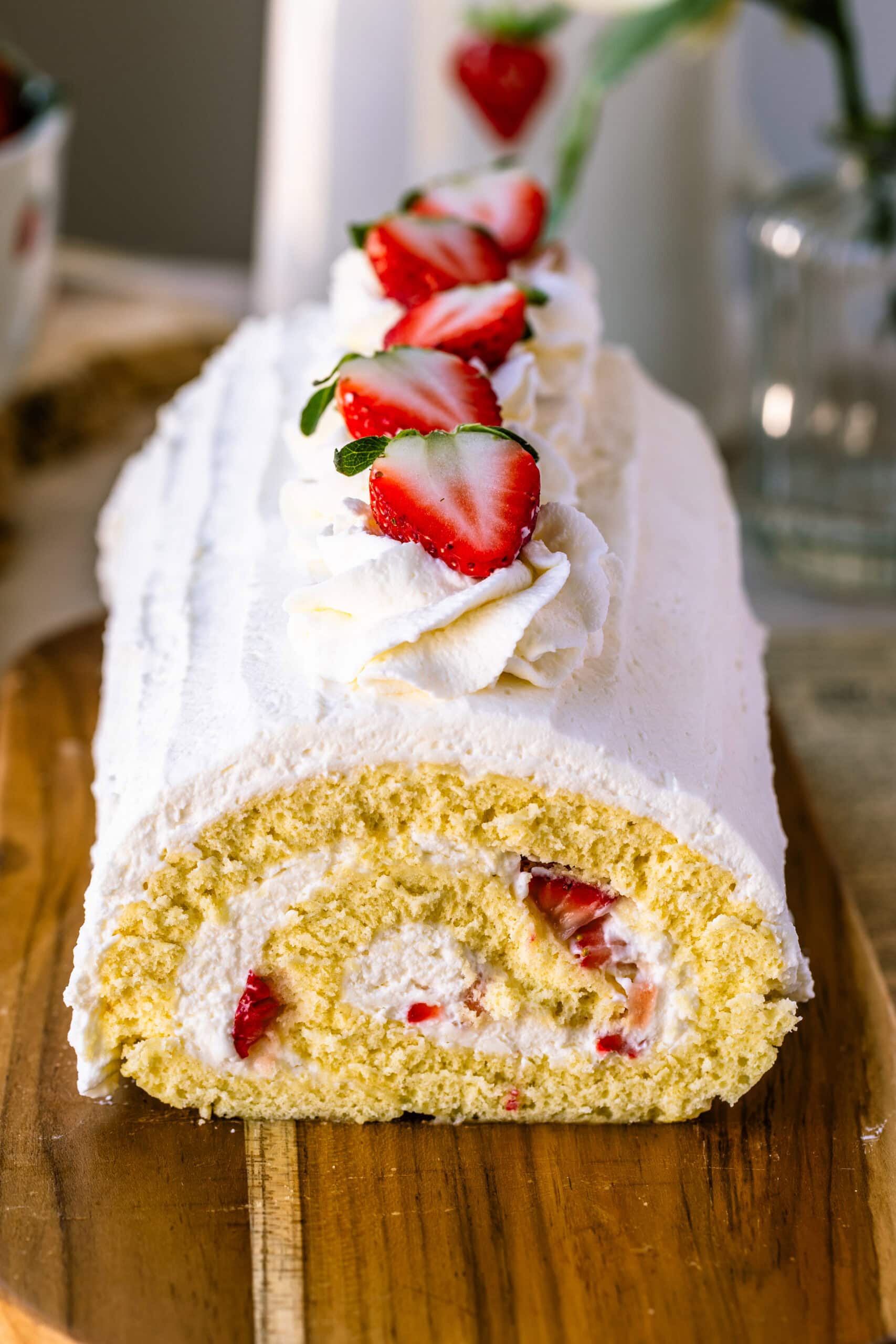
Now, roll the cake back up with the filling. Keep the roll tight but not forced. Spread the remaining cream on top, smoothing it with a spatula, and pipe any extra on top for decoration.
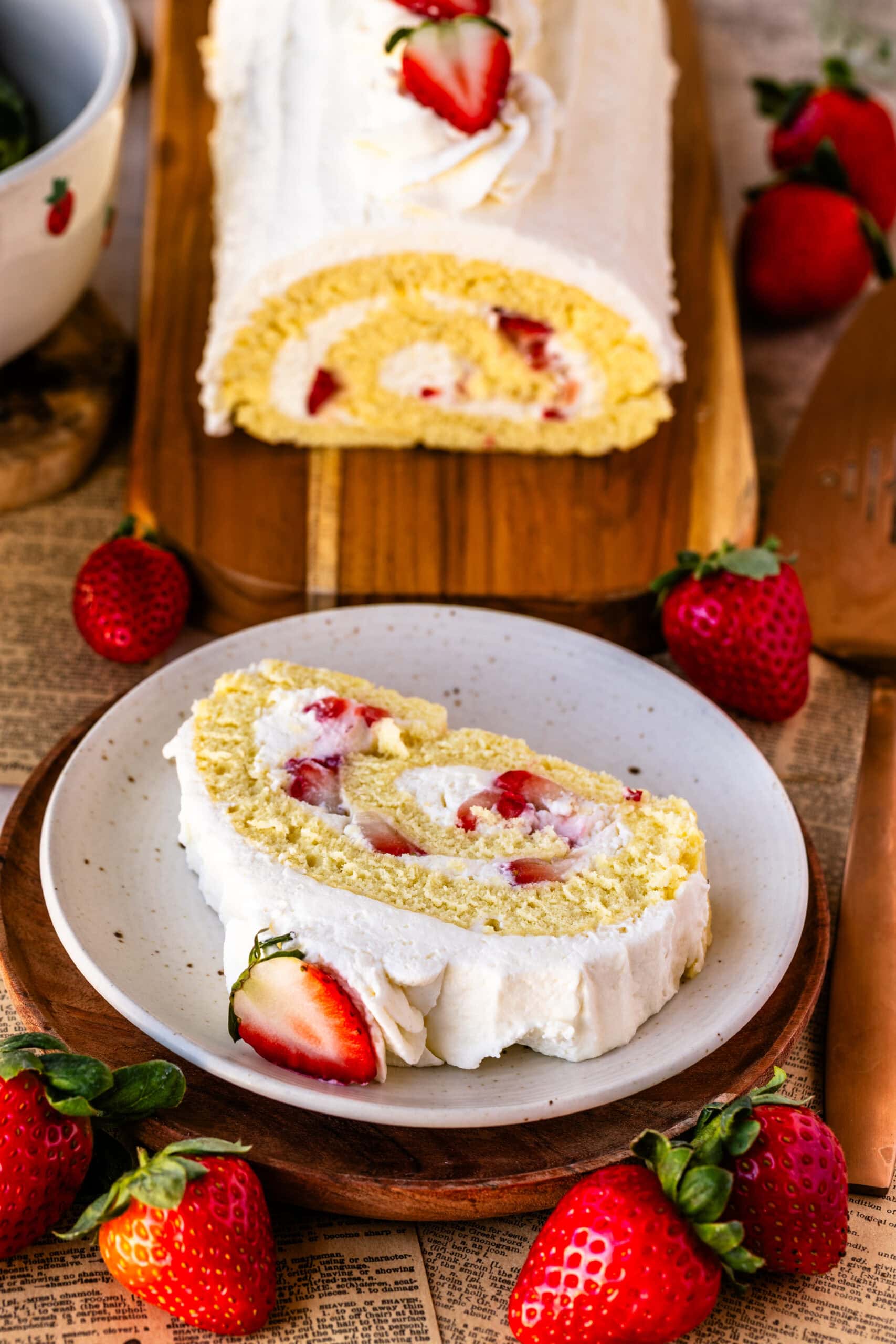
Then chill the cake for one to two hours before slicing. This will give you the cleanest cuts.
Tips for Preventing Cracks
- Whip the meringue to medium-stiff peaks only. Over-whipped whites become dry and lose elasticity, which makes the sponge more likely to split when rolled.
- Do not overbake. Even slight browning dries the sponge. The cake should look set and spring back lightly, not crisp at the edges.
- Roll the cake while it’s still hot. This trains the sponge into its shape and keeps it flexible. Waiting too long allows the structure to set flat, making cracks more likely.
- Don’t let the cake rest too long in its rolled shape. Leaving it wrapped for too long while warm can trap steam and weaken the structure. Unroll once cooled enough to handle, then fill.
- Use a thin, even layer of filling. Overfilling forces the sponge to stretch beyond its natural curl and can cause splitting.
- Handle gently when unrolling. Slow, controlled movements help preserve the crumb structure and prevent stress fractures.
- Use parchment and powdered sugar. These prevent sticking, which can tear the surface and start cracks before you even roll.
FAQ
Does this Swiss roll taste eggy?
No. While Swiss roll cakes rely heavily on eggs for structure, this recipe is carefully balanced so the eggs don’t overpower the flavor. Properly whipping the meringue, baking the sponge fully, and using vanilla and salt all help prevent any eggy taste. When made as written, the cake tastes light and clean, not sulfurous.
Why did my roll cake crack?
Cracking usually happens when the sponge is overbaked, over-whipped, or allowed to cool completely before rolling. This cake should be rolled while still warm, which keeps it flexible and prevents breakage.
Can I make the cake ahead of time?
Yes. The rolled cake can be filled, rolled, and refrigerated for up to 24 hours. Chilling helps it hold its shape and actually improves the texture for cleaner slices.
Why do you use cornstarch with all-purpose flour?
Cornstarch softens the crumb and reduces gluten formation, which keeps the sponge tender and flexible rather than chewy.
Why does the cake need to be rolled while hot?
Rolling the sponge while it’s hot helps “train” the cake’s shape. Once cooled, the cake remembers the curve and rolls again easily without cracking.
How should I store the Swiss roll?
Store it covered in the refrigerator for up to 3 days. Let it sit at room temperature for about 15 minutes before serving for the best texture.
Variations
This Swiss roll works well with different fillings as long as they stay light and spreadable. I’ll sometimes swap the cream cheese filling for stabilized whipped cream or chocolate whipped cream. The sponge also pairs well with raspberry jam, dulce de leche, or finely chopped fruit layered thinly so the roll doesn’t get overloaded.
More Recipes to Try
If you enjoy this Swiss roll cake, you might also like my Pumpkin Roll or Chocolate Roll Cake because it follows a similar process with rolling up the cake. And if you’re looking for more soft flavors, try my Tres Leches Cake or the chocolate version.
After you make this recipe, tag me on social media! I’d love to see what you’re baking!
Swiss Roll Cake

Ingredients
Yolk Mixture
- 4 large egg yolks
- ¼ cup granulated sugar 50g
- ¼ cup milk 60ml
- 3 tbsp melted butter 40g
- 1 tsp vanilla extract
- 85 g all-purpose flour
- 4 tsp cornstarch 12g
- ½ tsp baking powder
- ¼ tsp salt
Egg White Mixture
- 4 large egg whites
- ½ cup granulated sugar 100g
To Roll
- ¼ cup powdered sugar
Whipped Cream Cheese Frosting
- 6 oz cream cheese, softened 170g
- 6 tbsp powdered sugar 45g
- 1 tsp vanilla extract
- 1½ cups heavy cream, cold 360ml
To Assemble
- ½ cup finely chopped strawberries optional
Instructions
Prep
- Preheat the oven to 350ºF (175ºC). For convection, use 325ºF (162ºC). Lightly grease and line a 10×15-inch jelly roll pan with parchment, leaving overhang. I use spray oil. Don’t drench it with oil, a little will go a long way.
Yolk Mixture
- In a large bowl, whisk the yolks with ¼ cup sugar until slightly pale, for about 2 minutes.
- Add the melted butter and whisk. Add the milk and the vanilla and whisk until combined.
- Add the flour, cornstarch, baking powder, and salt. Whisk just until combined and smooth.
- Set this aside.
Egg White Mixture
- To make the meringue, start by whipping the egg whites in a clean bowl with an electric mixer, or using a stand mixer with the whisk attachment on medium speed.
- After about 30 seconds, add the ½ cup sugar gradually, one tablespoon at a time. Continue whipping on medium-high speed until the peaks are medium-stiff. They should be glossy and thick, but still bending, not completely dry and straight. It should take a few minutes, depending on the speed you are using and on the mixer.
Folding
- Add ⅓ of the meringue into the yolk batter and fold to combine. Add the rest in two additions, folding until no streaks of meringue remain.
Baking
- Spread the batter evenly in the prepared pan. Smooth it out with a spatula, making the layer as even as possible. Tap the pan gently to release any air bubbles.
- Bake for about 12 minutes in a conventional oven. For convection, you might need slightly less baking time. Check at around 10 minutes. The cake should look set on top and around the edges, not golden. If the cake is golden, it means it’s over baked.
Rolling
- While the cake is baking, prepare your station to roll the cake. You will need a clean kitchen towel and a sifter with the powdered sugar.
- As soon as the cake comes out of the oven, sprinkle powdered sugar on top of it.
- Place the clean kitchen towel on top. Flip the cake over the towel and lay it on the table or counter.
- Remove the peel off the parchment. Starting from the short side, roll the cake with the towel inside. The towel should be rolled along with the cake.
- Let it cool completely in this rolled shape (prevents cracking) for about 45 minutes. Don’t over rest it.
Whipped Cream Cheese Frosting
- While the cake is resting, make the filling. For this recipe, we’re making a Whipped Cream Cheese Frosting.
- Beat the cream cheese with powdered sugar and vanilla until smooth, about 1 minute. Set it aside.
- On a separate bowl, whip the heavy cream on medium speed for about 2 to 3 minutes, until medium-stiff peaks form. Don’t over whip or the filling will become chunky.
- Add the cream cheese mixture to the whipped cream and whip with the mixer on low. Finish by mixing with a spatula until smooth.
Assembling
- Unroll the cooled cake. Spread a thin layer of the whipped cream evenly over the surface of the cake (about 2 cups). Reserve the rest for the topping.
- Spread the chopped strawberries, if using.
- Re-roll tightly, without the towel this time.
- Spread the remaining whipped cream cheese on top, smooth it out with a spatula. Place whatever is left in a piping bag and pipe on top.
- Decorate with strawberries if desired.
- Chill 1–2 hours before slicing for clean cuts.
Staat een fout op laatste staat laat het vlees 2 uur rusten in de koelkast voor u hem snijt