

Flan Recipe
Flan is one of those desserts I grew up around—it shows up at family gatherings, bakeries, and celebrations all across Latin America, including Brazil. This is the version I make now: smooth, creamy, and deeply familiar, with a caramel that stays soft and pours cleanly when you unmold it. It’s simple, classic, and exactly the kind of dessert that doesn’t need embellishment to feel special.
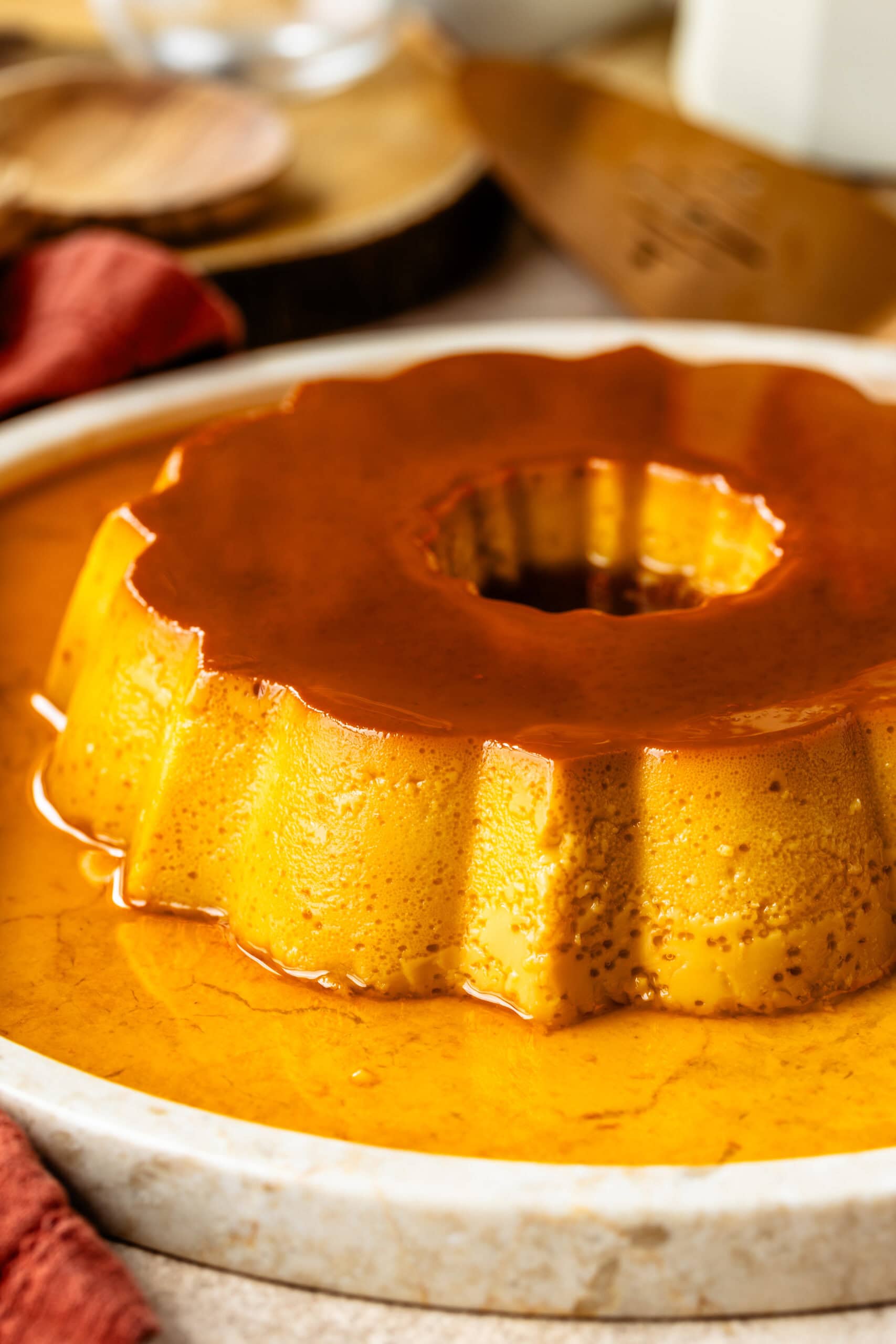
In Brazil, flan is everywhere, and everyone has a strong opinion about how it should be made. I’ve tested different ratios and methods over the years, and this is the one I trust most. It uses condensed and evaporated milk for richness, whole eggs for structure, and a gentle bake so the custard stays silky instead of firm
Why I Love This Recipe
This recipe, first and foremost feels super familiar and comforting, but also…
This post may contain affiliate links. I earn a commission from qualified purchases. Please read our Privacy policy here.
- The custard bakes up smooth and silky, never grainy
- The caramel stays soft and glossy after unmolding
- It’s made with straightforward ingredients you can find anywhere
- The water bath ensures even baking and a clean set
- It holds well in the fridge and slices beautifully
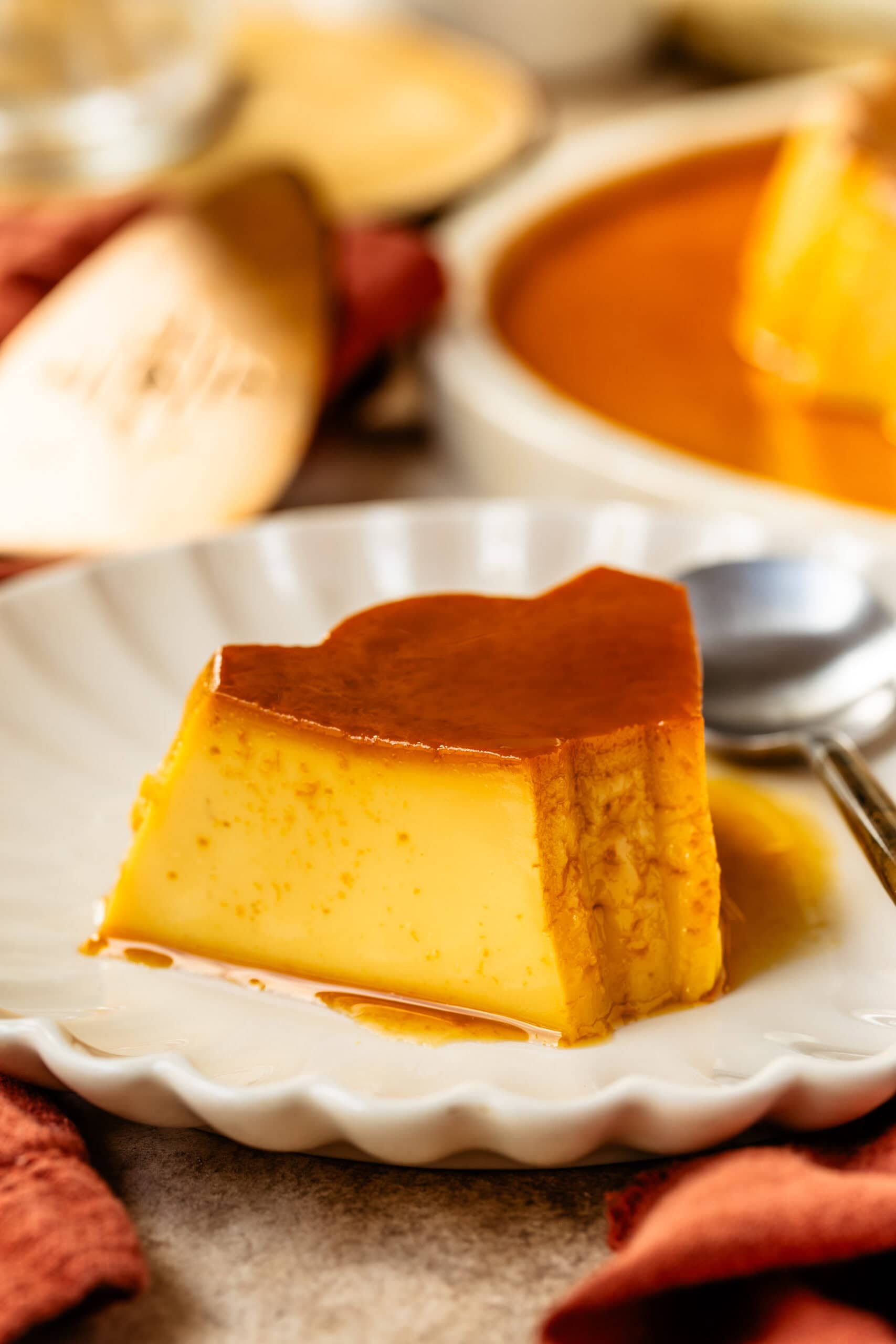
Key Ingredients & Why I Use Them
Sweetened condensed milk: This provides sweetness and richness without needing additional sugar in the custard.
Evaporated milk: I like the balance it gives—creamier than whole milk, but lighter than using cream.
Whole eggs: Using whole eggs gives the flan structure while keeping the texture soft and cohesive.
Sugar (for the caramel): Plain granulated sugar works best here. No need to complicate it.
Vanilla extract: A small amount goes a long way and rounds out the custard flavor.Best Flan Recipe
How I Make This Flan
In this post, I’ll guide you step-by-step to create a beautiful caramel flan recipe. Read on for the detailed instructions, ingredient list, and helpful tips to ensure perfect results.
Step 1: Preparing the Caramel
I start with the caramel so it’s ready before the custard goes in.
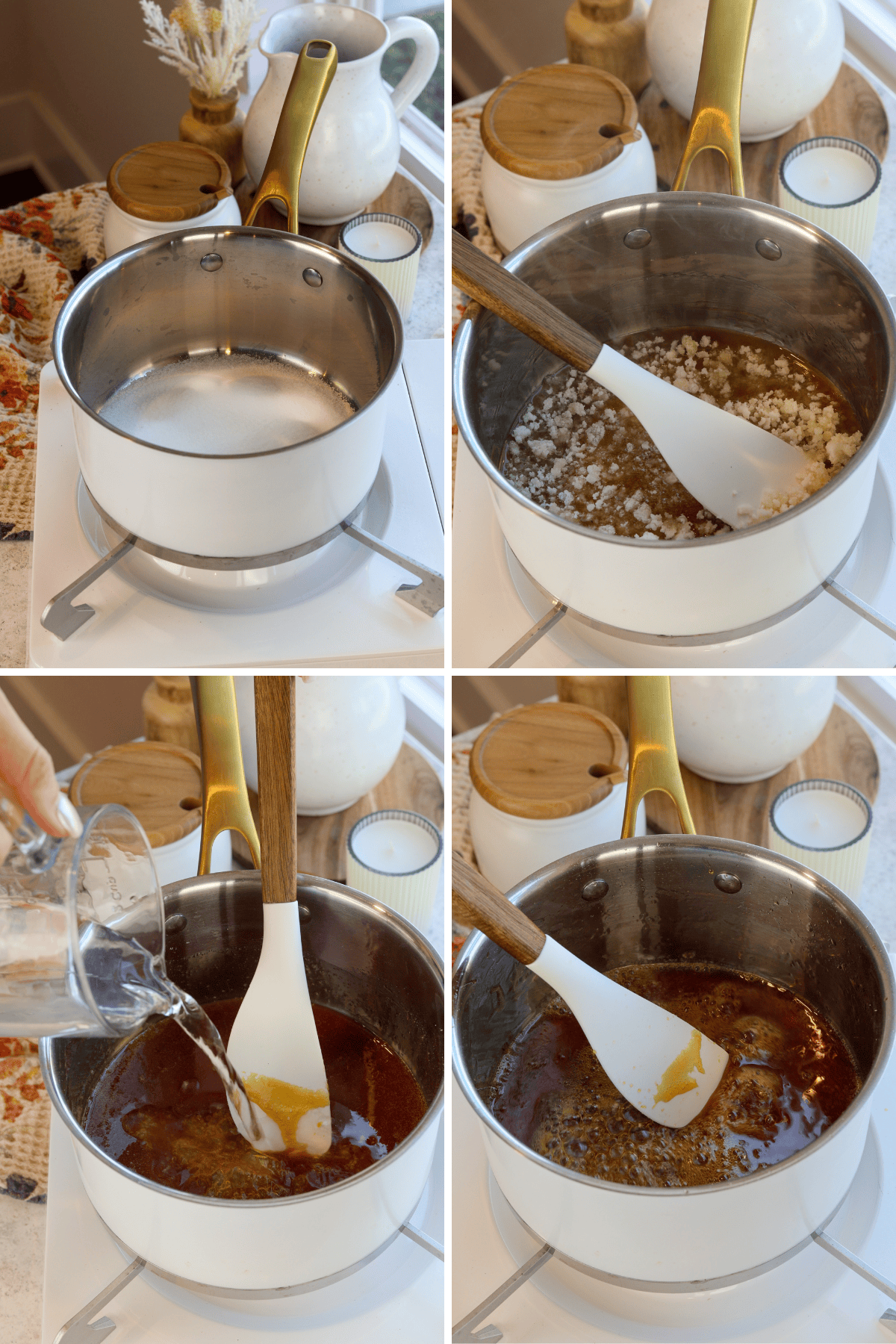
I add the sugar to a heavy-bottomed saucepan and place it over medium-high heat. I stir constantly as it heats, making sure the sugar melts evenly and doesn’t scorch. Once it fully melts, it turns a deep amber color.
At this point, I carefully add the water. The mixture bubbles and steams aggressively, so I pour slowly and stand back. I reduce the heat to medium-low and continue stirring until any hardened sugar remelts and the caramel is completely smooth.
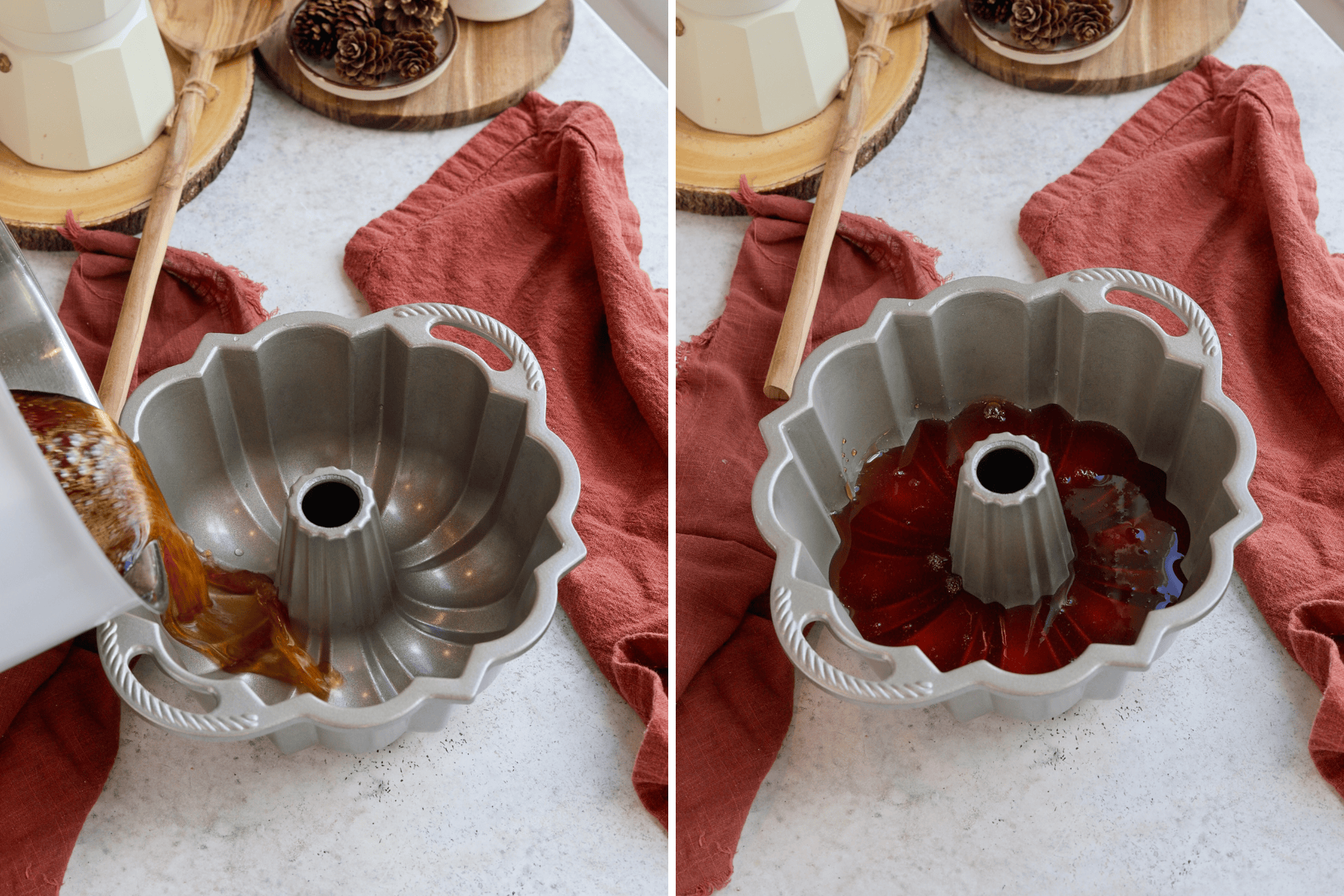
Once ready, I immediately pour the caramel into my flan mold and tilt the pan to coat the bottom evenly. I usually use a 6-cup bundt pan for a taller flan, but an 8-cup mold or traditional flanera also works. I set the pan aside while I prepare the custard.
Step 2: Make the Flan Mixture
Preheat your oven to 350°F (175°C).
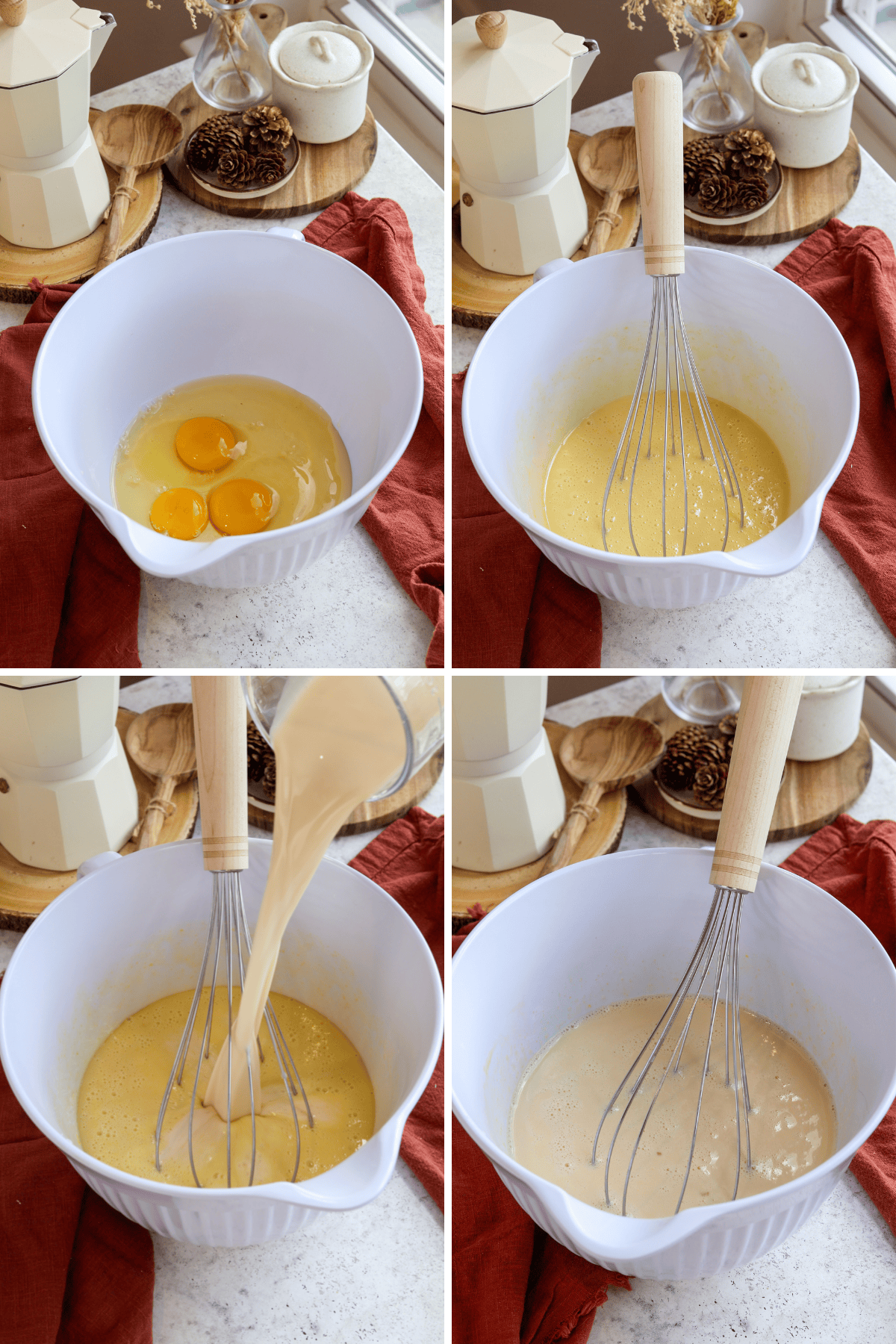
In a large bowl, I whisk together the sweetened condensed milk and eggs until fully blended. I don’t rush this—I want a smooth base before adding anything else.
Next, I whisk in the evaporated milk and vanilla extract until the mixture is completely smooth. I avoid using a blender here because whisking keeps excess air out, which helps the flan bake up creamier.
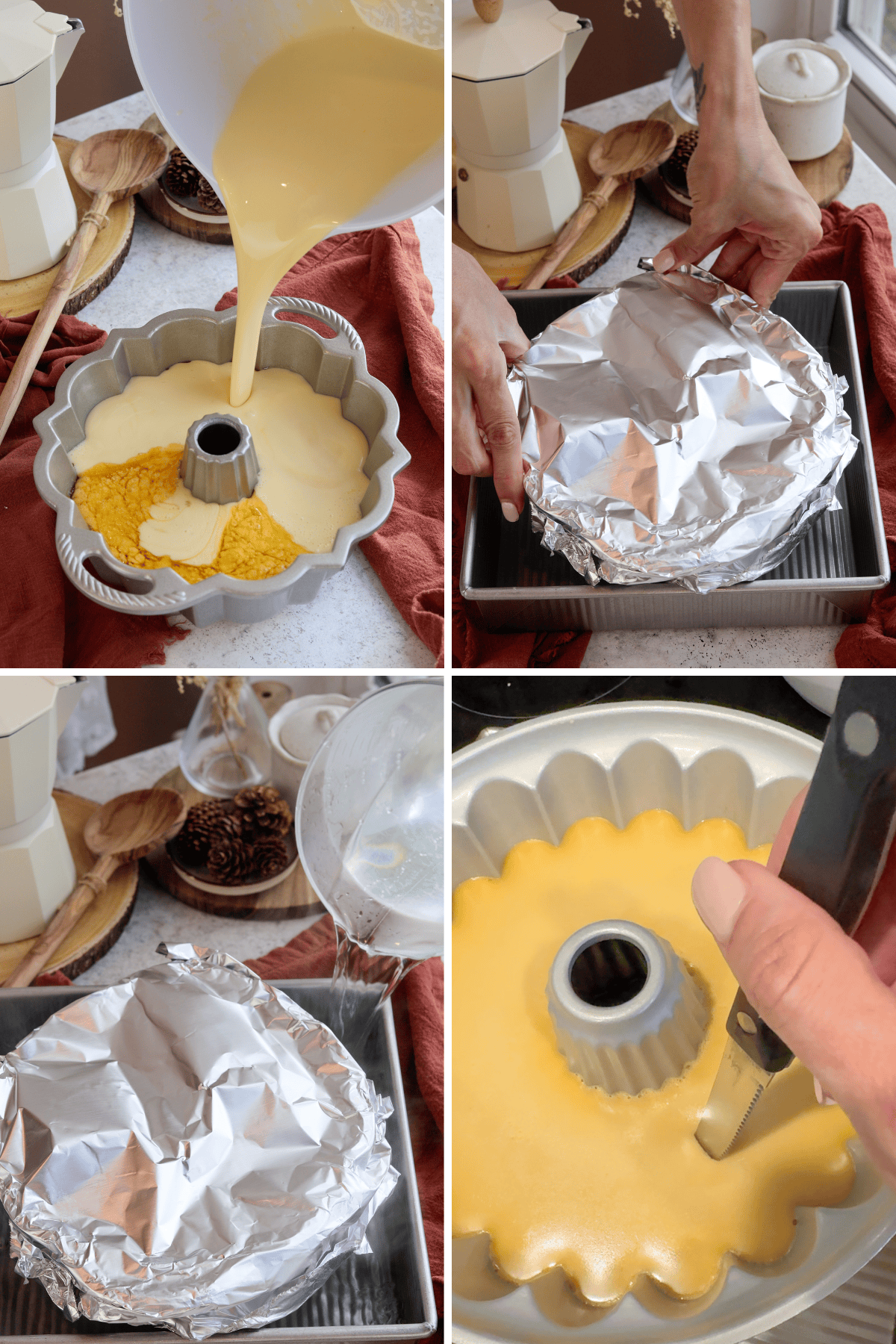
I pour the custard gently over the caramel in the prepared mold. Then I cover the mold tightly with aluminum foil to prevent browning.
Step 3: Baking the Flan
I place the flan mold inside a larger roasting pan and carefully pour hot water into the outer pan until it reaches about halfway up the sides of the flan mold. This water bath is essential—it allows the flan to cook gently and evenly.
I bake the flan for 50–60 minutes. When it’s ready, the edges are set and the center still has a slight jiggle. If I insert a knife into the custard, it comes out clean.
I remove the flan from the oven and let it cool to room temperature on a wire rack. Once cooled, I refrigerate it for at least 6 hours, though overnight is ideal for the cleanest unmolding.
Step 4: Unmolding and Serving
Before unmolding, I place the flan mold in a dish of hot water for 5–10 minutes. This loosens the caramel from the bottom.
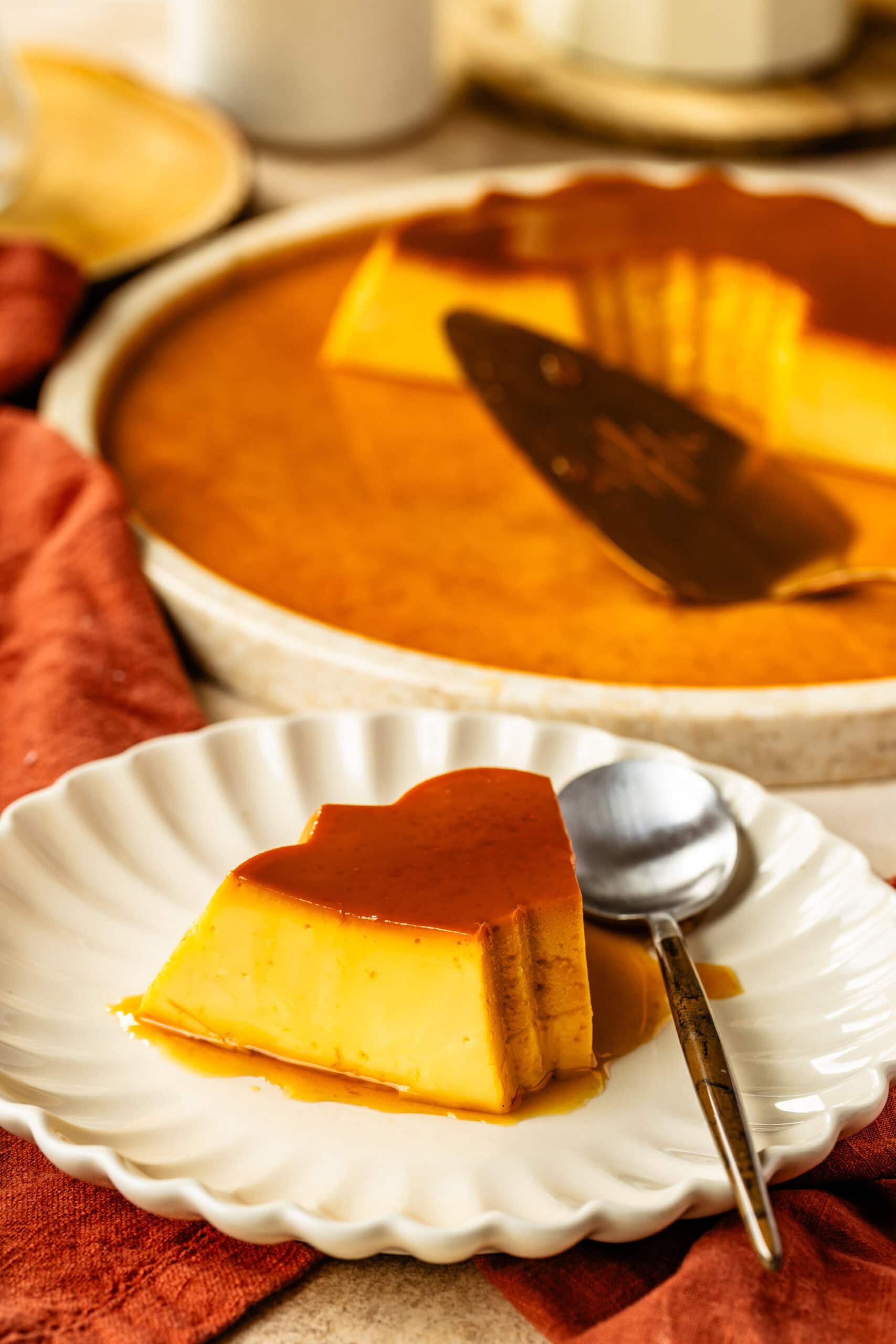
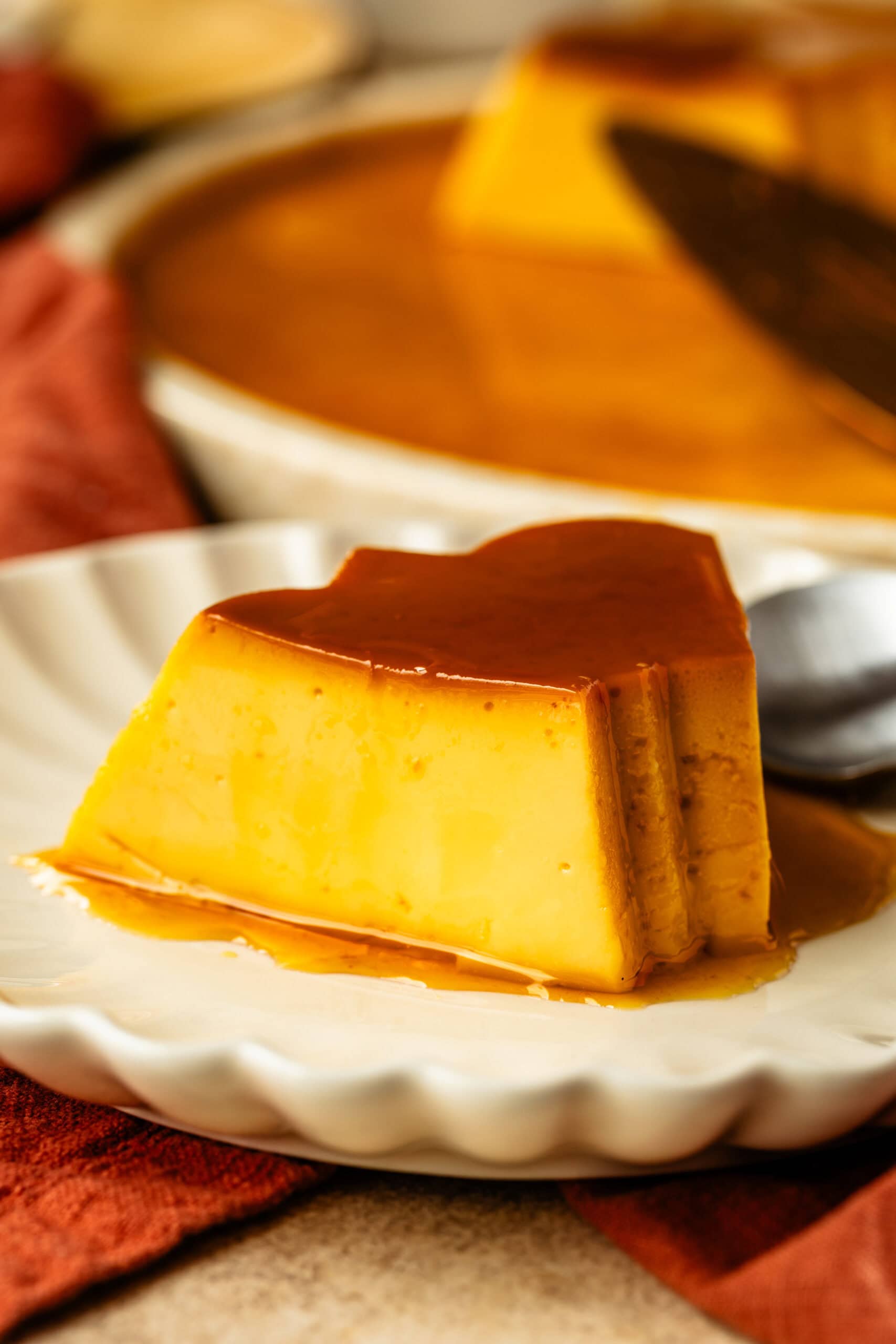
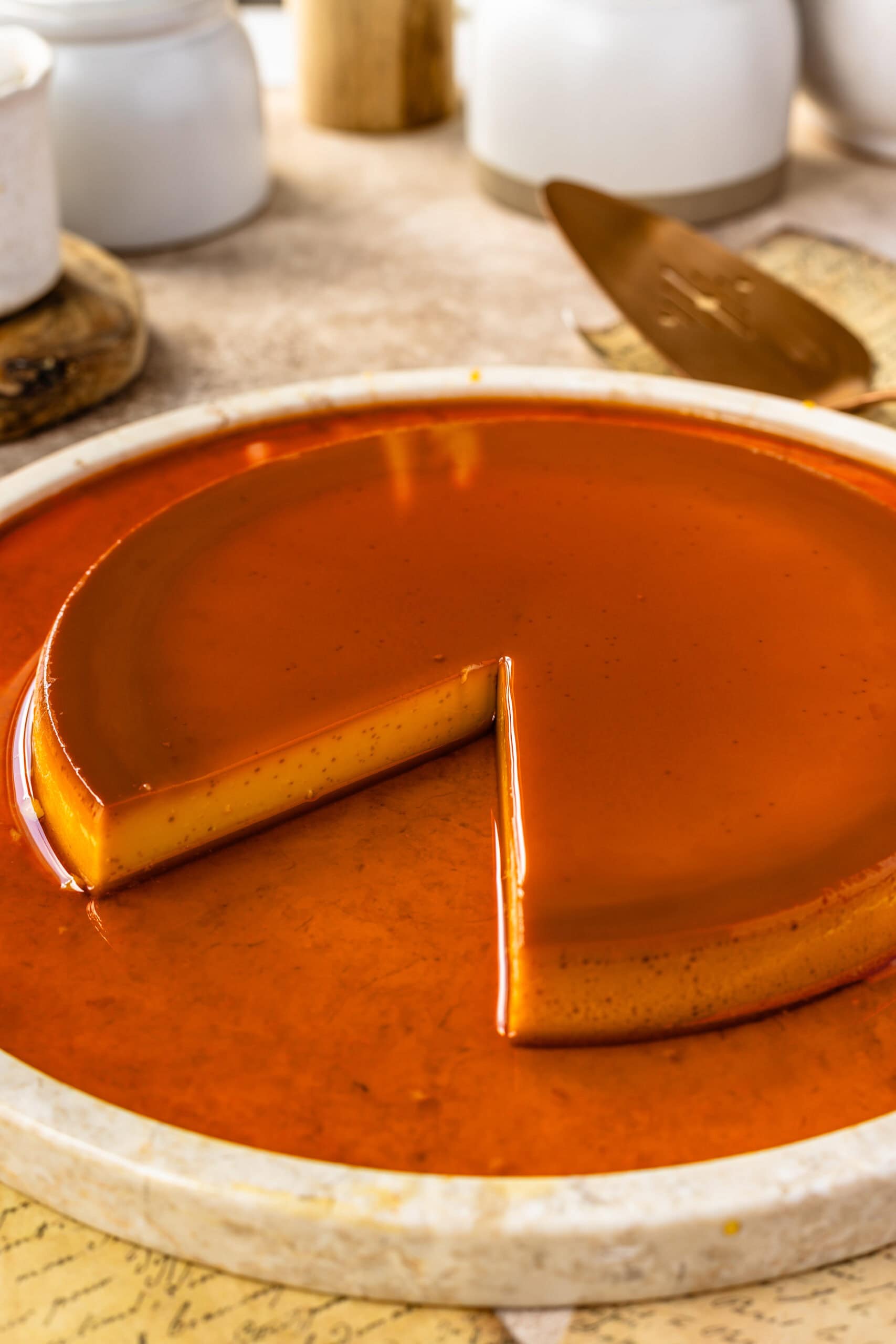
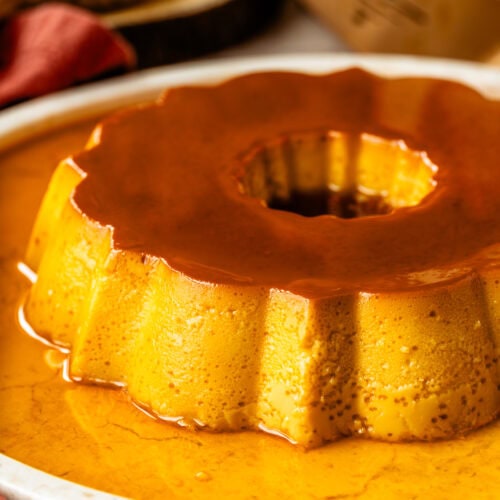
I run a knife gently around the edges, place a plate over the mold, and invert it in one confident motion. The caramel flows over the top and sides as the flan releases.
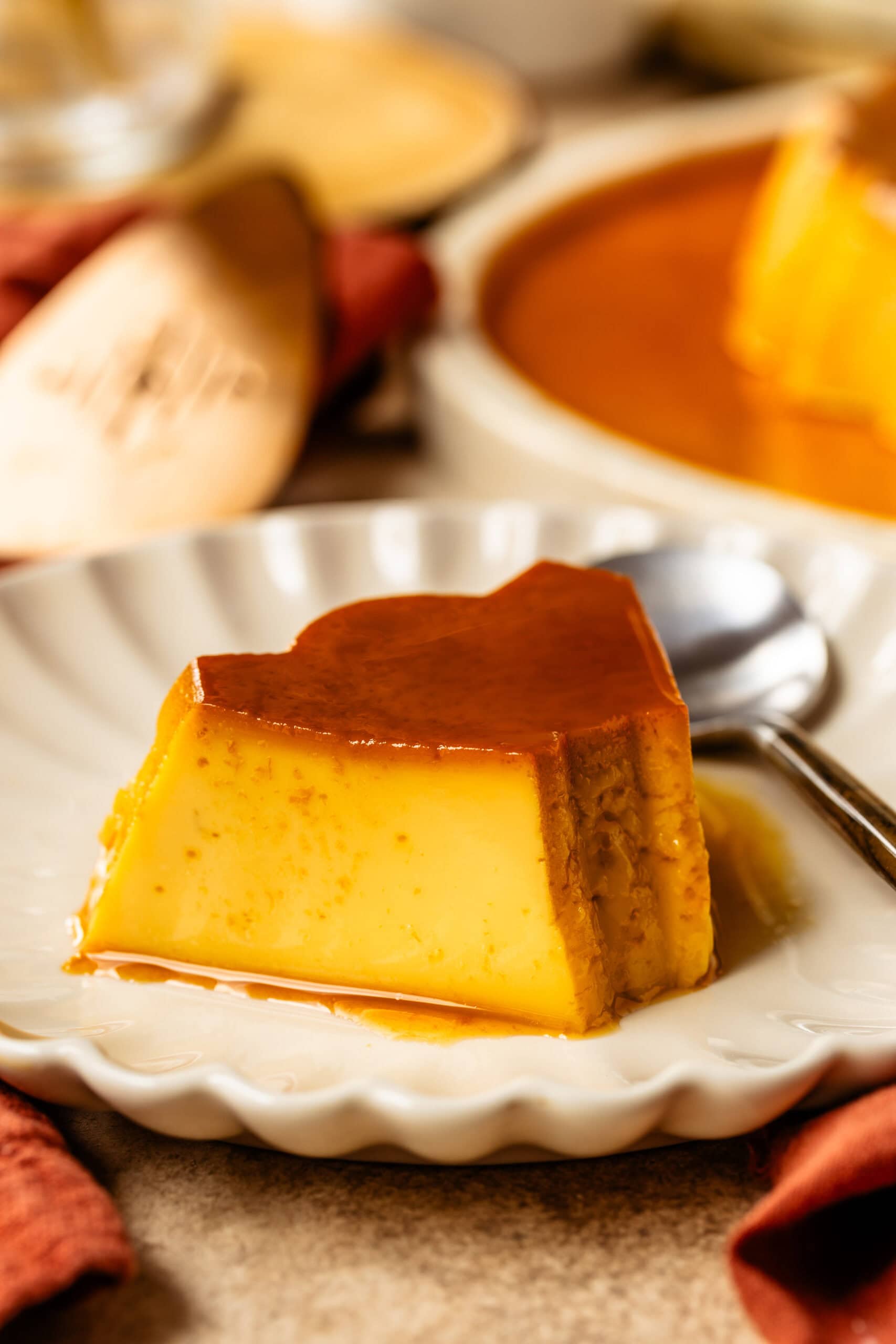
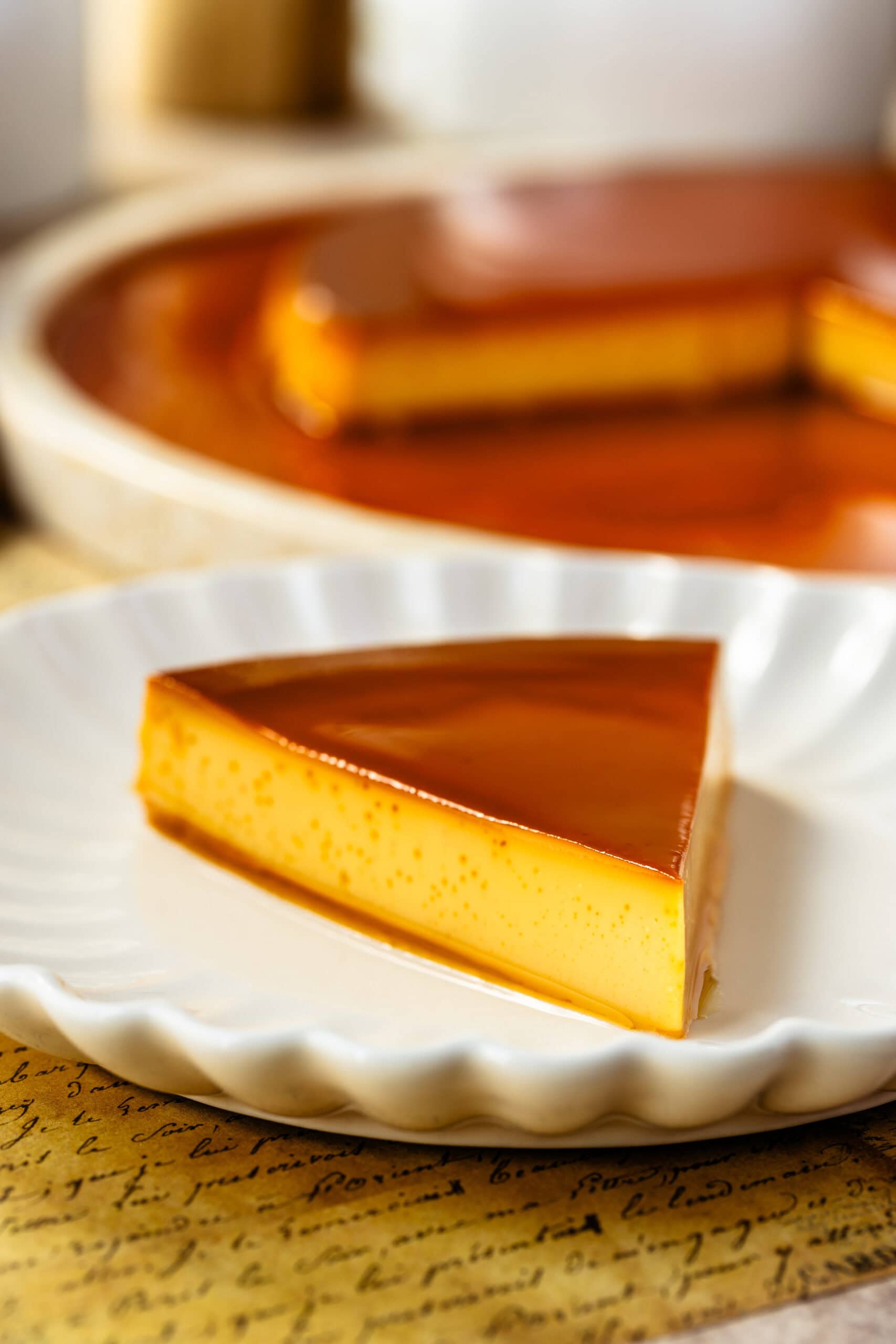
I slice and serve chilled.
Storage
Storage
Store the flan in the refrigerator, covered tightly with plastic wrap or aluminum foil, for up to 4–5 days.
Expert Tips
Here are some of the things I stick to when making flan to make sure that it comes out perfectly!
- Watch the caramel closely. Once it starts melting, things move quickly. Stir constantly and don’t walk away.
- Add the water carefully. The caramel will bubble and steam aggressively. Pour slowly and stand back.
- If the caramel crystallizes, keep going. I lower the heat and stir gently until it remelts completely.
Whisk, don’t blend. Whisking the custard keeps air bubbles out, which helps prevent a spongy texture. - Don’t skip the water bath. It protects the flan from overheating and keeps the texture smooth.
- Check for doneness early. Overbaking leads to a rubbery custard. The center should jiggle slightly.
- Warm the mold before unmolding. This step makes a big difference in releasing the caramel cleanly.
- Quick Tip: If your flan sticks slightly, let it sit inverted for a minute—the caramel usually releases on its own.
Flan Variations
Coconut Flan: I replace half of the evaporated milk with coconut milk for a subtle coconut flavor.
Coffee Flan: I whisk 1–2 teaspoons of instant espresso powder into the custard.
Orange Flan: I add orange zest to the custard for a bright citrus note.
The Difference Between Crème Caramel, Flan, and Quesillo
These three delicious desserts often cause confusion due to their similarities, but each has distinct characteristics that set them apart. Here’s a breakdown to help you navigate their differences:
Crème Caramel
Crème Caramel is a French classic known for its silky smooth texture and delicate vanilla flavor. It features a creamy custard base made with eggs, milk or cream, sugar, and vanilla, baked with a caramel layer that turns into a luscious sauce when inverted. The result is a refined, light dessert often enjoyed at the end of a gourmet meal.
Flan
Flan refers to a broad category of caramel-based custards, but its preparation and flavor can vary depending on the country. In Latin America and Spain, flan is typically made with sweetened condensed milk, evaporated milk, eggs, and sugar, giving it a richer and creamier texture compared to crème caramel. It’s denser and often flavored with ingredients like cinnamon, citrus, or coconut, making it a comforting dessert with a slightly heavier consistency.
Quesillo
Quesillo is a Venezuelan twist on flan. Its name, which means “little cheese,” might be misleading—it doesn’t contain cheese! Instead, it gets its name from its unique texture, which is denser and has tiny air pockets reminiscent of cheese. This dessert uses the same base ingredients as flan but incorporates whole eggs (instead of just yolks), which creates its signature texture. It’s slightly firmer yet still melts in your mouth, offering a delightful caramel finish.
FAQs
This almost always comes from overbaking. Flan should still have a slight jiggle in the center when it comes out of the oven. If it bakes until fully firm, the eggs tighten too much as it cools, which leads to a rubbery texture. I start checking around the 45–50 minute mark, especially if I’m using a smaller or deeper mold.
Yes—flan is actually better made ahead. I usually make it the day before and let it chill overnight. This gives the custard time to fully set and allows the caramel to soften and loosen, which makes unmolding much easier.
If the caramel is cooked too dark or not fully dissolved before pouring it into the mold, it can harden instead of turning into sauce. I always make sure the sugar is completely melted and smooth before pouring, and I stop cooking once it reaches a deep amber—not brown.
I don’t recommend freezing flan. While it’s safe to freeze, the texture changes once thawed and loses that smooth, silky consistency. Flan holds well in the refrigerator for several days, which is usually enough.
No, but the shape matters. A deeper mold will take longer to bake, while a wider dish will bake faster. I prefer a 6-cup bundt pan because it gives a taller flan and unmolds cleanly, but any oven-safe dish with similar capacity will work.
More Recipes You Might Like
If you enjoyed this flan, you might also like my Tres Leches Cake, Flan Cake, Pumpkin Flan, or Crème Brûlée Cheesecake—all creamy desserts with slightly different textures and techniques.
If you make this flan, I’d love to hear how it turned out. Leave a comment and rating below, or tag me on Instagram so I can see your version.
Flan Recipe

Ingredients
Caramel
- 1 cup sugar 200 grams
- ½ cup water 120 ml
Flan
- 1 14 oz. can sweetened condensed milk (396 grams)
- 3 large eggs room temperature
- 1 ½ cups evaporated milk (see notes) 360 ml
- 1 tbsp vanilla extract
Instructions
Caramel
- Add the sugar to a saucepan with a thick bottom and place over medium heat. Stir the sugar constantly until it fully melts. It’s important to stir frequently so the sugar melts evenly.
- Once the sugar melts entirely and has a deep amber color, add the water carefully, because once you add it, it will bubble up, so be careful not to burn your hands.
- Use a spatula to stir the mixture over the medium-low heat, until the crystallized sugar remelts with the water. It can take a few more minutes. You can remove it from the heat and stir off heat for a bit and then return to the heat, to ensure it won’t burn, but still making sure it will all re-melt.
- Once the caramel has melted, carefully pour the caramel into a flan mold or baking dish. You can use a 8 or 6 cup bundt pan. You can also use a flanera, which is a flan baking dish. My favorite pan to use to make this recipe is a small 6-cup bundt pan because it makes the flan taller.
- Set the pan aside while you prepare the flan mixture.
Flan
- Preheat the oven to 350°F (175°C).
- In a mixing bowl, add the sweetened condensed milk and eggs. Whisk until combined.
- Pour in the evaporated milk and vanilla, and whisk until the mixture is smooth and fully combined.
- Pour the flan mixture over the caramel in the mold. Cover the mold tightly with aluminum foil.
- Place the mold in a larger baking dish and fill the dish with hot water until it reaches halfway up the sides of the flan mold to create a water bath.
- Bake for 50–60 minutes, or until the flan is set but slightly jiggly in the center when gently shaken. Also, when you insert a pointy knife in the flan, it should come out clean without any wet custard.
- Baking time will depend on the size of the dish used, on a 6-cup bundt it can take longer than in a 8-cup bundt.
- Remove the mold from the water bath and let it cool to room temperature. Refrigerate for at least 6 hours or overnight.
- Before unmolding the flan, heat some water and pour it into the same larger dish used for the water bath during baking. Place the bundt pan in the warm water and let it sit for 5 to 10 minutes. The heat will help loosen the caramel from the bottom, making it easier to release the flan effortlessly.
- Run a knife around the edges, place a plate over the mold, and quickly flip it over to release the flan.
- Slice, serve, and enjoy!
can you make this dairyfree?
I don’t think this recipe would work with dairy free ingredients.
Flan has deep roots in Portugal and Brazil. Venezuela quesillo is identical to Portuguese flan.